Methods and compositions for cyclizing diterpenes
- Summary
- Abstract
- Description
- Claims
- Application Information
AI Technical Summary
Benefits of technology
Problems solved by technology
Method used
Image

Examples
example 1
Isolation and Purification of Elisabethatriene Cyclase
[0041]P. elisabethae was collected from various sites in the Bahamas as well as in the Florida Keys. The harvested coral was immediately flash frozen in liquid nitrogen and stored at −80° C. A CFE was prepared by homogenizing the flash frozen coral with phosphate buffer (pH 7.7, 5 mM β-mercaptoethanol and 1 mM MgCl2) and liquid nitrogen. The homogenate was centrifuged at low speed to remove insoluble debris and the supernatant used as the CFE.
[0042]Enzymatic activity in CFE preparations was typically assessed by incubating 3H-GGPP (1 μCi) with 30 mL of CFE at 27° C. for 1-4 hours. All CFE preparations analyzed showed the ability to catalyze the cyclization of GGPP to elisabethatriene. In other studies, CFE was shown to transform elisabethatriene to the pseudopterosins. Adding protease inhibitors in this process did not increase the enzymatic activity of the CFE.
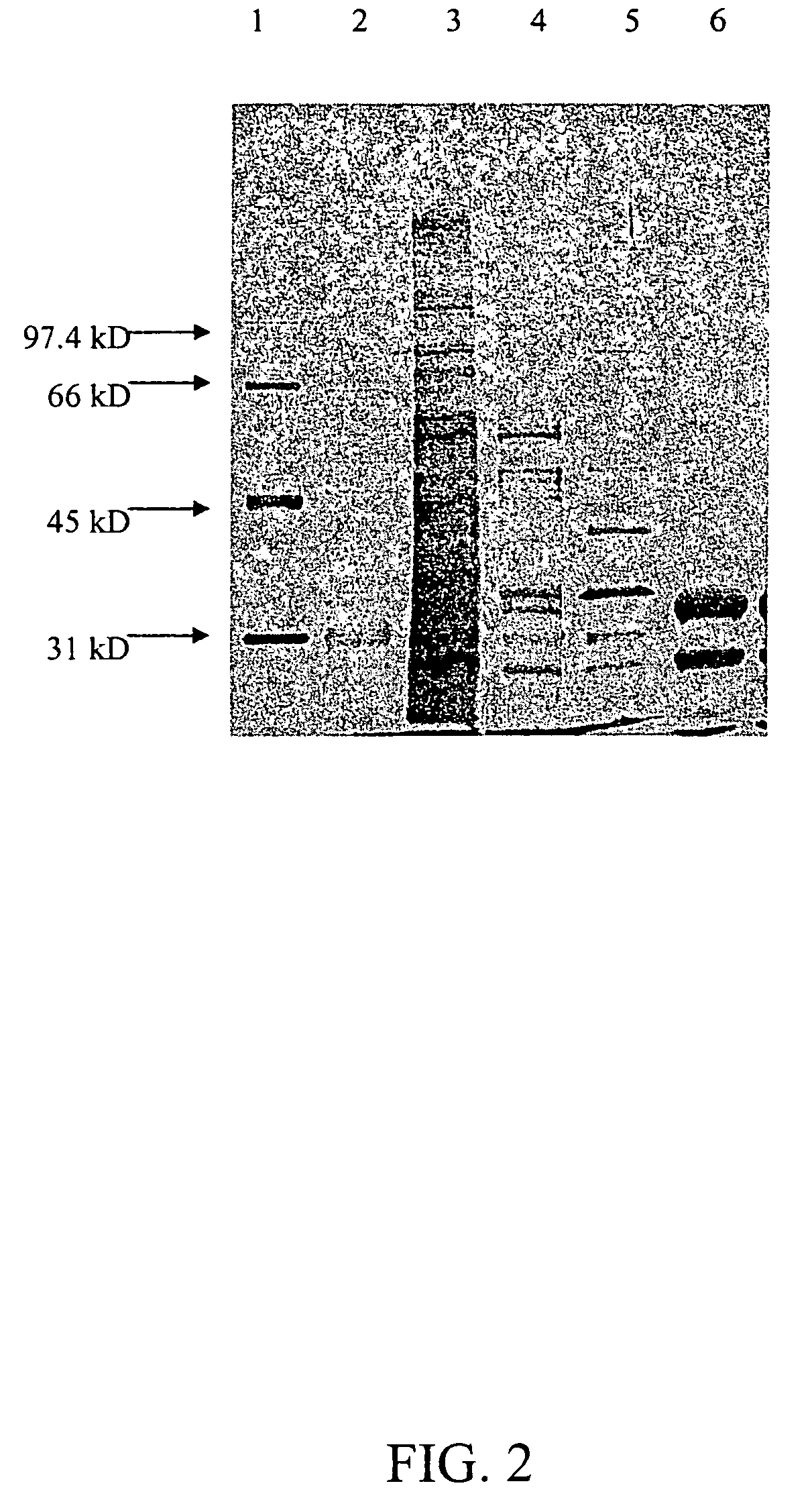
[0043]To purify enzymatically active elisabethatriene cyclase, CFE sa...
example 2
Cyclizing GGPP to Elisabethatriene
[0046]Using elisabethatriene cyclase purified by column chromatography as described in Example 1, GGPP was cyclized to elisabethatriene. To carry out the reaction, incubations were performed by incubating 3H-GGPP (1 μCi) with purified elisabethatriene cyclase-containing fractions from chromatography columns at 27° C. for 1-4 hours. Purified cyclase elisabethatriene preparations analyzed catalyzed the cyclization of GGPP to elisabethatriene. Adding protease inhibitors (e.g., pepstatin, leupeptin and chymostatin) in this process did not increase the enzymatic activity of the fractions as judged by the formation of pseudopterosins.
example 3
Pseudopterosin Biosynthesis
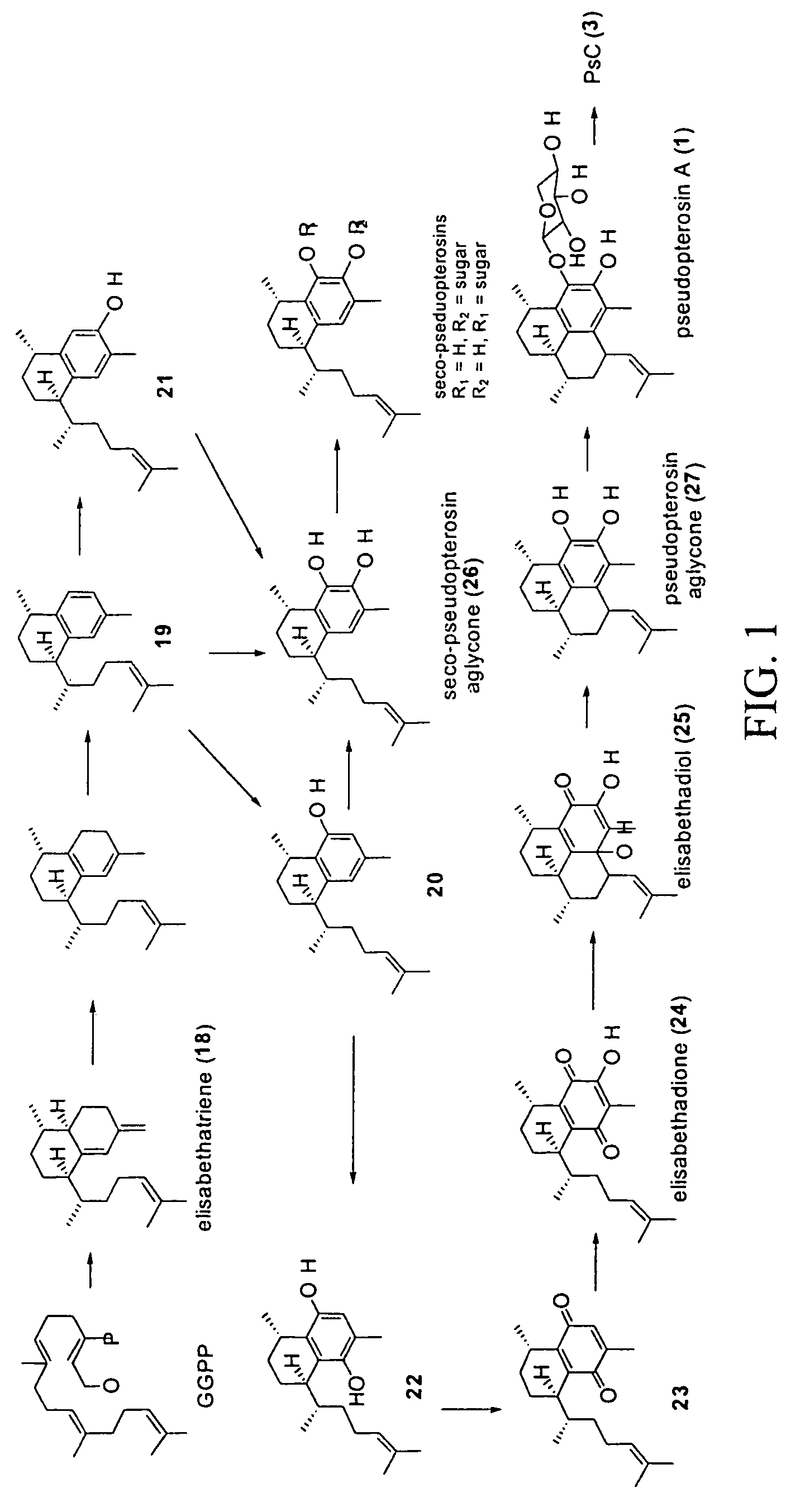
[0047]Pseudopterosin biosynthesis was characterized by performing a detailed chemical analysis of specimens of P. elisabethae collected in diverse geographic locations. P. elisabethae were collected from three regions of the Bahamas and a recently discovered site in the Florida Keys. From very careful analyses of these samples, over 20 metabolites, many of which are potential intermediates in the pseudopterosin / seco-pseudopterosin biosynthetic pathway (e.g., compounds 18, 19, 20, 22, 24, 25, 27) were identified. Experiments were carried out to confirm the intermediacy of a number of these metabolites. These experiments suggested the pathway shown in FIG. 1 as the metabolic origin of this group of diterpenes.
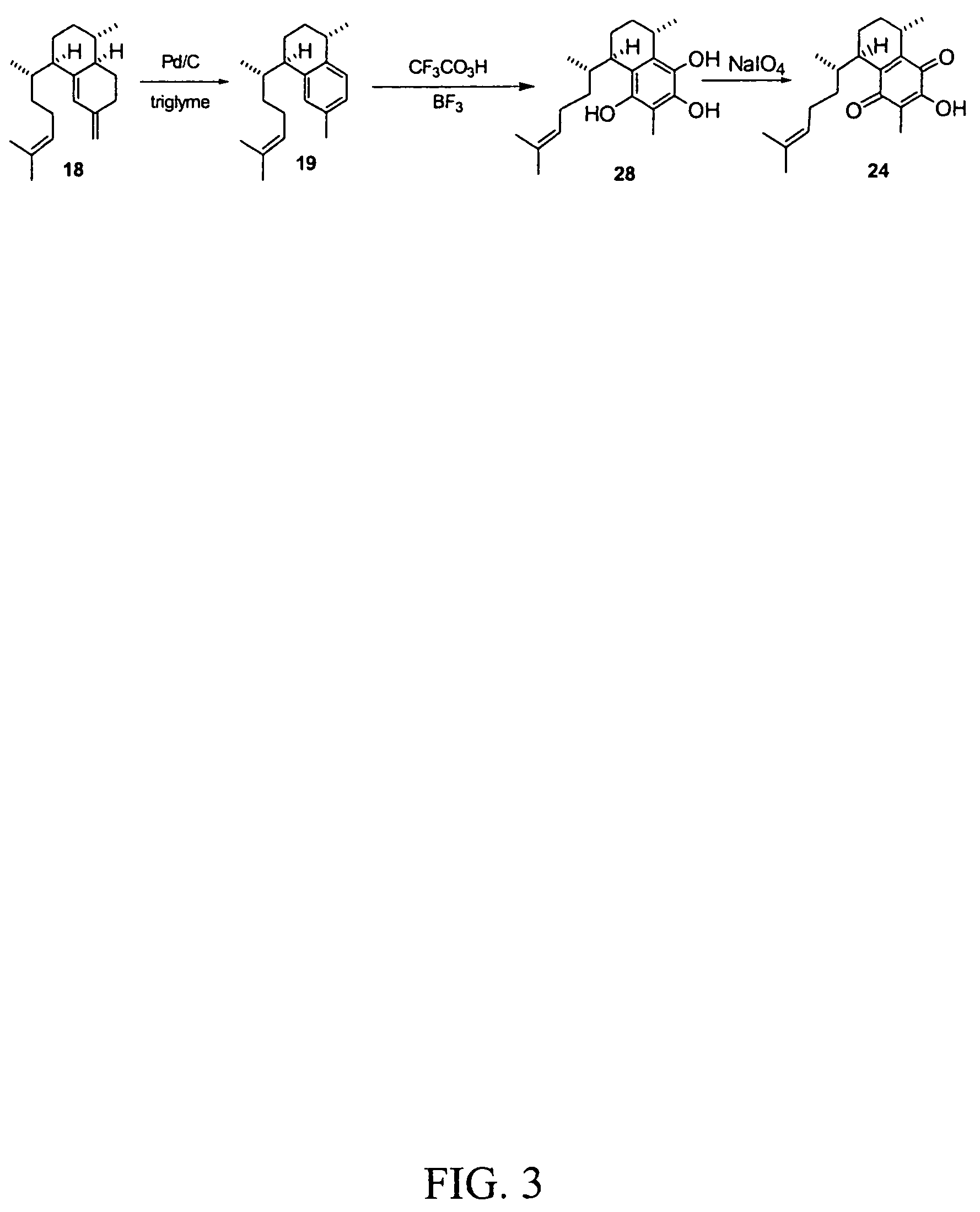
[0048]Using purified elisabethatriene cyclase coupled with other known chemical methods, various pseudopterosins can be made from a GGPP substrate. Referring to FIGS. 1 and 3, the first step of the chemical transformation of elisabethatriene to elisabet...
PUM
| Property | Measurement | Unit |
|---|---|---|
| Mass | aaaaa | aaaaa |
| Atomic weight | aaaaa | aaaaa |
| Molecular weight | aaaaa | aaaaa |
Abstract
Description
Claims
Application Information
 Login to View More