Flight management system with precision merging

US7412324B1Active Publication Date: 2008-08-12ROCKWELL COLLINS INC
12 Cites 55 Cited by

Patent Information

Authority / Receiving Office
US · United States
Current Assignee / Owner
Publication Date
2008-08-12

Smart Images

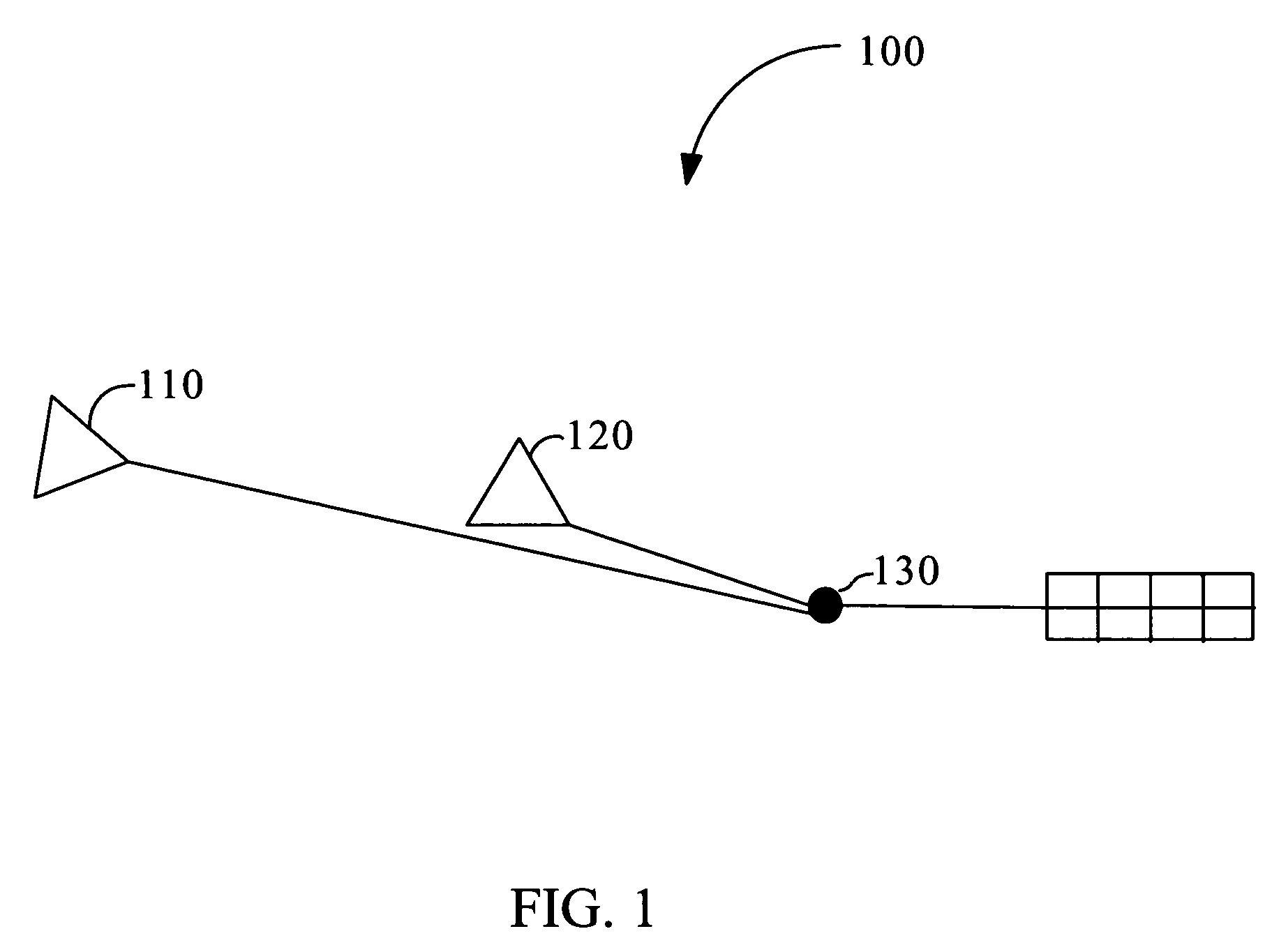
  • Figure 1
    Figure 1
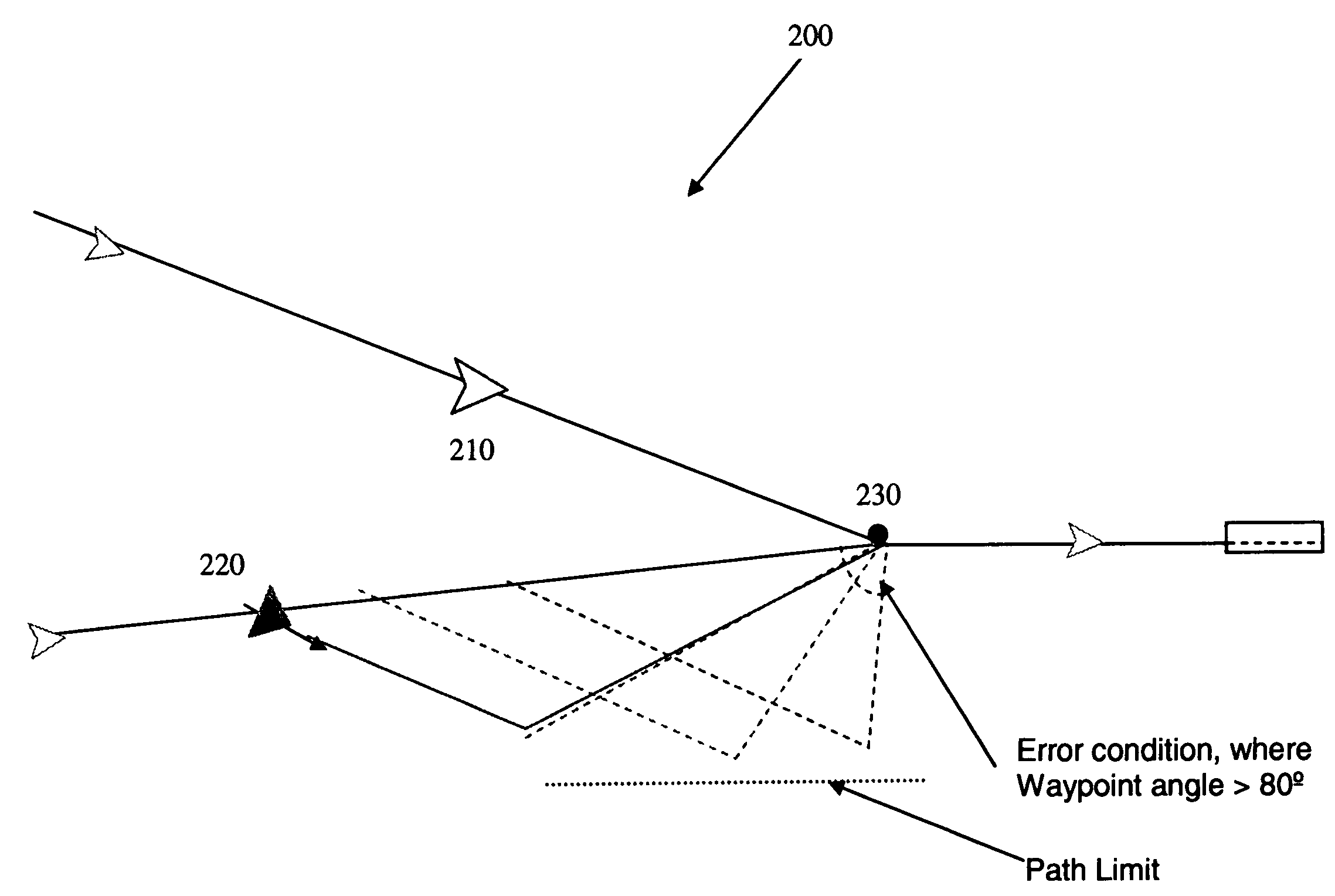
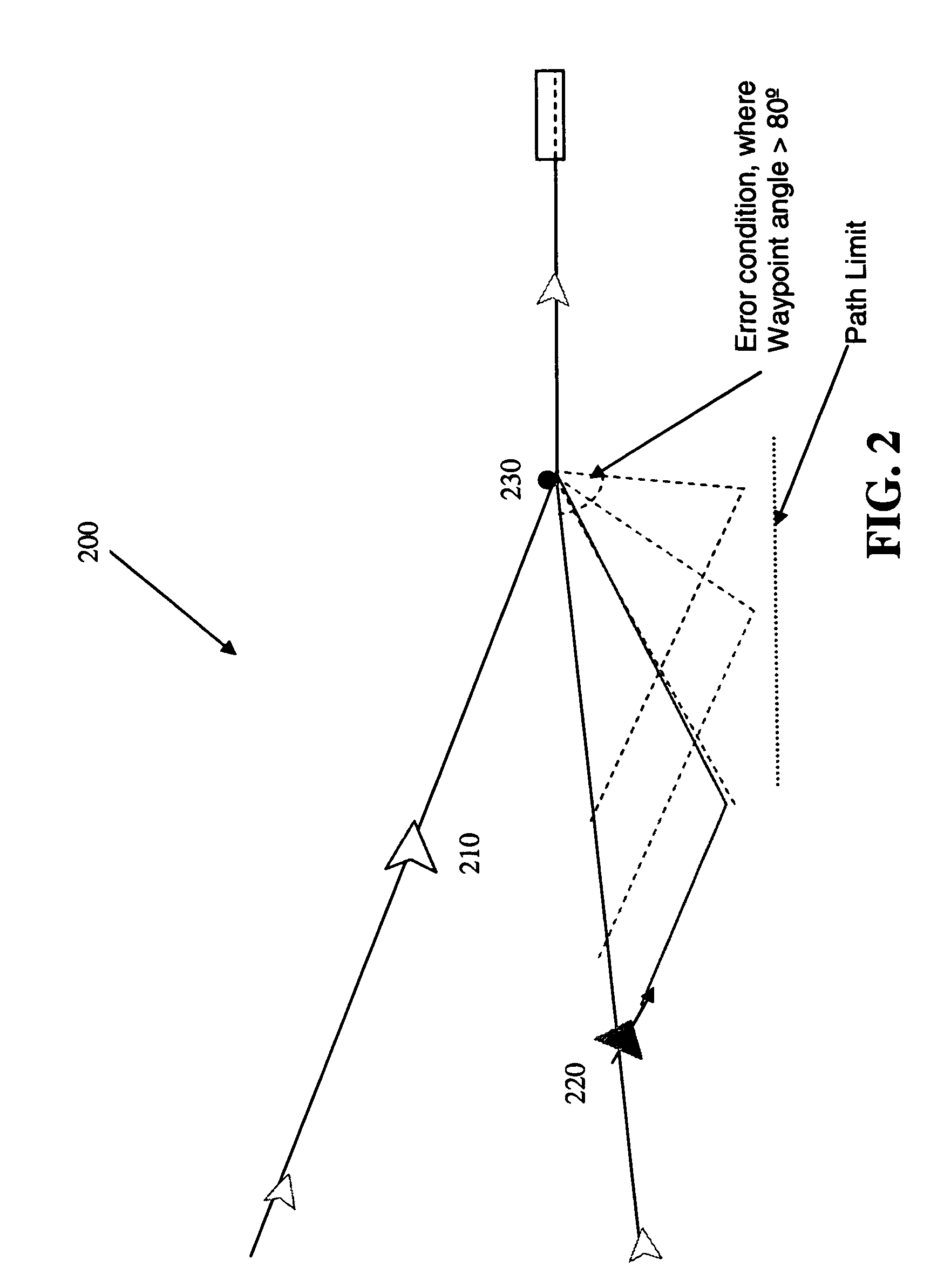
  • Figure 2
    Figure 2
  • Figure 3
    Figure 3
Patent Text Reader

Abstract

The present invention is a flight management system with precision merging that may determine a rejoin turn location based upon a heading to allow proper spacing between an aircraft and an identified target aircraft. The flight management system may monitor for deviation from assigned airspace, winds, turn radius and desired airport speed profile for the approach to further refine a turn-back location. Advantageously, a delay in landing of the target aircraft may not affect the landing approach of other aircraft. This may result in more accurate spacing between aircraft which are closer to the allowed separation minima and may provide an increase in capacity especially in high-density areas.
Need to check novelty before this filing date? Find Prior Art

Description

FIELD OF THE INVENTION

[0001] The present invention relates generally to aircraft control; and more particularly to a system and method of precision merging of aircraft while maintaining safe separation among aircraft.BACKGROUND OF THE INVENTION

[0002] The use of aircraft is vital for transporting individuals and shipping products. During peak travel times, over five thousand airplanes may be in the sky each hour in the United States. Air traffic controllers direct each aircraft in the air to ensure safe operation of each aircraft and to maintain a safe distance between each aircraft.

[0003] Airspace around airports is especially congested. This problem is exacerbated at large airports where many aircraft are departing and landing in short intervals of time. An air traffic controller may direct a pilot to adjust an aircraft's heading, speed and altitude to begin the runway approach. Air traffic controllers base their directions to each aircraft to establish an efficient approach procedure...

Examples

Embodiment Construction

[0015]Reference will now be made in detail to a presently preferred embodiment of the invention, an example of which is illustrated in the accompanying drawings.

[0016]Referring generally to FIGS. 1-8, a method and system for efficient landing of aircraft while maintaining safe separation among aircraft is shown. When multiple aircraft are in airspace in proximity to an airport, each aircraft are directed individually through multiple instructions and landing procedures. Conventionally, this has been under the control of air traffic controllers. Because of the need to maintain a safe separation between aircraft, buffers are included within the directions provided by the air traffic controller. This results in inefficient landing of aircraft.

[0017]A flight management system of the present invention may be proceeding on a heading and then may automatically direct the flight crew to an appropriate landing procedure while maintaining minimal spacing between the aircraft and a target airc...