[0007]A
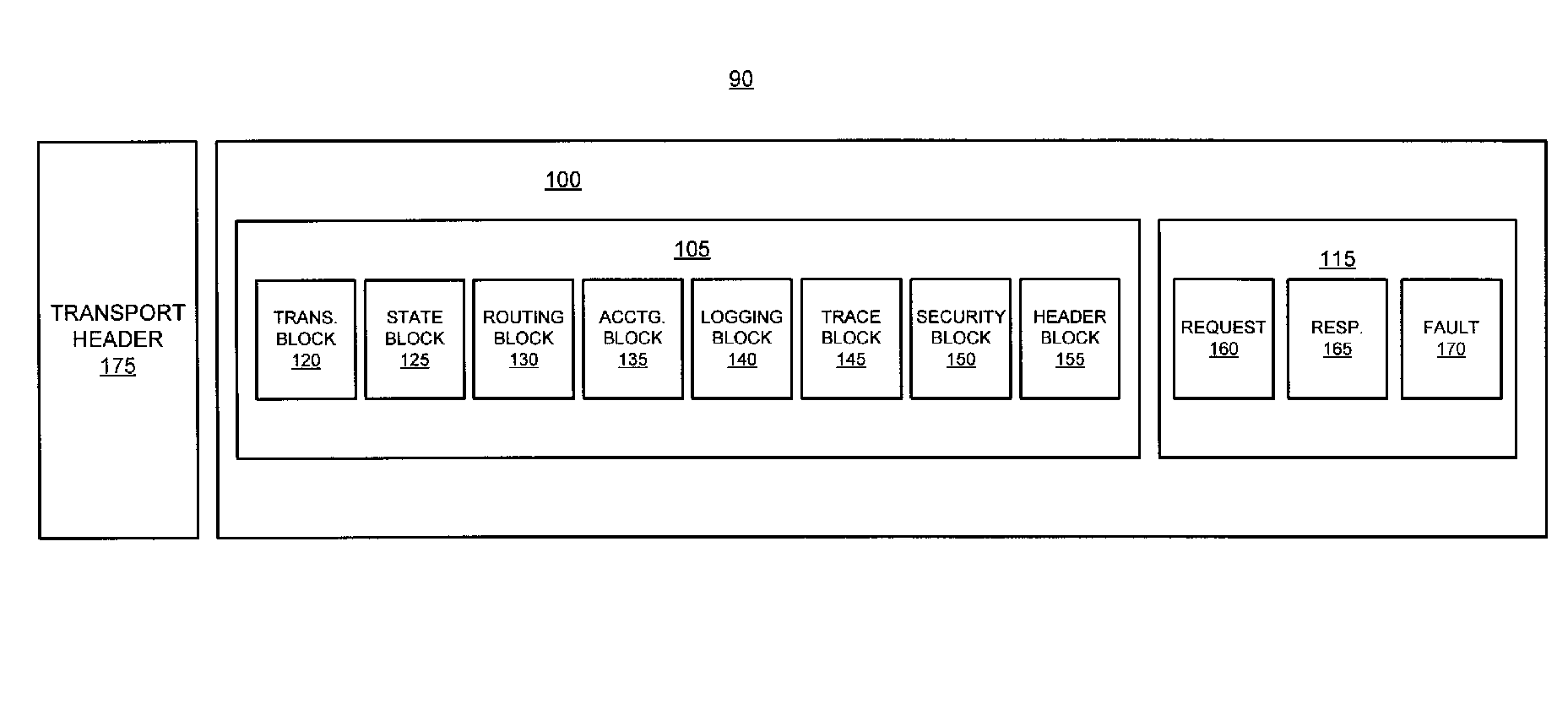
system and method for defining a standard envelope structure for components to use for their service messages. In one embodiment, the envelope structure includes several header data blocks, wherein each block is defined to meet the needs of a specific infrastructure capability common to component messaging. The envelope structure also defines two body data blocks as a general framework for the service to use when accepting or returning
business data. The
message structure and its blocks provide a framework for physical transformations of messages, allowing components to be loosely coupled across a heterogeneous technology environment. The
message structure provides a single framework that every component project can leverage, thereby reducing development time. This framework advances a single solution to the challenges of multiple technologies and a common system and method of linking to EMI infrastructure capabilities. A single framework allows a standard set of handling logic to be implemented within the EMI, reducing
deployment time and maintenance costs. Without a standard framework, these transformations may not be handled in a uniform manner. The system and method is particularly beneficial with the adoption of adaptive architecture approaches emphasizing component-based and message-oriented solutions.
[0008]The system and method include a specific solution to
coupling infrastructure capabilities within a message between the two principal components and a solution for transformational elements. The EMI message structure may be considered an
adaptation of some
Web Service standards to an
Enterprise Application Integration (EAI) solution with specific focus on solving common infrastructure capability needs. The single message
structure pattern leads to a more consistent, higher quality, lower cost service environment. The message structure also helps to standardize how corporations create services, which results in more consistent deliverables with decreased development time, development cost, and overall project risk.
[0009]In one embodiment, the message structure is an extension and
adaptation of a basic messaging protocol as specified by the W3C
SOAP 1.1 Specification, which is incorporated by reference.
SOAP simply specified a message as an envelope consisting of an optional header and a body, wherein the messages are sent using the HTTP transport protocol. SOAP only defined one internal block, namely a
fault block that could appear within the body. The message structure defines two standard body blocks, namely a request and a response. These blocks are only patterns, but still provide development time savings to each component's
development team. The message structure also answers a technology challenge, allowing components to be loosely coupled despite having different technologies at play at the individual endpoints. The standard Header blocks provide a place to preserve data when transformations occur, while moving between transport protocols (e.g., HTTP or MQ) or converting the message language (e.g., between
COBOL- or another fixed-format language—and
XML).
[0010]More particularly, the method facilitates creating a standard envelope structure with defined data blocks by, for example, creating a first request message within a first
programming language; creating a request mark-up language envelope from the first request message; converting the request mark-up language envelope to a second request message within a second
programming language;
processing the second request message; creating a response message within a second
programming language, wherein the response message is based upon the results of the
processing of the second request message; and, creating a response mark-up language envelope from the response message. Creating a response message within a second
programming language includes, for example: creating a first response message within a second
programming language; creating a response mark-up language envelope from the first response message; converting the response mark-up language envelope to a second response message within a first
programming language; and, processing the second response message.



 Login to View More
  Login to View More