The complement cascade, however, if inappropriately activated, can cause a significant amount of inflammation, tissue damage, and other disease states such as the autoimmune diseases.
Complement activation during immunotherapy with recombinant IL-2 appears to cause the severe toxicity and side effects observed from IL-2 treatment (Thijs et al., 1990).
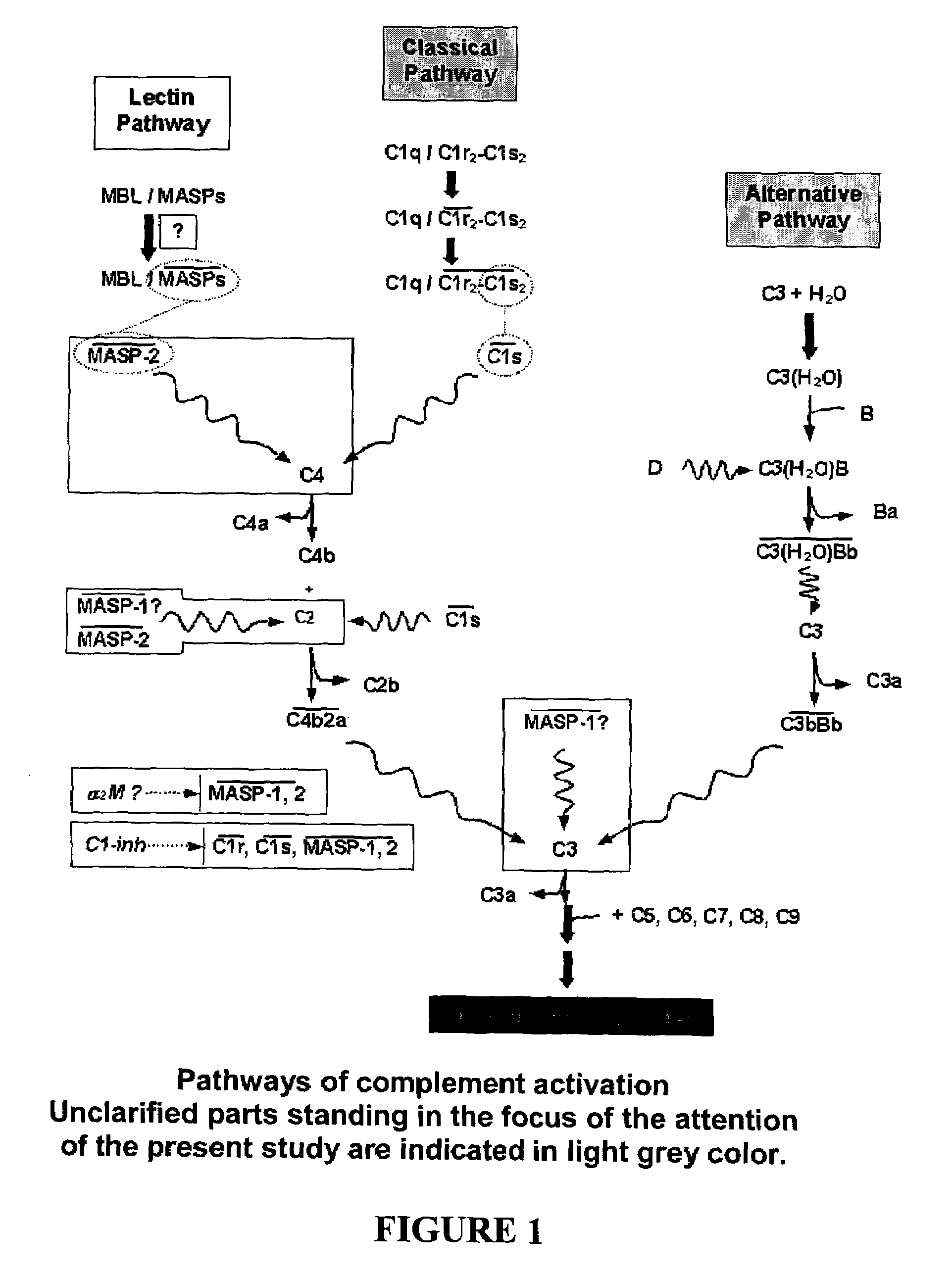
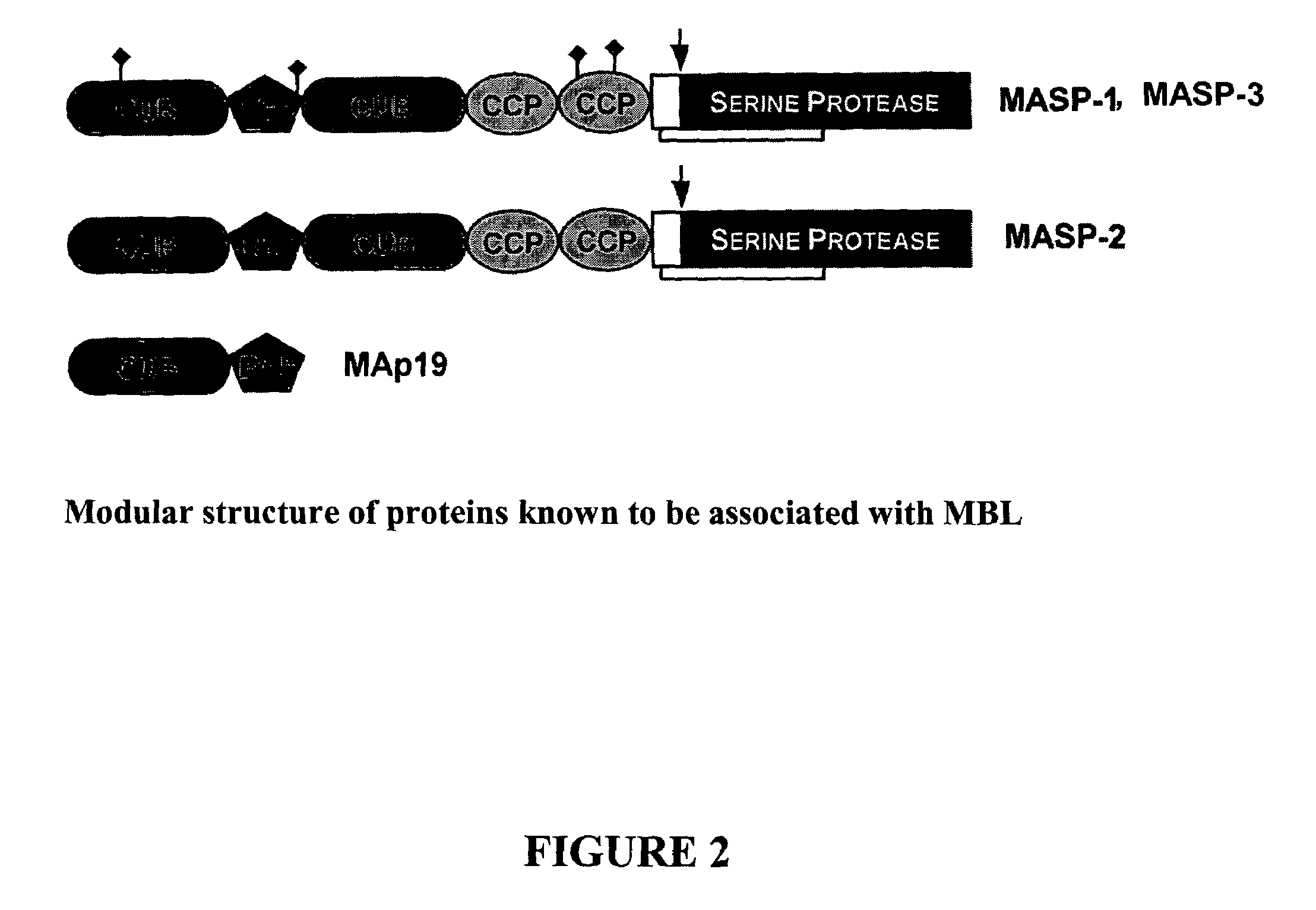
Although the lectin pathway was discovered more than a decade ago (Kawasaki, 1989), there are many uncertainties concerning the composition of the activation complex and the substrate specificities of the MBL-associated serine proteases (MASPs).
MASP-1 was shown to cleave C3 and C2 (Matsushita, 2000), but this action may not be sufficient for direct complement activation (Rossi, 2001).
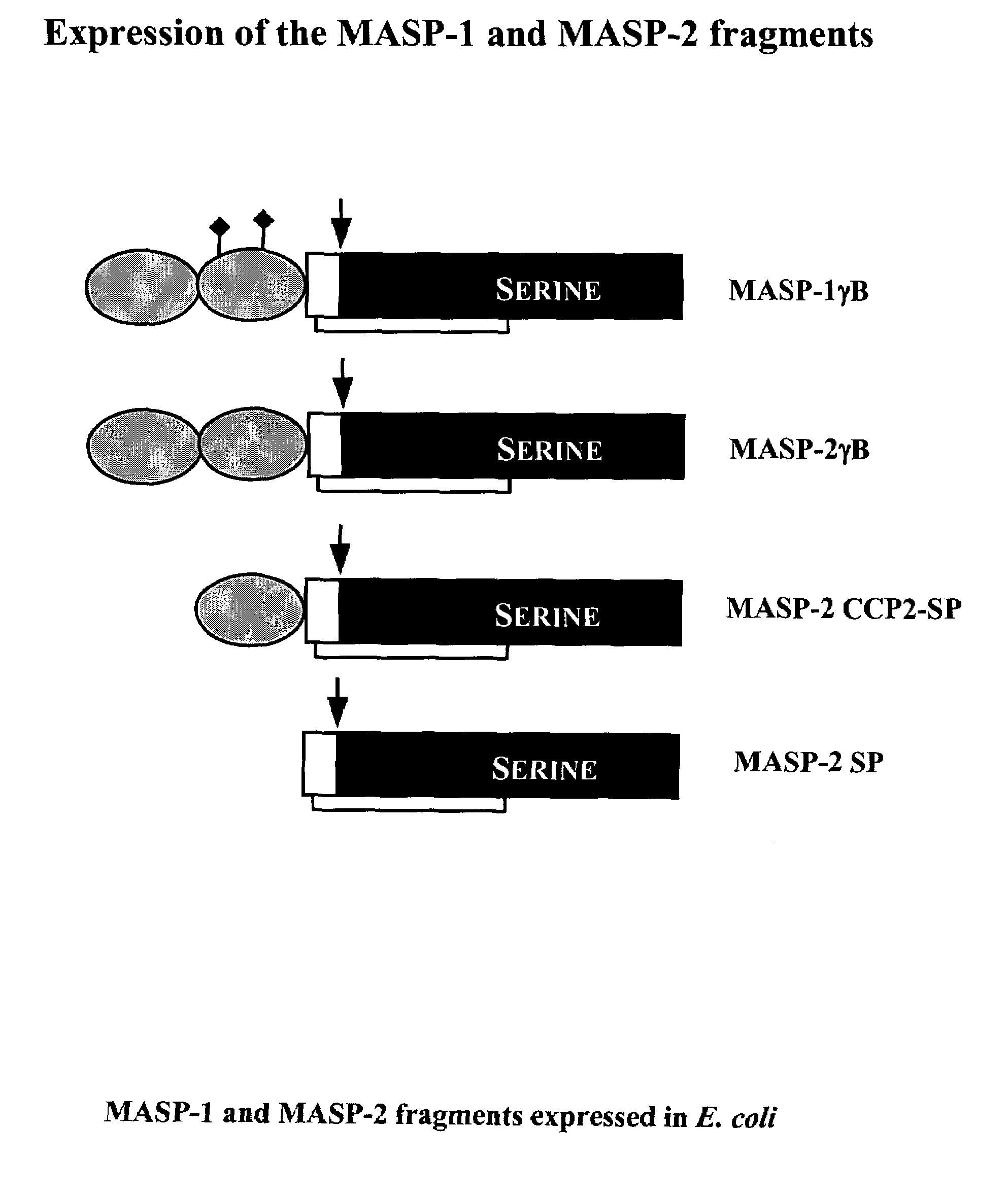
However, the contribution of the individual domains to the enzymatic properties of MASP-2 has not yet been determined.
Moreover, the autoactivation mechanism was unclear.
The main reason for these uncertainties concerning biological function of these proteases is the lack of availability of active and / or native recombinant proteins in a sufficient quantity and purity.
The functional characterization has been retarded by the fact that their serum concentration is very low (in the case of MASPs: [MASP-1]=6 μg / ml, [MASP-2]≈2 μg / ml) (Hajela, 2002) which rendered their isolation extremely difficult.
Most MASP preparations obtained from serum were usually cross-contaminated with other MASP species.
Therefore, precise experiments could not be carried out in many cases.
Also, though methods for determining in vivo levels of a mixture of MASPs have been known (e.g. U.S. Pat. No. 6,235,494 and U.S. Pat. No. 6,294,024) assessing MASP-1 and MASP-2 levels, differentiating one from the other, caused problems according to the art.
In general, due to the lack of sufficiently pure preparations antibodies for native MASP proteins could not be produced according to the art with a good reliability.
Similarly, a search for drugs, e.g. inhibitors, alleviating symptoms associated with overactivity of the complement system had been greatly hindered by the lack of availability of folded, possibly active fragments of key multidomain serine proteases of the complement system.
Also, in lack of a reliable and effective system for the recombinant preparation of fragments of complement serine proteases associated with recognition molecules of the complement system mutation studies and genetic engineering of them were difficult and the outcome was difficult to interpret.
Last but not least methods of the art for producing MASP proteins and fragments were relatively expensive and cumbersome: cheaper and more effective methods were needed.
However, recombinant expression of the full-length MASPs provided serious difficulties.
However, the protein was not recombinantly prepared.
Moreover, the preparation process was prolonged and complicated.
Rossi et. al. expressed full-length human MASP-1 and MASP-2 in a baculovirus insect cell system, but due to the very low yield the proteases could not be purified to homogeneity (Rossi, 2001).
However, CCP-SP fragment of MASP-2 could not be successfully produced in the baculovirus expression system (Rossi et al., 2001).
Moreover, expression in a baculovirus / insect cell system has obviously several disadvantages from the economic point of view that is relatively low yield, high costs and the complexity of purification process.
Moreover proteins secreted from the insect cells are subject to a possible protease attack.
The yield of the secreted recombinant proteins, however, was found to be low.
Despite a great number of proteins successfully renatured, protein refolding remains a problem to be solved on a case-by-case basis [Rudolph and Lilie, (1996)].
Nevertheless, even in the recent past protein refolding was considered as an extremely difficult task.
Moreover, to the best of Inventors' knowledge, multidomain serine proteases, in particular of human origin, have not been prepared in a folded form in a prokaryotic expression system.
After the failure of methods at hand, Inventors used a variety of additives and removed them in a stepwise manner which, of course, raises costs.
In spite of this, no unambiguously positive results were obtained.



 Login to View More
  Login to View More