
Optical atomic magnetometer
a magnetometer and optical atomic technology, applied in the field of magnetometers, can solve the problems of low sensitivity, lack of compactness, and/or high energy demands
- Summary
- Abstract
- Description
- Claims
- Application Information
AI Technical Summary
Benefits of technology
Problems solved by technology
Method used
Image

Examples
Embodiment Construction
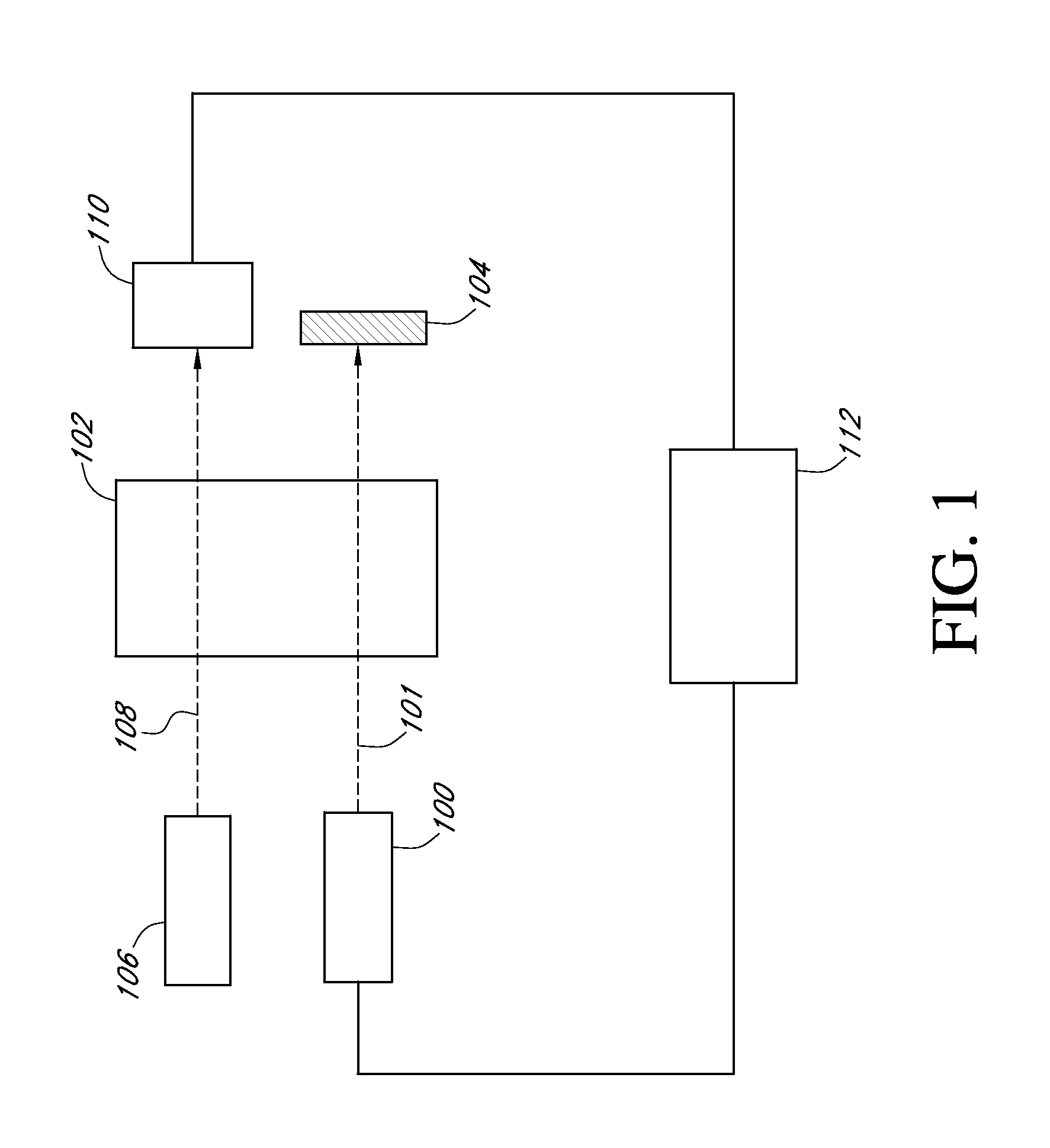
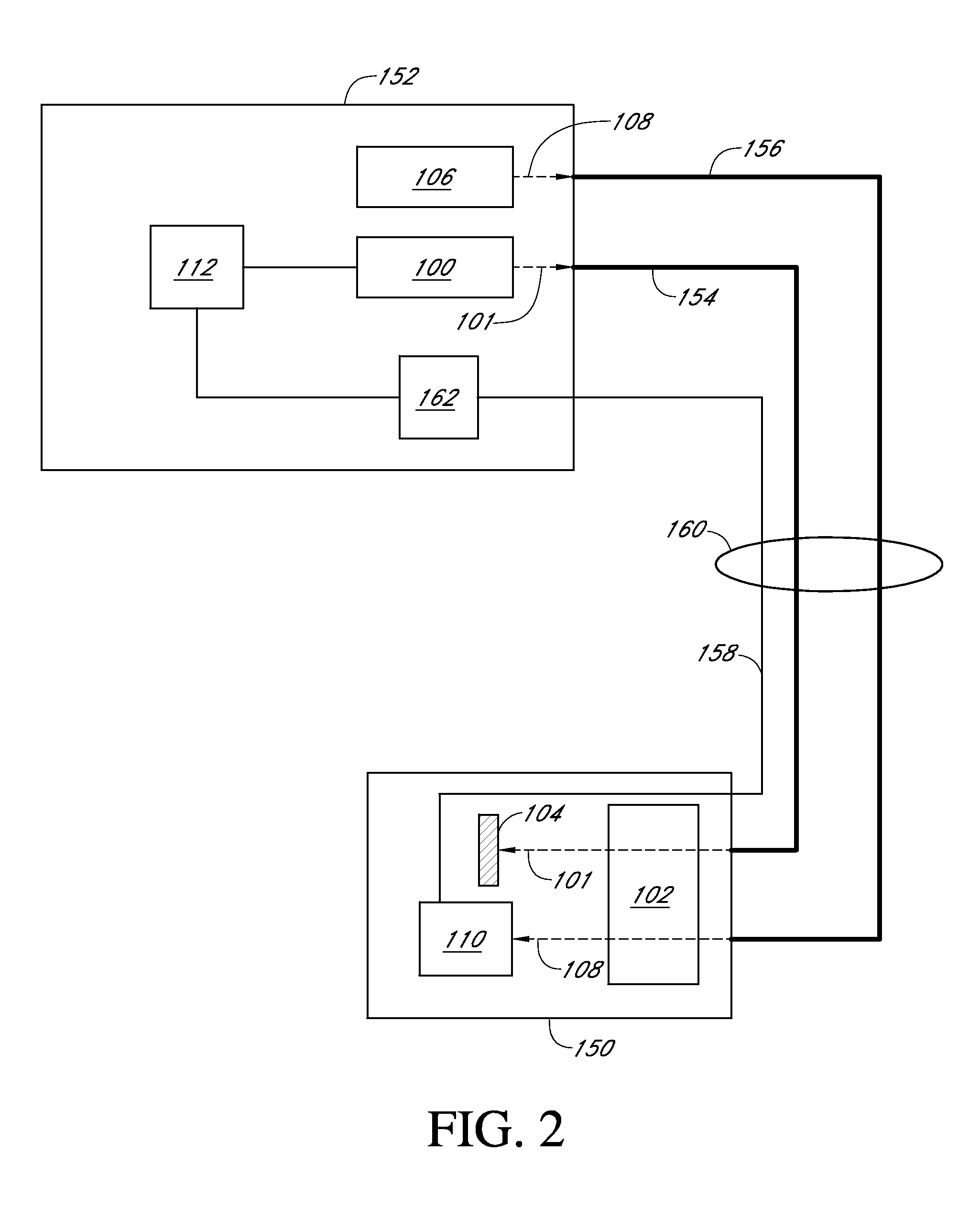
[0023]One embodiment includes a magnetometer that utilizes nonlinear magneto-optical rotation (NMOR) with a modulated pump light source and a non-modulated probe light source. An NMOR resonance occurs when optical pumping causes an atomic vapor to become dichroic (or birefringent), so that subsequent probe light experiences polarization rotation. In one embodiment, both pump and probe light are linearly polarized and therefore primarily produce and detect atomic alignment (Δm=2 coherences). Magnetic-field dependence of the polarization rotation originates from the fact that the atomic spins undergo Larmor precession in the presence of an external magnetic field. Weak optical pumping can only produce a macroscopic alignment when the Larmor precession frequency is small compared to the spin relaxation rate, or alternatively, when optical pumping is modulated nearly synchronous with precession. If the optical-pumping rate is modulated at a frequency ν, then the optical-rotation angle o...
PUM
 Login to View More
 Abstract
Description
Claims
Application Information
 Login to View More