

Methods and apparatus for using sensors with a deep brain stimulation system
a brain stimulation and sensor technology, applied in the field of deep brain stimulation system methods and apparatus, can solve the problems of over-treatment and/or under-treatment, side effects, increase in irregular eye movement, etc., and achieve the effect of minimizing the side effect of the stimulus
- Summary
- Abstract
- Description
- Claims
- Application Information
AI Technical Summary
Benefits of technology
Problems solved by technology
Method used
Image

Examples
example 1
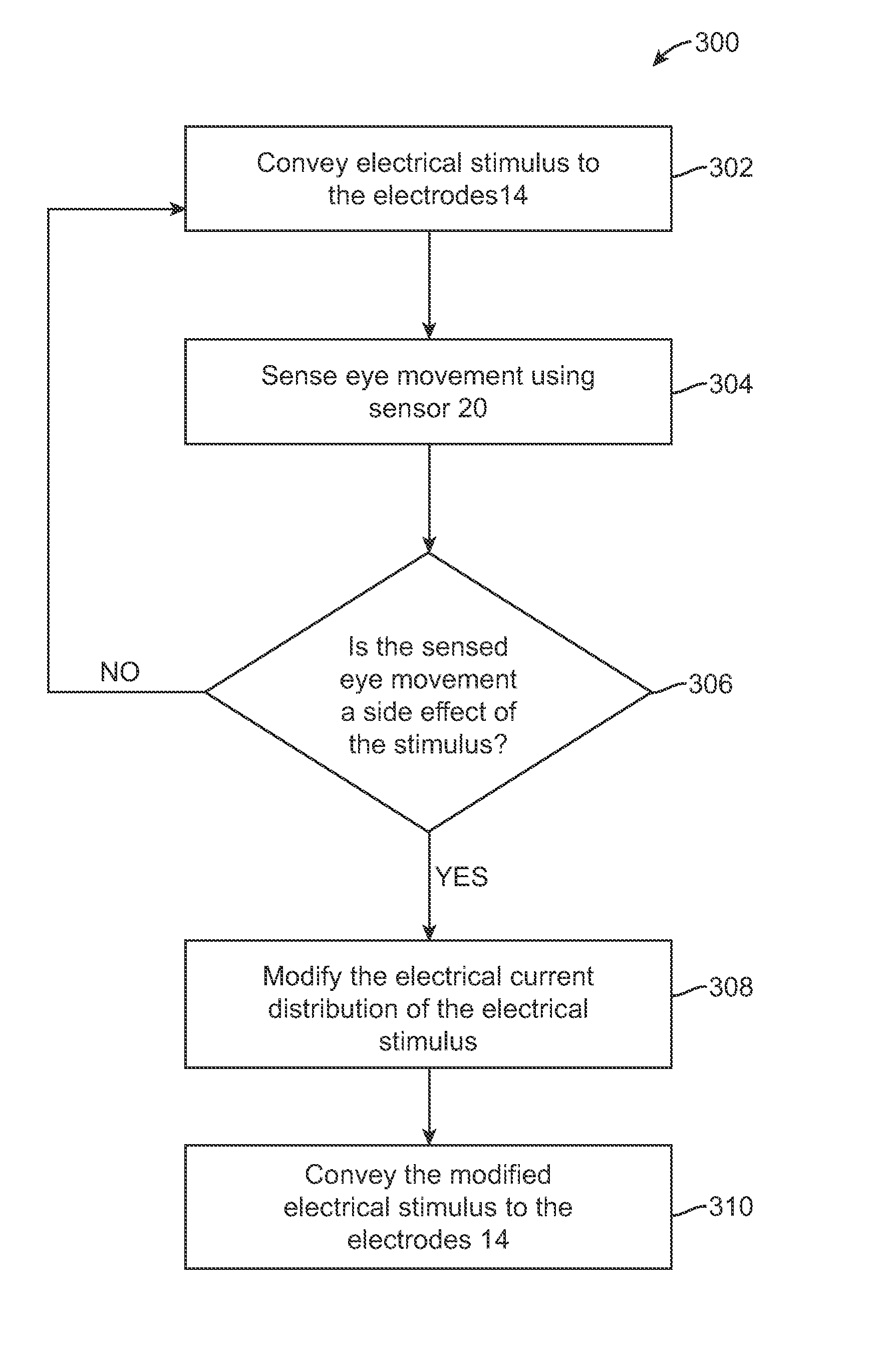
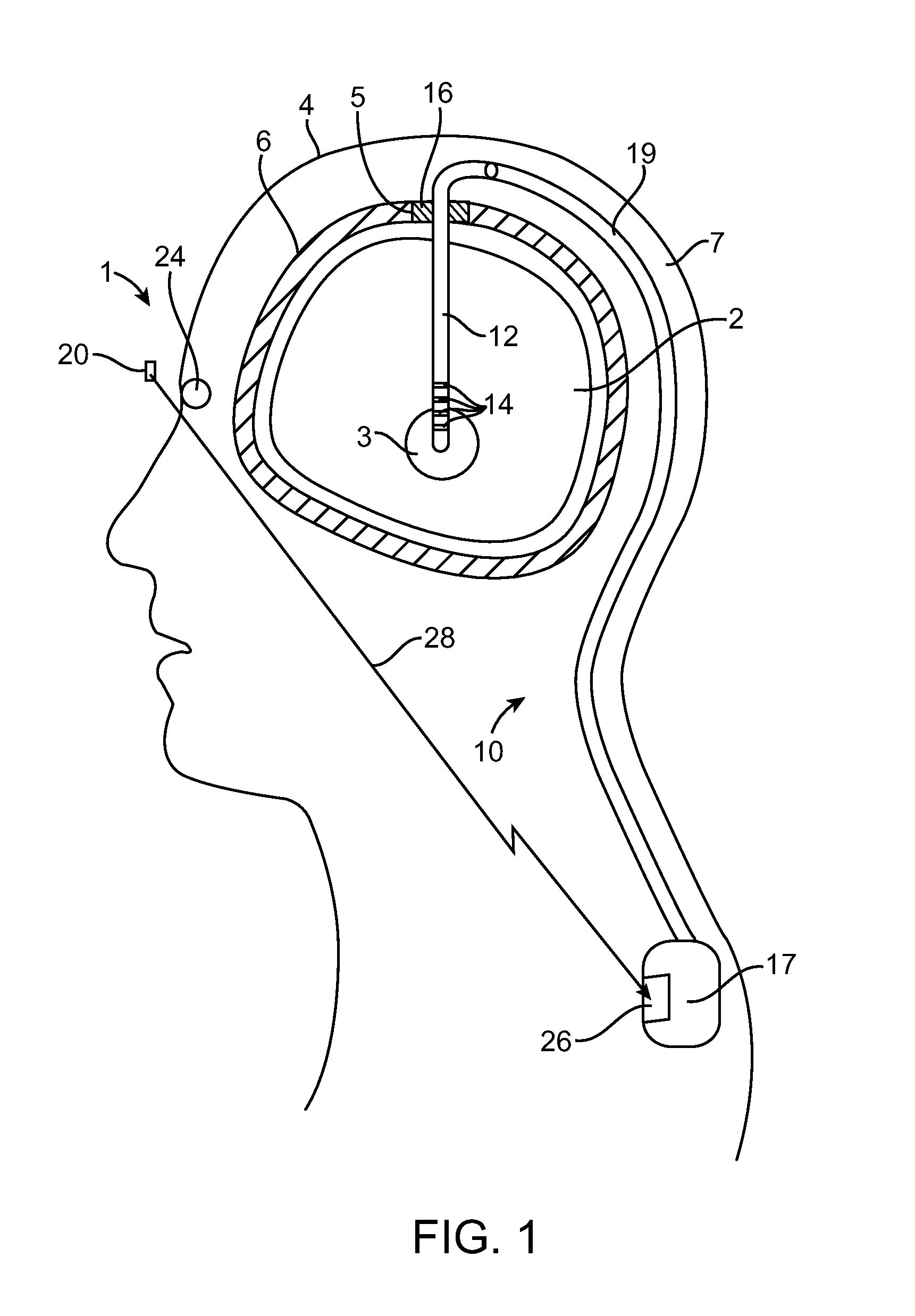
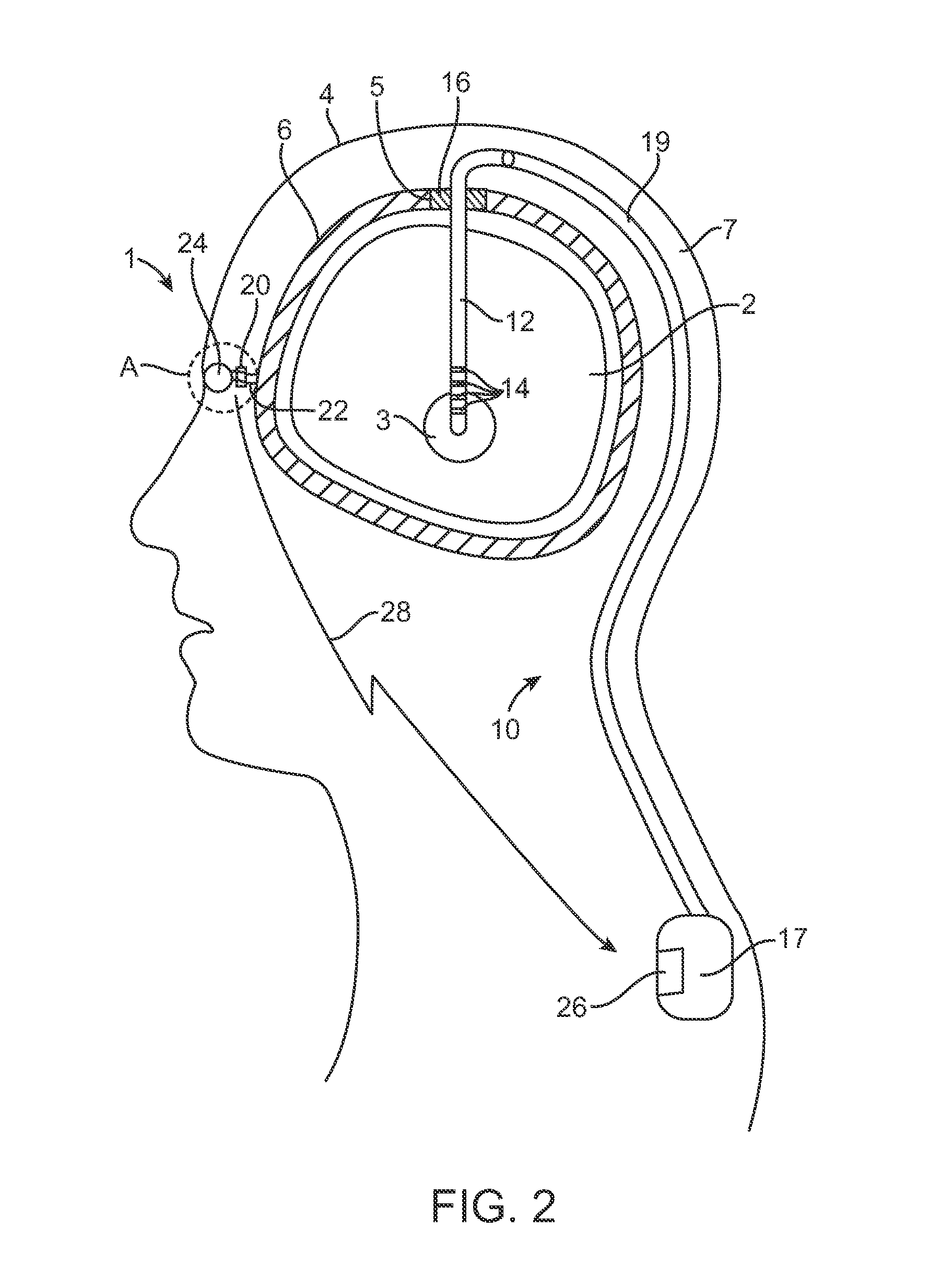
[0035]In a first example, an electrical stimulus is conveyed through the electrodes 14 and eye movement is sensed by the sensor 20. Upon analyzing the sensed eye movement, the processor 26 determines that apraxia of lid opening is occurring. Apraxia of lid opening is a side effect of DBS wherein the patient's eyelid is lowered due to inactivity in the levator palpebrae superioris 42, shown in FIG. 4. The levator palpebrae superioris 42 is innervated by the oculomotor nerve, which is controlled by the oculomotor nuclear complex. Trigeminothalamic fibers provide inhibitory input to the central caudal nucleus, a posterior central subnucleus of the oculomotor nuclear complex. Thus, electrical stimulation of trigeminothalamic fibers adjacent to the STN may cause inhibition of the levator palpebrae superioris, resulting in apraxia of lid opening. Thus, in response to the apraxia of lid opening, the processor 26 modifies the electrical current distribution of the stimulus in order to steer...
example 2
[0036]In a second example, an electrical stimulus is conveyed through the electrodes 14 and eye movement is sensed by the sensor 20. Upon analyzing the sensed eye movement, the processor 26 determines that downward movement and adduction of only one eyeball is occurring. Such downward movement and adduction of a single eyeball indicates that the superior rectus 44, inferior rectus 46, inferior oblique 48 and medial rectus 50 muscles of the single eye, all of which are depicted in FIG. 4, are being over-stimulated by the DBS treatment. The superior rectus 44, inferior rectus 46, inferior oblique 48 and medial rectus 50 are all innervated by the oculomotor nerve. Thus, in response to the downward movement and adduction of the one eyeball, the processor 26 modifies the electrical current distribution of the electrical stimulus in order to steer the current away from the oculomotor nerve on the lead that is associated with the one eyeball that experiences this side effect. The current m...
example 3
[0037]In a third example, an electrical stimulus is conveyed through the electrodes 14 and eye movement is sensed by the sensor 20. Upon analyzing the sensed eye movement, the processor 26 determines that continuous deviation of both eyes is occurring. Such continuous deviation of both eyes indicates that the lead 12 is placed too laterally. Thus, in response to the continuous deviation of both eyes, the processor 26 modifies the electrical current distribution of the stimulus in order to steer the current in the dorsal direction, away from the fronto-pontine tract. Additionally or alternatively, the processor 26 may reshape the current field by decreasing the amplitude. A stimulus in accordance with the modified electrical current distribution is then applied to the target stimulation site 3 in order to treat the patient 1 (as shown in FIG. 1), while avoiding the side effect of continuous deviation of both eyes.
PUM
 Login to View More
 Abstract
Description
Claims
Application Information
 Login to View More