
Vehicle door control system and method
a technology for pneumatic doors and control systems, applied in the direction of fluid couplings, rotary clutches, couplings, etc., can solve problems such as system icing risk, and achieve the effect of energy efficient and reliabl
- Summary
- Abstract
- Description
- Claims
- Application Information
AI Technical Summary
Benefits of technology
Problems solved by technology
Method used
Image

Examples
Embodiment Construction
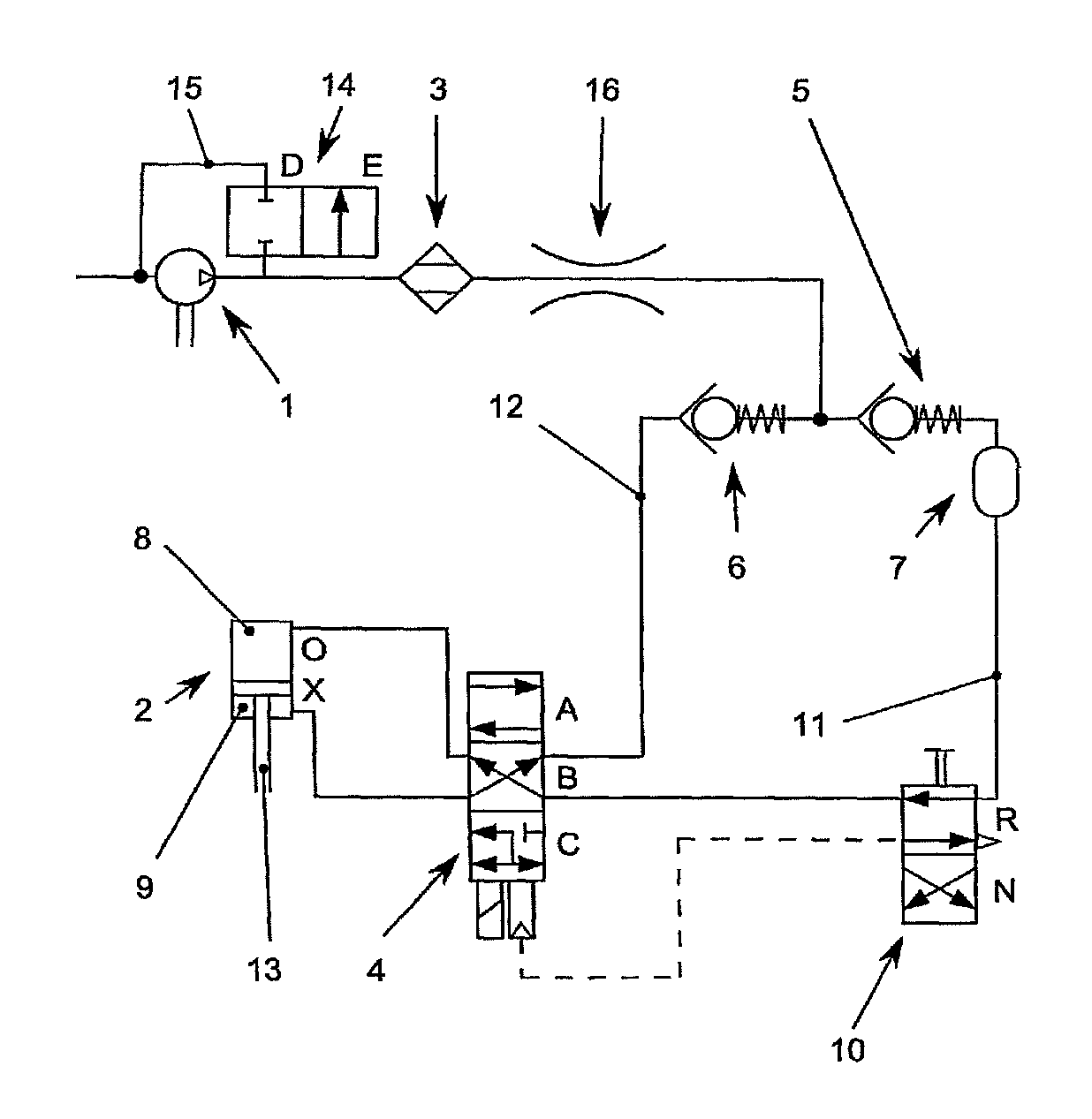
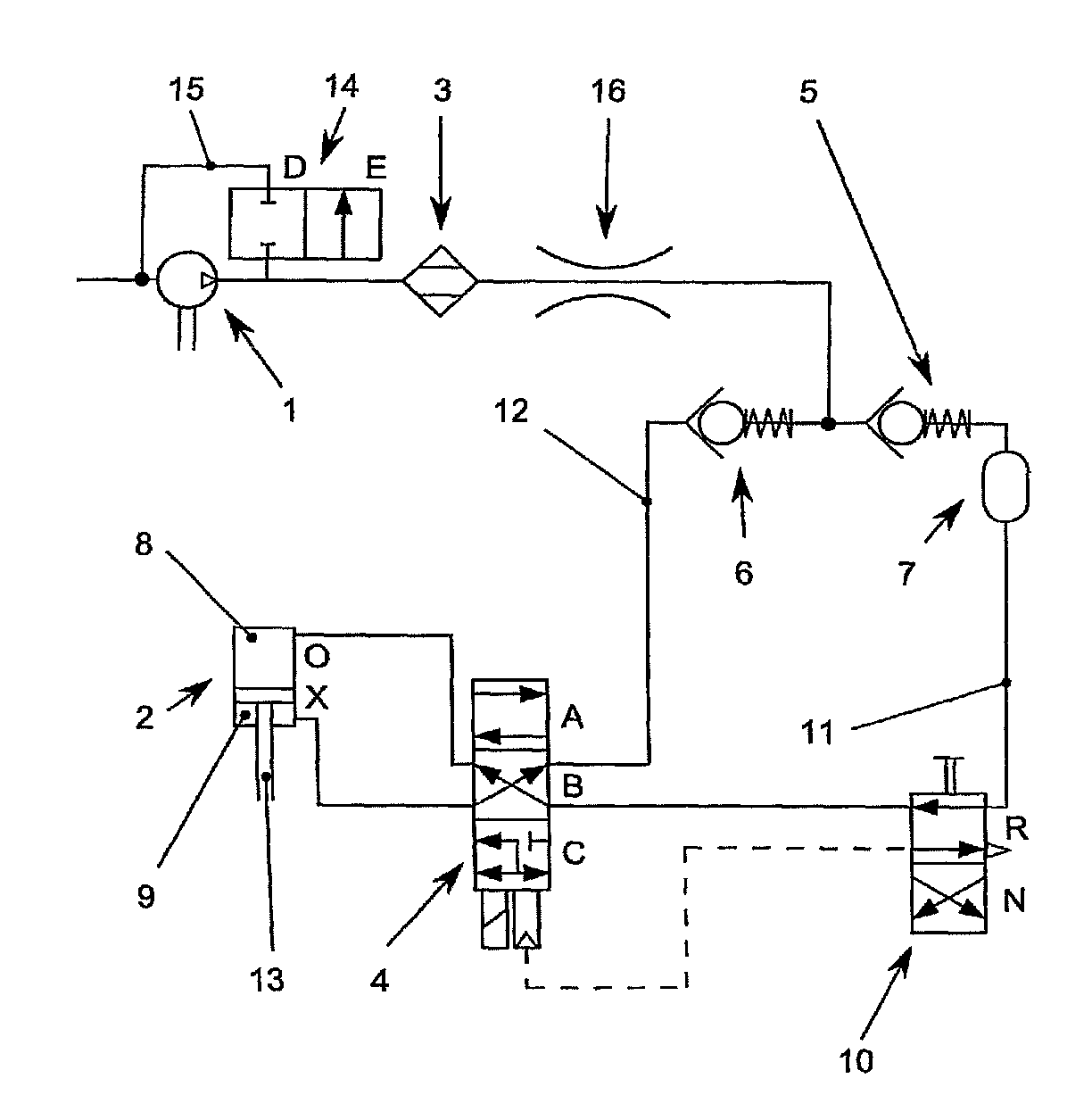
[0019]FIG. 1 is a schematic of a pneumatic door control system with a compressor 1 for producing compressed air, a cylinder 2 for operating a vehicle door, an air dryer 3 and a door control valve 4. The cylinder 2 has a first chamber 8 and a second chamber 9 that are separated from each other by means of a piston 13, which is movably arranged in the cylinder 2. The cylinder piston 13 can systematically occupy a first functional position O and a second functional position X, wherein the cylinder piston 13 occupies the second functional position X as soon as the first cylinder chamber 8 is pressurized. If the second cylinder chamber 9 is pressurized, then the cylinder piston 13 is in the first functional position O.
[0020]A switch between the first functional position O and the second functional position X is achieved by a change of a first switched position A and a second switched position B of the door control valve 4. In FIG. 1, the door control valve 4 is in the second switched pos...
PUM
 Login to View More
 Abstract
Description
Claims
Application Information
 Login to View More