
Managing computer performance
a computer and performance technology, applied in the field of managing computer performance, can solve the problems of increasing the cost of cooling costs, increasing the cost of removing all of the heat, and increasing the cost of operating large data centers, so as to maximize the performance of one or more computers, reduce the cooling cost, and minimize the cooling airflow rate directed to the computer(s).
- Summary
- Abstract
- Description
- Claims
- Application Information
AI Technical Summary
Benefits of technology
Problems solved by technology
Method used
Image

Examples
Embodiment Construction
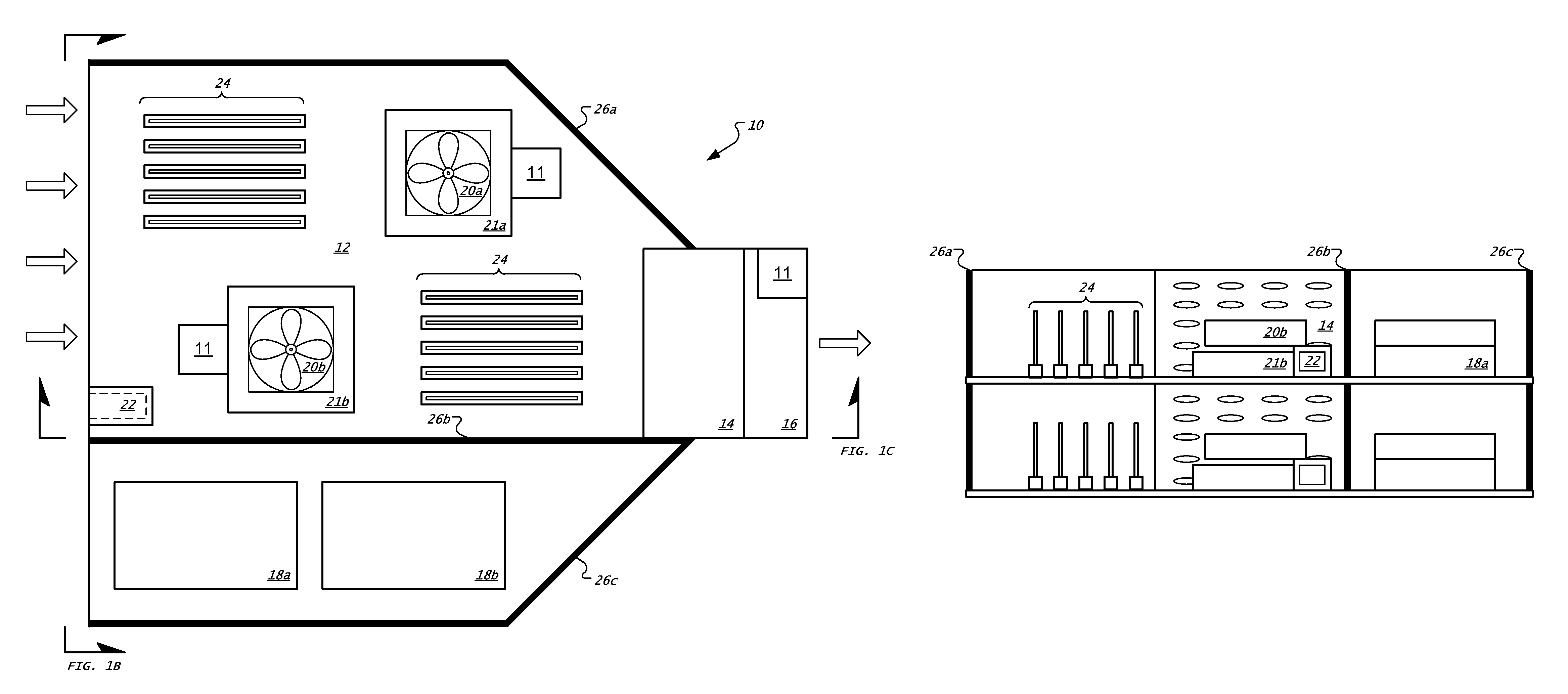
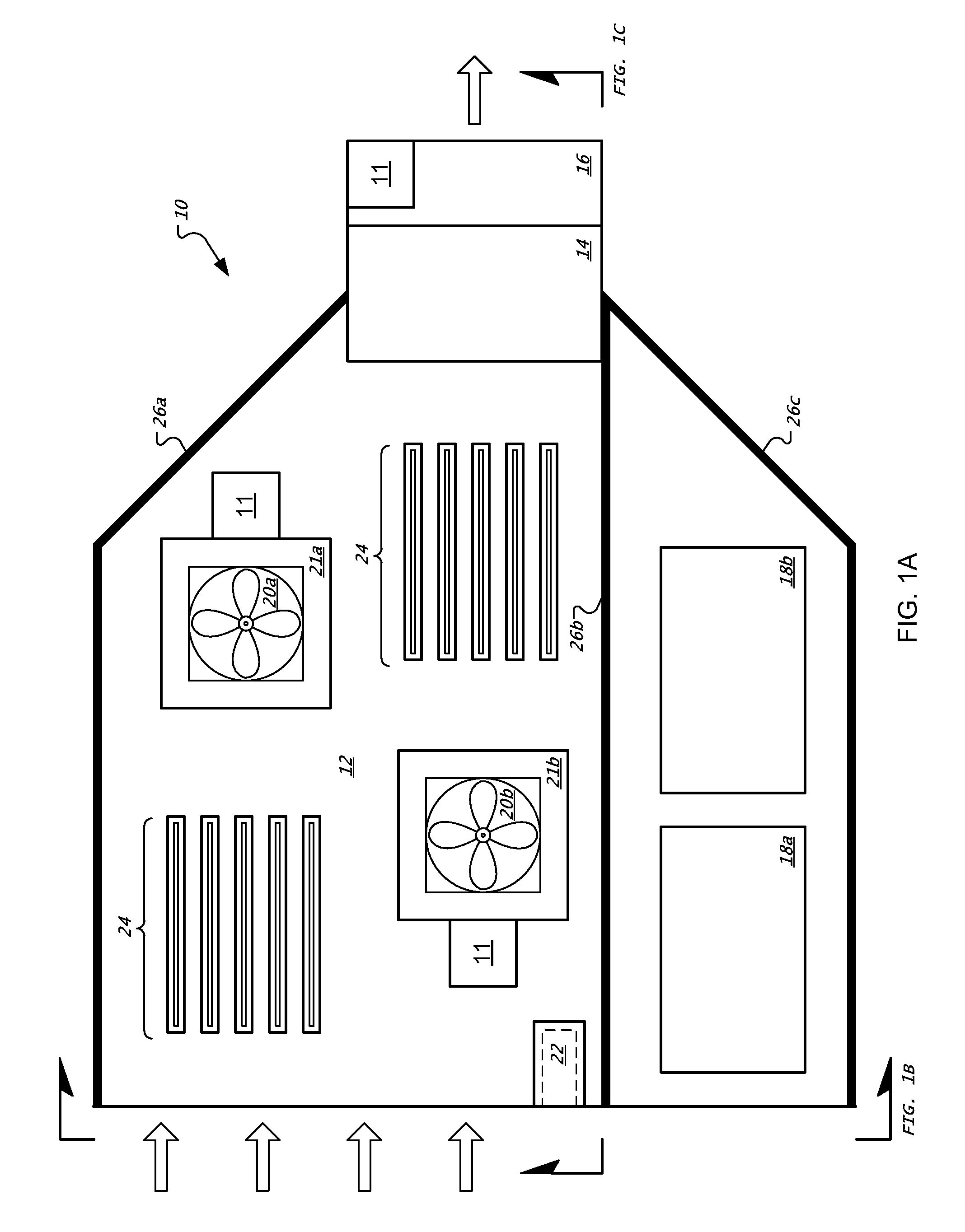
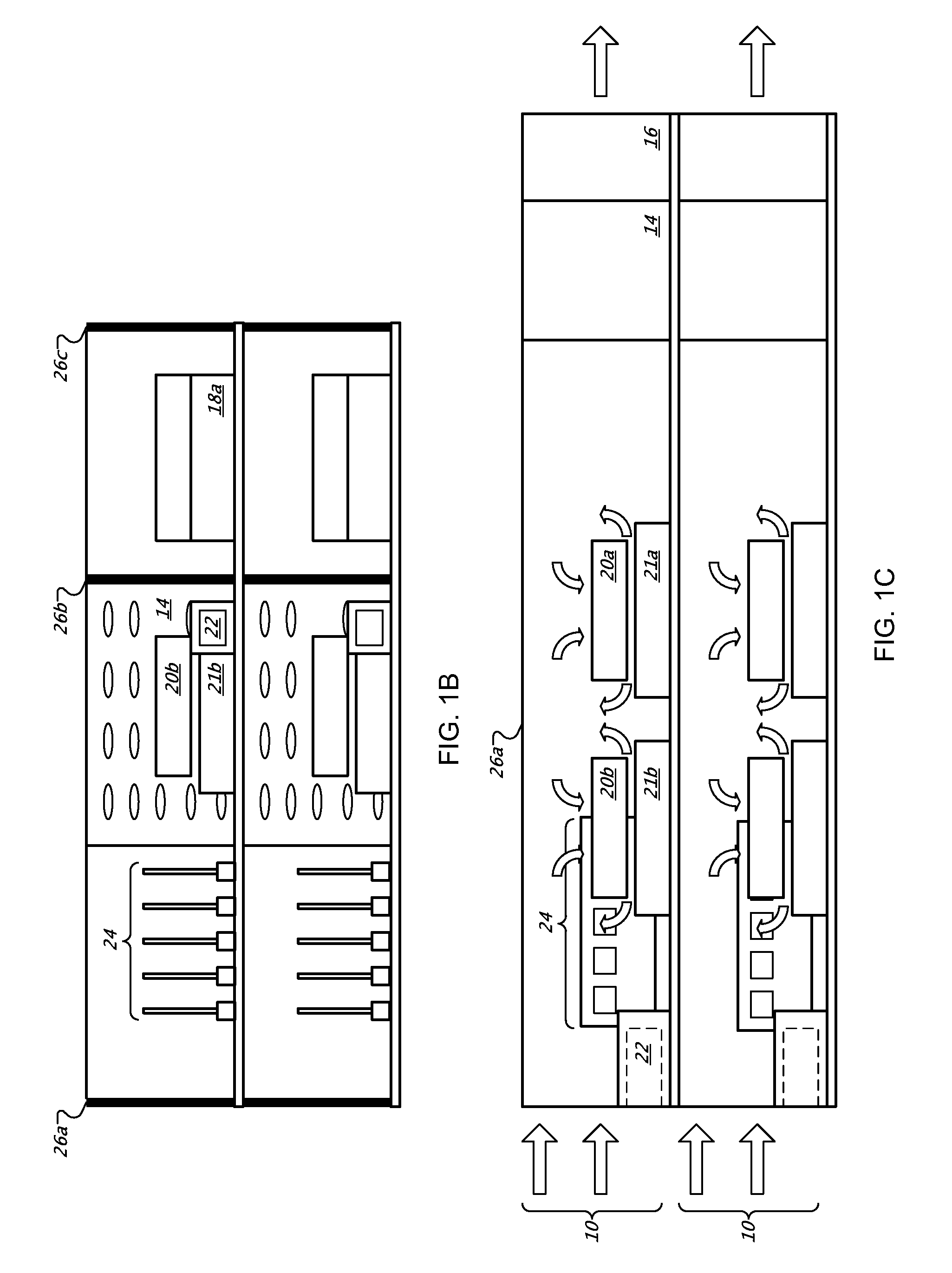
[0051]FIG. 1A shows a plan view of a tray 10 in a rack-mount computer system, while FIG. 1B shows a front view, and FIG. 1C shows a side view, of the tray 10 in FIG. 1A. The term “tray” is not limited to any particular arrangement, but instead includes any arrangement of computer-related components coupled together to serve a particular purpose, such as on a motherboard. Trays may be generally mounted parallel to other trays in a horizontal or vertical stack, so as to permit denser packing than would otherwise be possible with computers having free-standing housings and other components. The term “blade” may also be employed to refer to such apparatuses, though that term too should not be limited to a particular arrangement. Trays may be implemented in particular configurations, including as computer servers, switches, e.g., electrical and optical, routers, drives or groups of drives, and other computing-related devices. In general, the trays in a system take a standardized physical...
PUM
 Login to View More
 Abstract
Description
Claims
Application Information
 Login to View More