

Curved surfboard fin
a fin and surfboard technology, applied in the field of fins, can solve the problems of difficulty in changing the fin direction, surfboard speed loss while turning, etc., and achieve the effects of reducing the effort required, increasing maneuverability, and reducing the time and speed loss
- Summary
- Abstract
- Description
- Claims
- Application Information
AI Technical Summary
Benefits of technology
Problems solved by technology
Method used
Image

Examples
Embodiment Construction
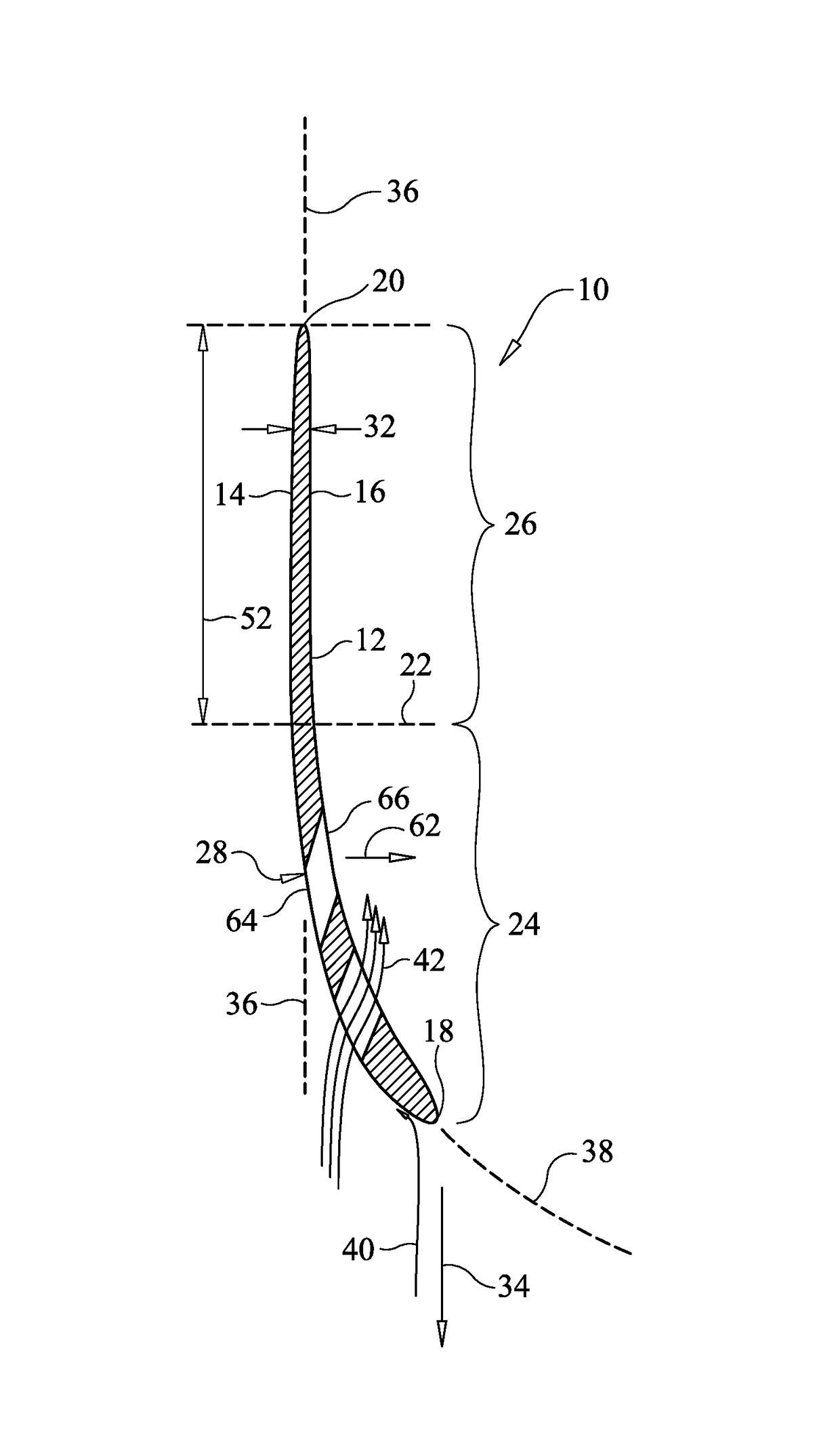
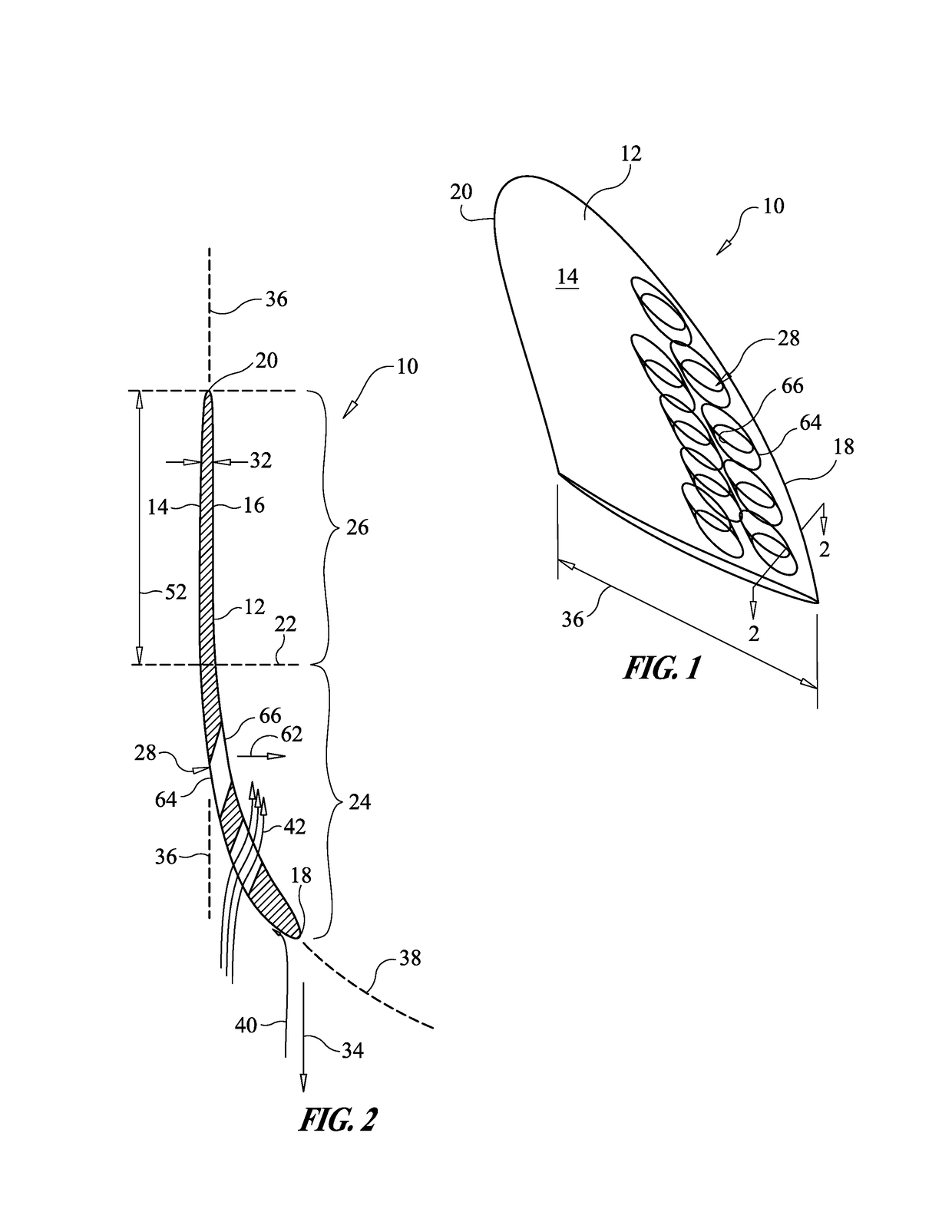
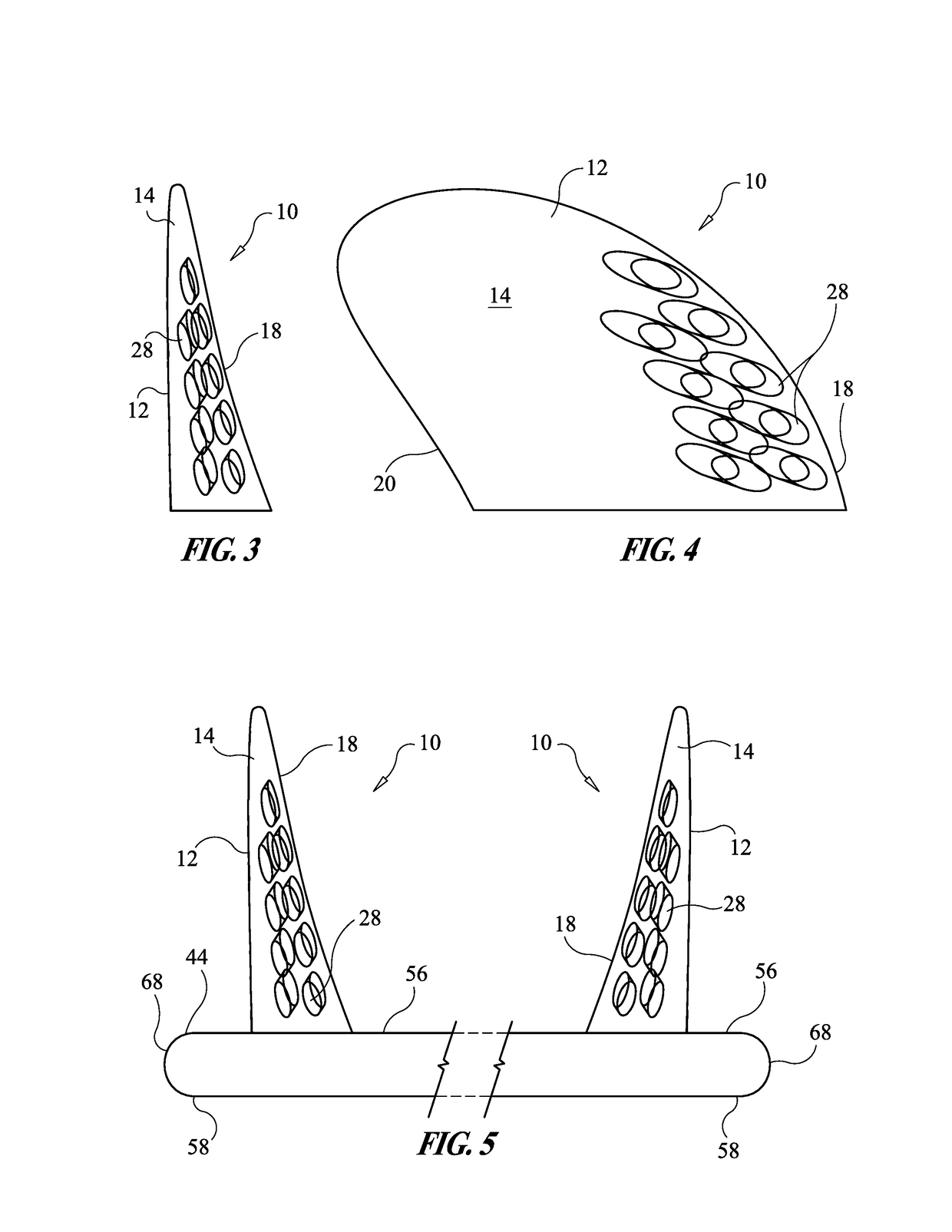
[0021]With reference to FIGS. 1-4, there is representatively illustrated a new curved surfboard fin that is constructed in accordance with an embodiment of the present invention and is designated by reference number 10. As discussed in more detail below, surfboard fin 10 has a unique construction including a rearward fin portion that is straight and a forward fin portion that is curved in an inwardly direction relative to a centerline of a surfboard to which it is attached. This unique fin construction has the advantage of increasing the ability to change direction of the surface board with reduced effort and time as compared to a conventional surfboard fin.
[0022]In the representatively illustrated embodiment, the curved surfboard fin 10 has an elongated body 12 that has an outward side surface 14, an opposing inward side surface 16, a leading edge 18, and a trailing edge 20. The elongated body 12 has a length 30 that extends from the leading edge 18 to the trailing edge 20. The out...
PUM
 Login to View More
 Abstract
Description
Claims
Application Information
 Login to View More