Converting low-dose to higher dose mammographic images through machine-learning processes

a machine learning and high-dose technology, applied in the field of mammography, can solve the problems of high signal-to-noise ratio, insufficient risk of radiation exposure for asymptomatic women under 35, and inability to detect breast cancer, so as to improve the detection ability of lesions and clinically important findings such as masses and microcalcifications, and reduce noise and artifacts due to low radiation dose.
US9730660B2Active Publication Date: 2017-08-15ALARA SYST

Patent Information

Authority / Receiving Office
US Ā· United States
Patent Type
Patents(United States)
Current Assignee / Owner
ALARA SYST
Publication Date
2017-08-15

Smart Images

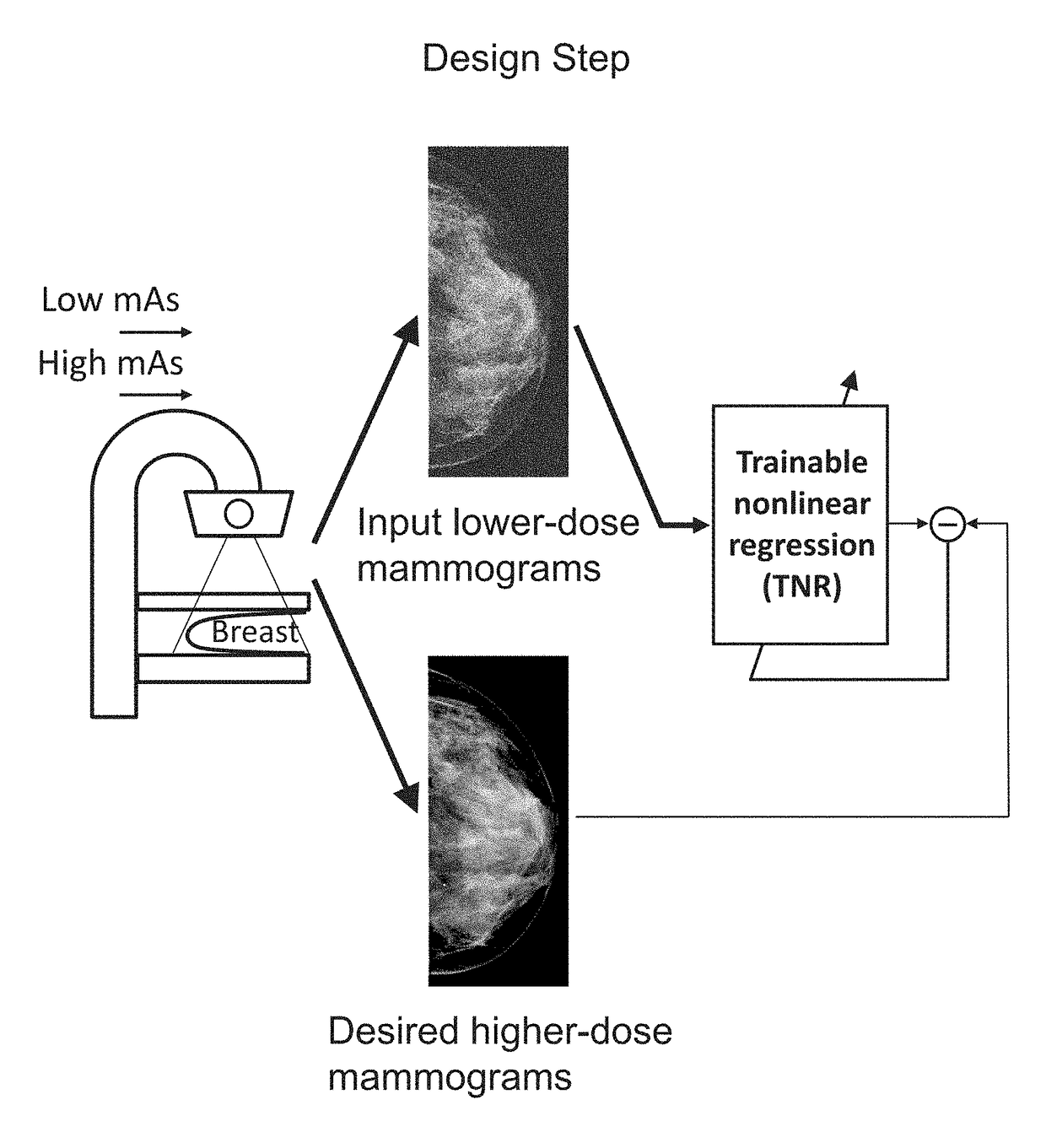
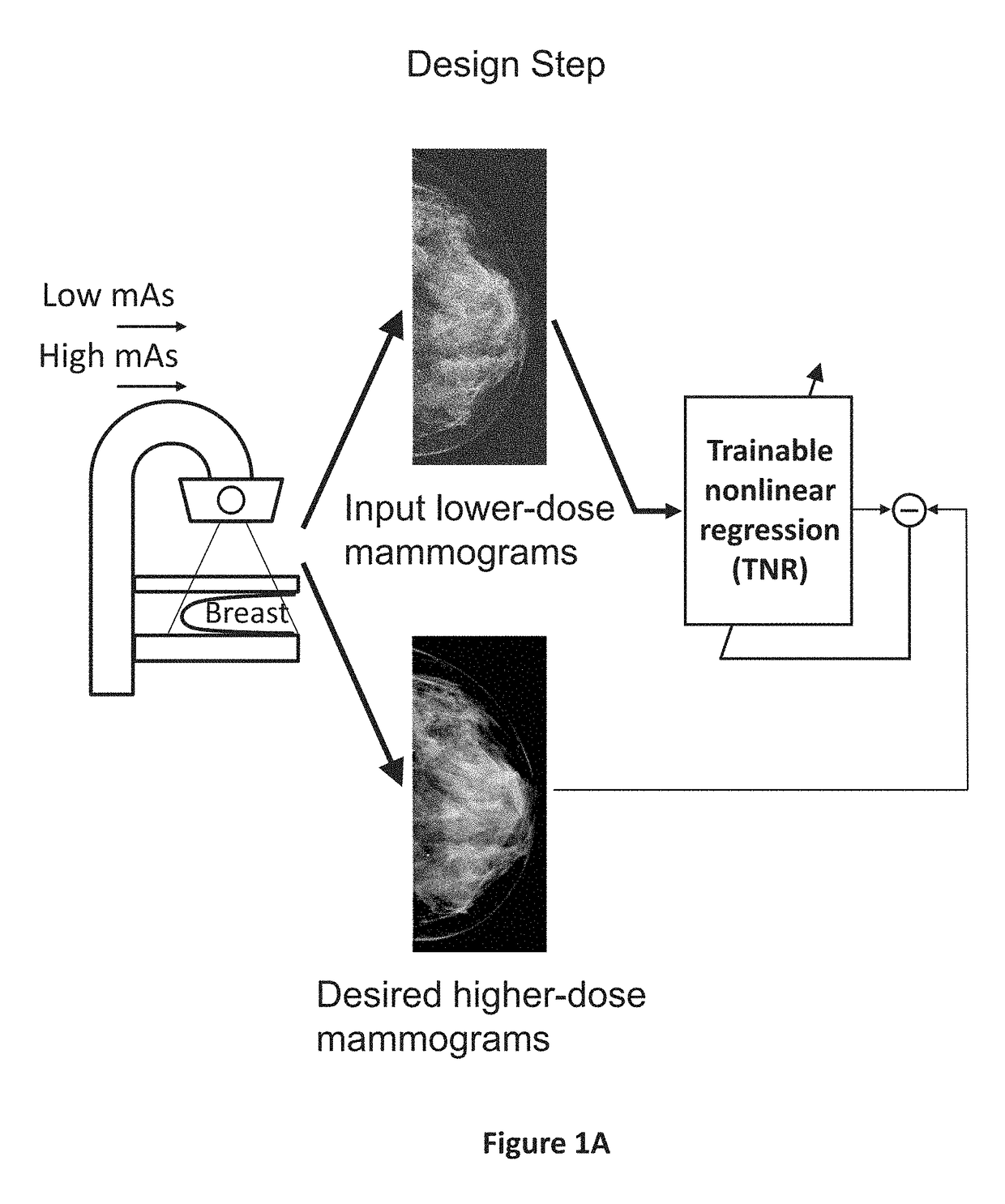
  • Figure 1
    Figure 1
  • Figure 2
    Figure 2
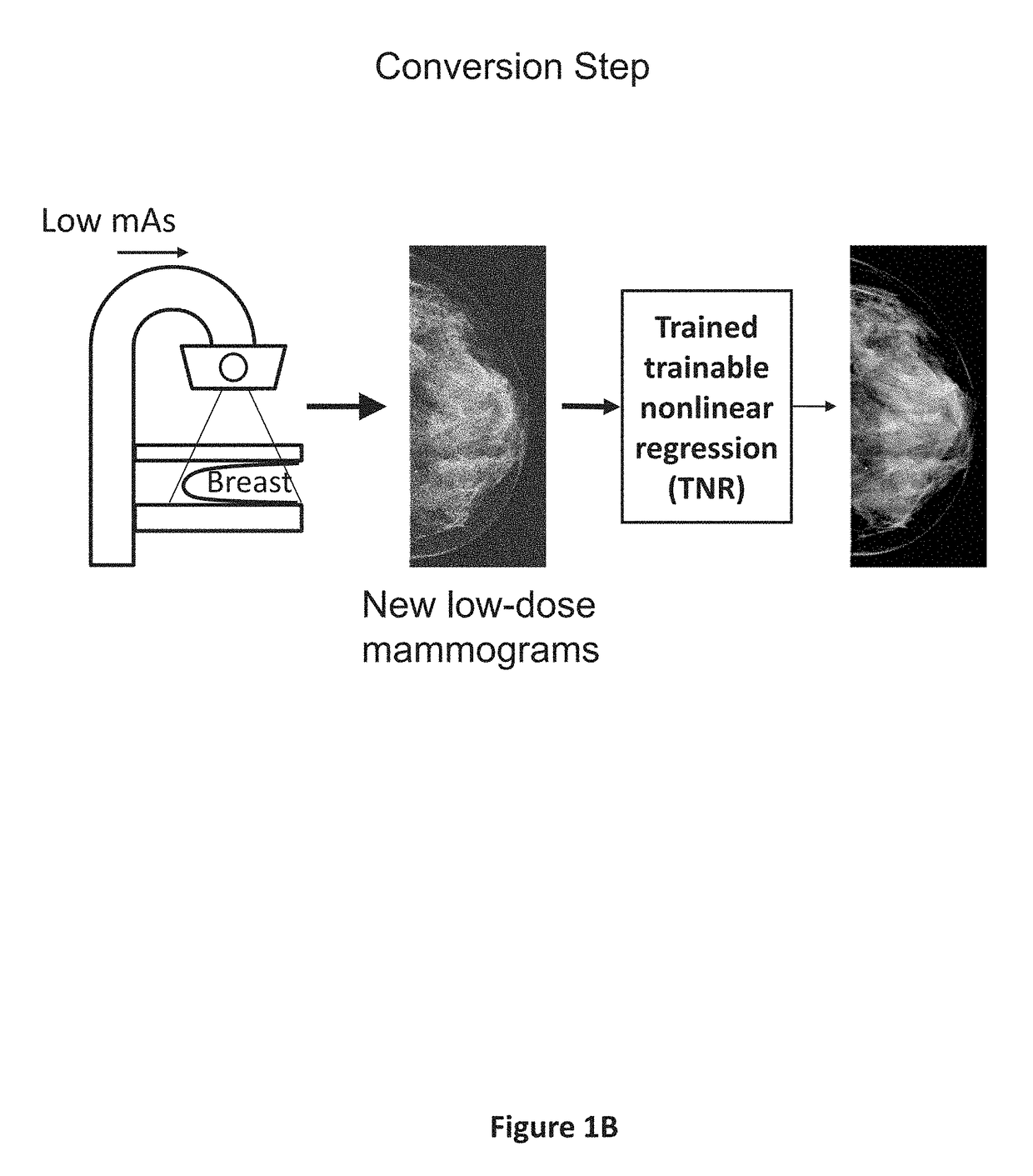
  • Figure 3
    Figure 3
Patent Text Reader

Abstract

A method and system for converting low-dose mammographic images with much noise into higher quality, less noise, higher-dose-like mammographic images, using of a trainable nonlinear regression (TNR) model with a patch-input-pixel-output scheme, which can be called a call pixel-based TNR (PTNR). An image patch is extracted from an input mammogram acquired at a reduced x-ray radiation dose (lower-dose), and pixel values in the patch are entered into the PTNR as input. The output of the PTNR is a single pixel that corresponds to a center pixel of the input image patch. The PTNR is trained with matched pairs of mammograms, inputting low-dose mammograms together with corresponding desired standard x-ray radiation dose mammograms (higher-dose), which are ideal images for the output images. Through the training, the PTNR learns to convert low-dose mammograms to high-dose-like mammograms. Once trained, the trained PTNR does not require the higher-dose mammograms anymore. When a new reduced x-ray radiation dose (low dose) mammogram is entered, the trained PTNR would output a pixel value similar to its desired pixel value, in other words, it would output high-dose-like mammograms or ā€œvirtual high-doseā€ mammograms where noise and artifacts due to low radiation dose are substantially reduced, i.e., a higher image quality. With the ā€œvirtual high-doseā€ mammograms, the detectability of lesions and clinically important findings such as masses and microcalcifications can be improved.
Need to check novelty before this filing date? Find Prior Art

Description

FIELD

[0001] This patent specification relates generally to the field of mammography including full-field digital mammography and digitized screen-film mammography, and more particularly to methods, systems, and computer programs for converting lower-dose mammograms into higher-dose-like mammograms.

[0002] This patent specification also generally relates to computerized techniques for automated analysis of digital images, for example, as discussed in one or more of U.S. Pat. Nos. 5,751,787; 6,158,888; 7,412,024; 8,378,302; 8,395,120; 6,819,790; 6,754,380; and 7,545,965, and U.S. Publication No. 2006 / 0018524, all of which are hereby incorporated by reference.

[0003] This patent specification includes use of technologies referenced and discussed in the above-noted U.S. Patents and Applications, as well as those discussed in the documents identified in the following List of References, which are cited throughout the specification by reference number (as providing supporting information) and ...

Claims

the structure of the environmentally friendly knitted fabric provided by the present invention; figure 2 Flow chart of the yarn wrapping machine for environmentally friendly knitted fabrics and storage devices; image 3 Is the parameter map of the yarn covering machine
Login to View More