
Binder to process book blocks and method of binding
A technology of adhesives and book blocks, which is applied to binding adhesives, compound continuous process of book processing, book binding, etc., which can solve problems such as product quality problems, problems, and damage to the shape of the milling back.
- Summary
- Abstract
- Description
- Claims
- Application Information
AI Technical Summary
Problems solved by technology
Method used
Image

Examples
Embodiment Construction
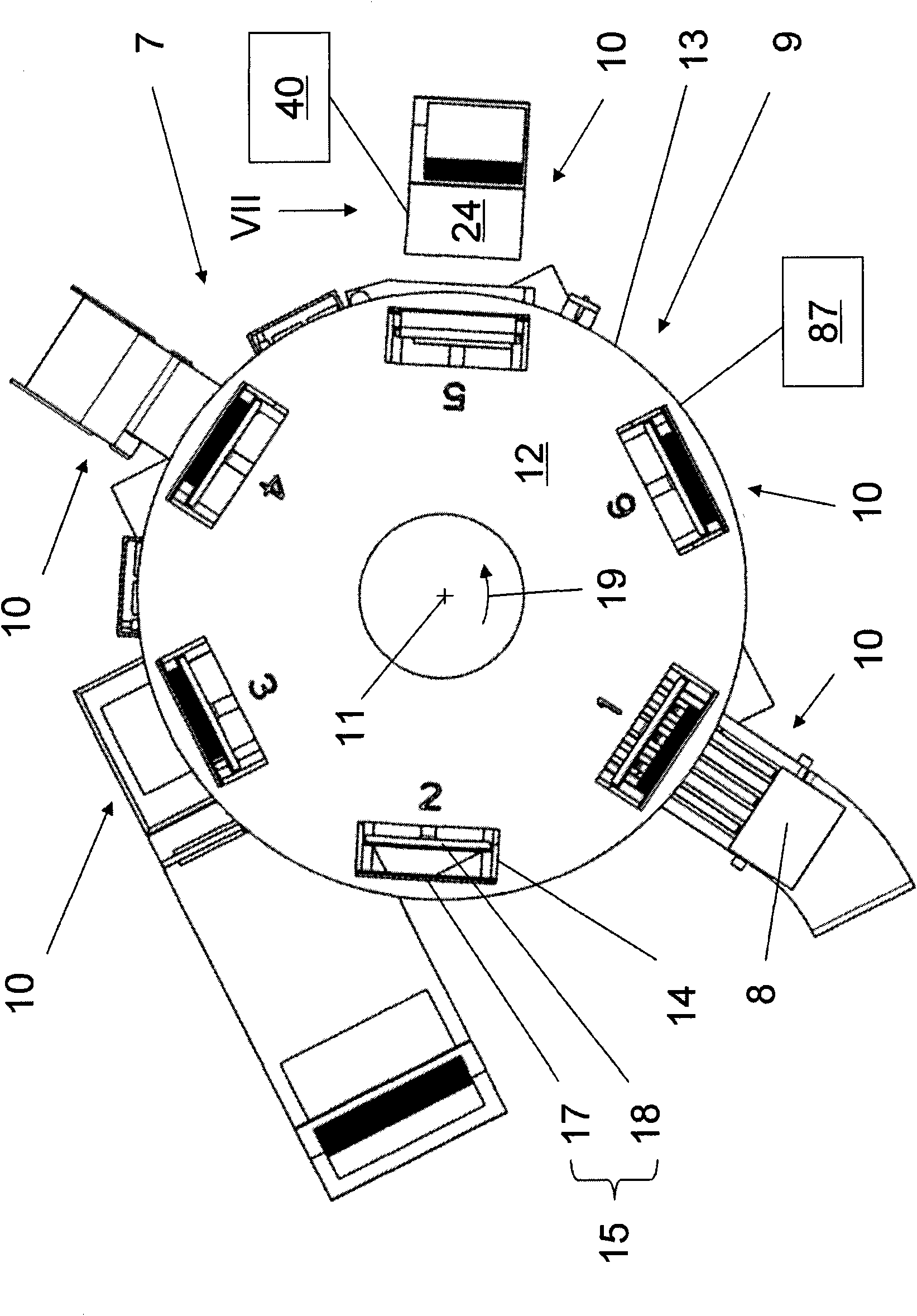
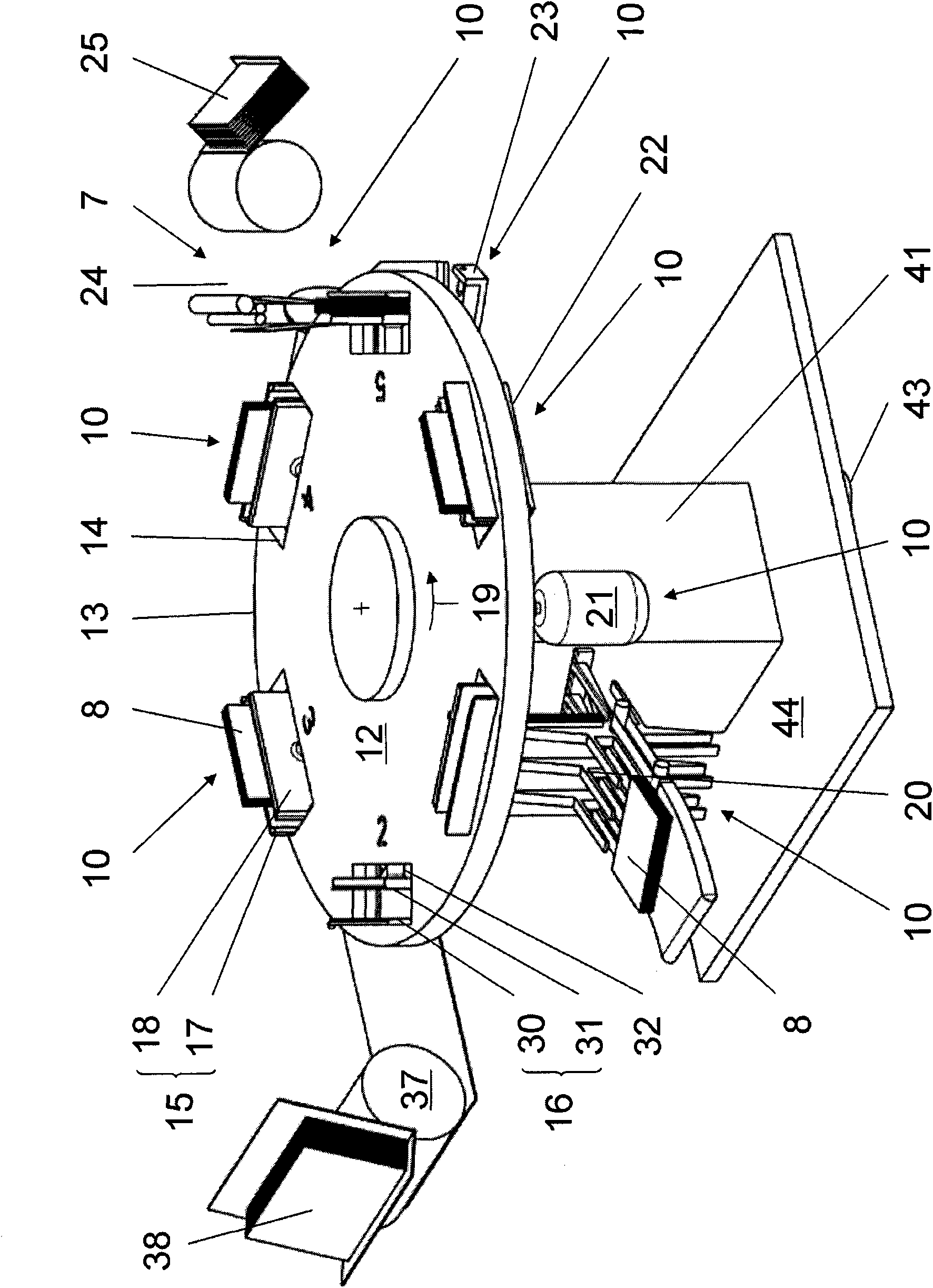
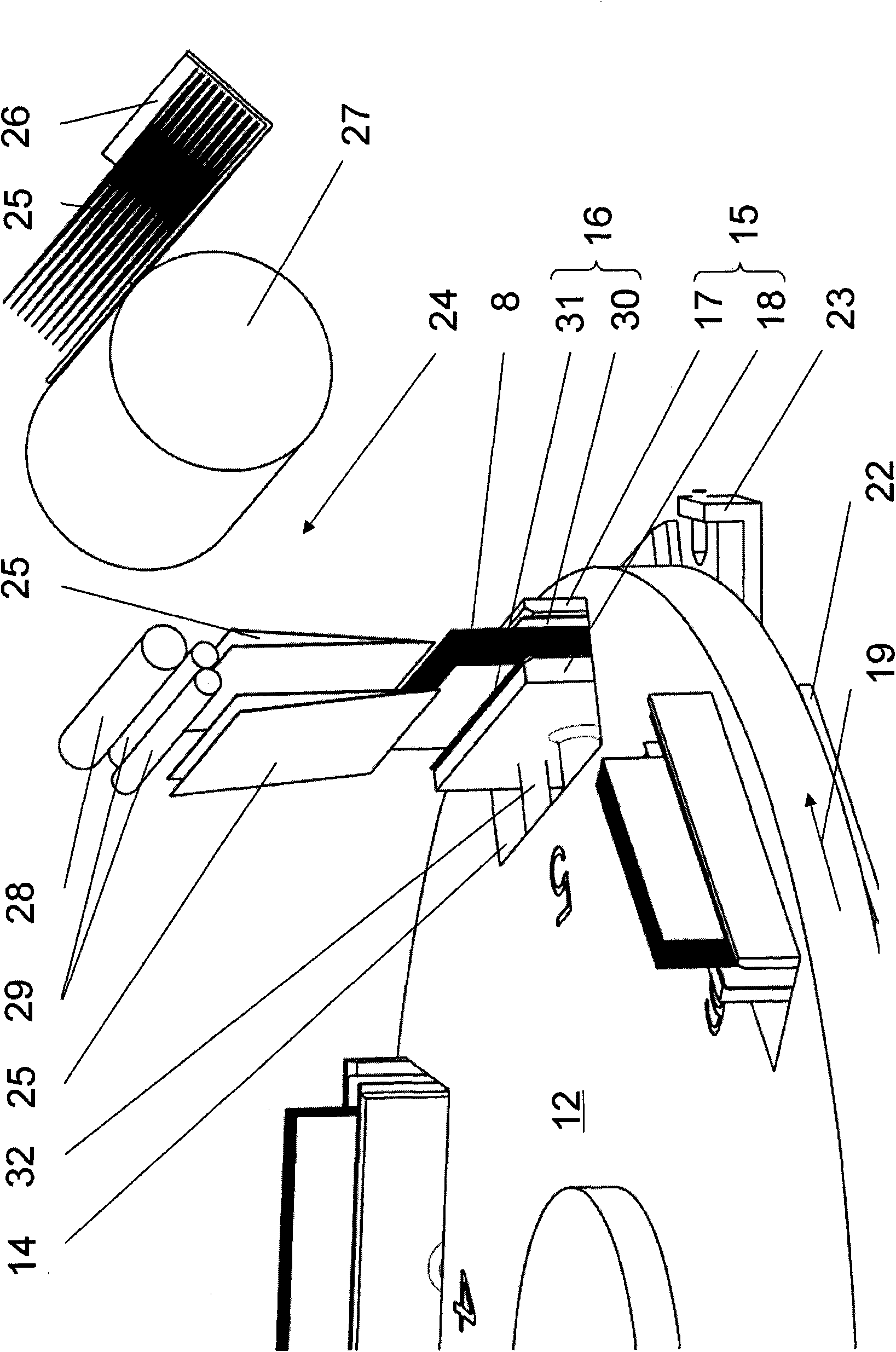
[0039] figure 1 A top view of the bonder 7 used to process the book block 8 into bonded books, which can be made into hardcovers (Hardcover) later in an automatic book production line. The bonder 7 is driven by an unshown drive mechanism designed as a motor. Of course, one or more hydraulic or pneumatic drive mechanisms can also be used. The bonder 7 has a conveying device 9 and a plurality of processing stations 10. The conveying device 9 is a round table 12 rotating around a shaft 11 with a closed circular running track 13. The periphery of the table 12 has six splint accommodating mechanisms 14 arranged at equal intervals with each other, and these splint accommodating mechanisms respectively receive clamping devices 1 to 6 for the book block 8. Clamping devices 1 to 6 are adhesive splints with outer splints and inner splints 15, 16 respectively ( figure 2 ). The outer splints 15 arranged at an interval of 60° respectively have a fixed splint half and a movable splint half 1...
PUM
 Login to View More
 Abstract
Description
Claims
Application Information
 Login to View More