
Matching method for three-dimensional coronary angiography reconstruction
A technology of three-dimensional reconstruction and matching method, which is applied in the intersecting field of digital image processing and medical imaging, and can solve problems such as too much dependence on models, individual specific problems that cannot be solved well, large reconstruction errors, etc.
- Summary
- Abstract
- Description
- Claims
- Application Information
AI Technical Summary
Problems solved by technology
Method used
Image

Examples
Embodiment Construction
[0089] The present invention will be further described below in conjunction with the accompanying drawings and specific embodiments.
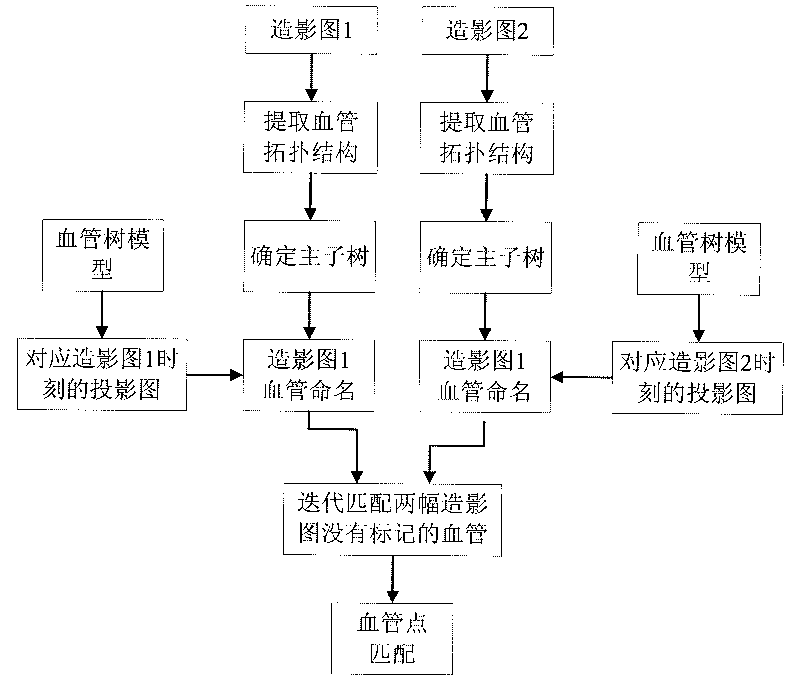
[0090] Such as figure 1 As shown, the method of the present invention uses the multi-scale model of the coronary artery to iteratively match the blood vessel segments in the angiographic images of two different angles, and obtains locally optimal matching blood vessel point pairs on the corresponding blood vessel segments through potential energy reduction. The specific steps are as follows (taking the left coronary artery as an example, the matching of the right coronary artery is similar):
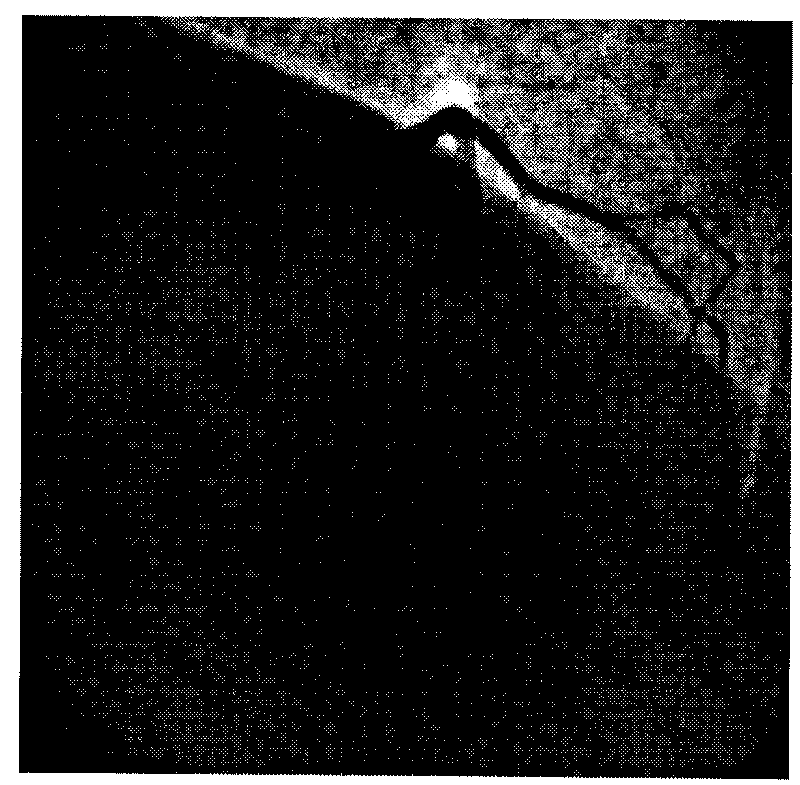
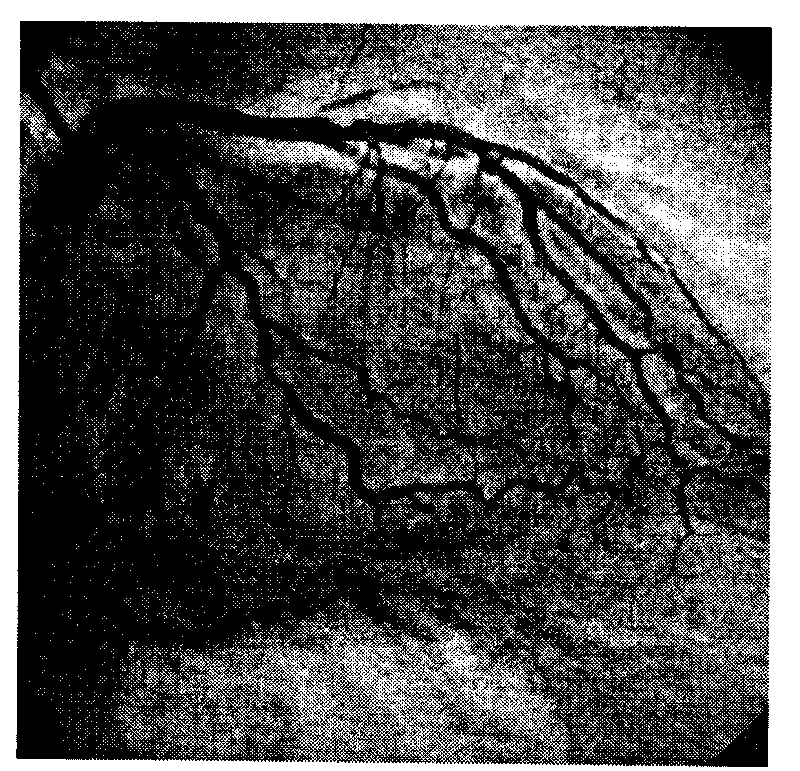
[0091] (1) Extraction of vascular topology in X-ray angiography
[0092] The skeleton of the coronary vessel tree is extracted from the angiogram through segmentation and thinning. Starting from the root node of the coronary vessel tree, the tree structure representation of the vessel is obtained, and the crossing of vessels and pseudo vessels are remove...
PUM
 Login to View More
 Abstract
Description
Claims
Application Information
 Login to View More