Method for carrying out gene transformation on manioca by using Agrobacterium tumefaciens mediated transformation

A technique of Agrobacterium-mediated and gene transformation, applied in the tissue culture of Jatropha curcas and in the field of genetic engineering, can solve the problems that breeding techniques cannot be genetically improved, and achieve the effects of avoiding molecular detection work, high rooting rate, and avoiding a large number of escapes

CN101857875AInactive Publication Date: 2010-10-13SINO FOREST CHINA INVESTMENTS LTD
0 Cites 12 Cited by

Patent Information

Authority / Receiving Office
CN · China
Current Assignee / Owner
Publication Date
2010-10-13
Estimated Expiration
Not applicable · inactive patent

Smart Images

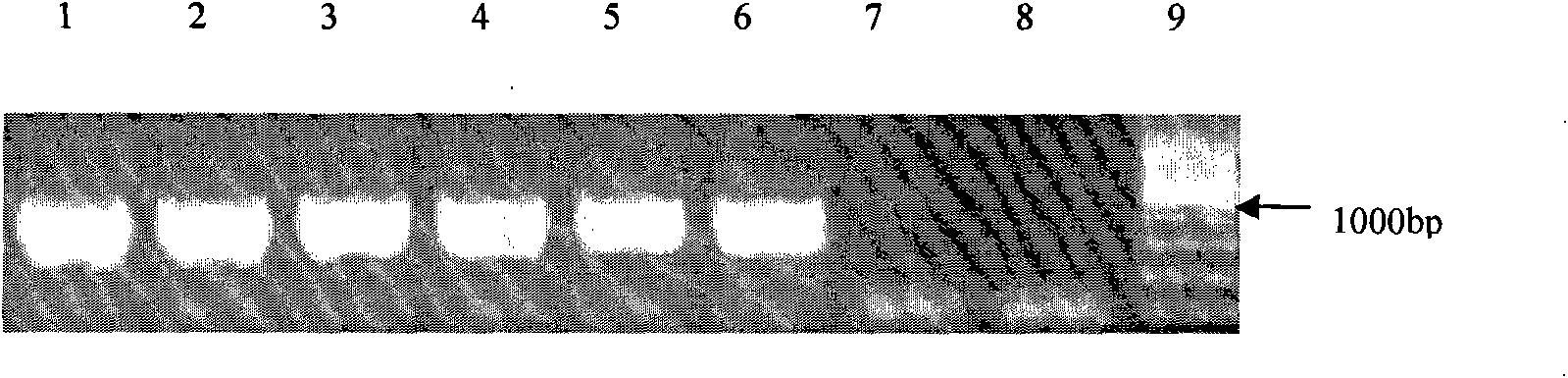
  • Figure 1
    Figure 1
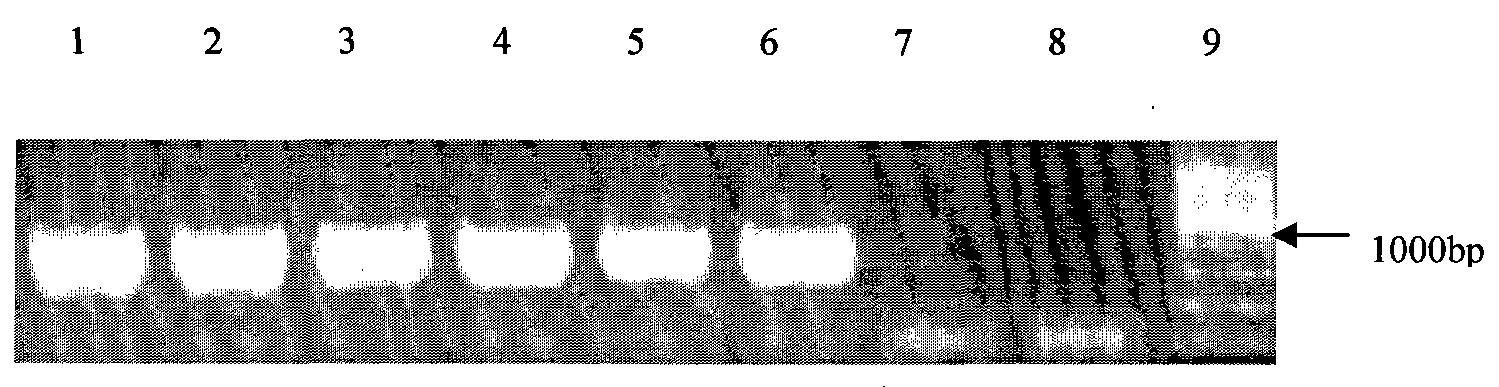
  • Figure 2
    Figure 2
  • Figure 3
    Figure 3
Patent Text Reader

Abstract

The invention relates to a method for carrying out gene transformation on manioca by using Agrobacterium tumefaciens mediated transformation, which comprises the following steps: preparing a manioca explant and agrobacterium liquid, and coincubating the mainoca explant after being soaked by the agrobacterium; inserting the coincubated explant into a screening culture medium C13PC for culture to obtain a resistance callus, wherein the screening culture medium C13PC contains 1-3mg / L of Glufosinate ammonium or 1-10mg / L of hygromycin; transferring the obtained resistance callus into a differential medium, and differentiating adventitious buds; and obtaining a transgenosis plant through rooting culture. The method can successively lead in functional genes to carry out genetic improvement on a wild manioca. The conversion efficiency can be about 10% or even more than 10%; the transgenosis inheritance is stable, and the cost is low; a manioca in vitro has good regenerative system stability; and the method has simple operation and high regeneration efficiency, and the time from the induction of the callus to the obtain of the regeneration plant is only 80-90 days.
Need to check novelty before this filing date? Find Prior Art

Description

technical field

[0001] The invention relates to the technical field of tissue culture of Jatropha curcas and the field of genetic engineering, in particular to a method for gene transformation of Jatropha curcas mediated by Agrobacterium, so as to obtain transgenic plants. Background technique

[0002] Jatropha curcas (Jatopha curcas), also known as Jatropha curcas and Diesel tree, is a perennial deciduous shrub or small tree in the genus Jatropha of Euphorbiaceae, distributed in tropical and subtropical regions. It is a light-loving plant with strong and well-developed root system and strong ability to tolerate drought and barrenness. It can be planted on land where other plants are not easy to grow. It is an ideal tree species for afforestation in arid areas. The oil content of jatropha seed kernels is as high as 50% to 60%. It can be extracted into biodiesel that does not contain sulfur, is pollution-free, and meets Euro IV emission standards. It is a bio-energy tree reco...

Examples

example 1

[0082] This example uses Agrobacterium to transfer the GUS gene into wild Jatropha curcas in Yuanmou, Yunnan. The method created by the present invention is described in detail. Please refer to Table 1 for the total number of samples and the number of survivors after each processing step. Each process step is as follows:

[0083] Step 1: Collect wild Jatropha seeds from Yuanmou, Yunnan. Pick full seeds, peel off the shell, soak in 75% ethanol for 30 seconds, rinse with sterile water for 2-3 times, then disinfect in 0.1% mercury chloride for 3-5 minutes, rinse with sterile water for 5-7 times, Then soak in sterile water for 2-4 hours and peel off the endosperm. Take complete embryos and cotyledons, inoculate them in MS medium, pick 2-3 seeds per bottle, culture in dark at 23-26°C for 2-4 days, then transfer to light culture for 10-12 days to obtain sterile seedlings for experiments.

[0084] Step 2: pick the single clone of Agrobacterium EHA105 (containing the expression vect...