Supercharge Your Innovation With Domain-Expert AI Agents!

Dye-sensitized solar cell module and preparation method thereof

A technology of solar cells and dye sensitization, which is applied in the field of solar cells, can solve problems such as mutual pollution, energy loss, and complex processes, and achieve the effects of reducing area waste, increasing yield, and simple processes

Active Publication Date: 2012-12-12
INST OF PHYSICS - CHINESE ACAD OF SCI
View PDF3 Cites 0 Cited by
  • Summary
  • Abstract
  • Description
  • Claims
  • Application Information

AI Technical Summary

Problems solved by technology

The problem with the W-type contact is that the photoanode and the counter electrode need to be prepared sequentially on a substrate. Since the functions of the two electrodes are just opposite, the two are likely to cause mutual contamination during the preparation process, so the process is very complicated; The photoelectric conversion efficiency generated by the incident on the electrode will be different, so there is a problem of current mismatch in the series structure of the W-type contact, resulting in additional energy loss

Method used

the structure of the environmentally friendly knitted fabric provided by the present invention; figure 2 Flow chart of the yarn wrapping machine for environmentally friendly knitted fabrics and storage devices; image 3 Is the parameter map of the yarn covering machine
View more

Image

Smart Image Click on the blue labels to locate them in the text.
Viewing Examples
Smart Image
  • Dye-sensitized solar cell module and preparation method thereof
  • Dye-sensitized solar cell module and preparation method thereof
  • Dye-sensitized solar cell module and preparation method thereof

Examples

Experimental program
Comparison scheme
Effect test

Embodiment

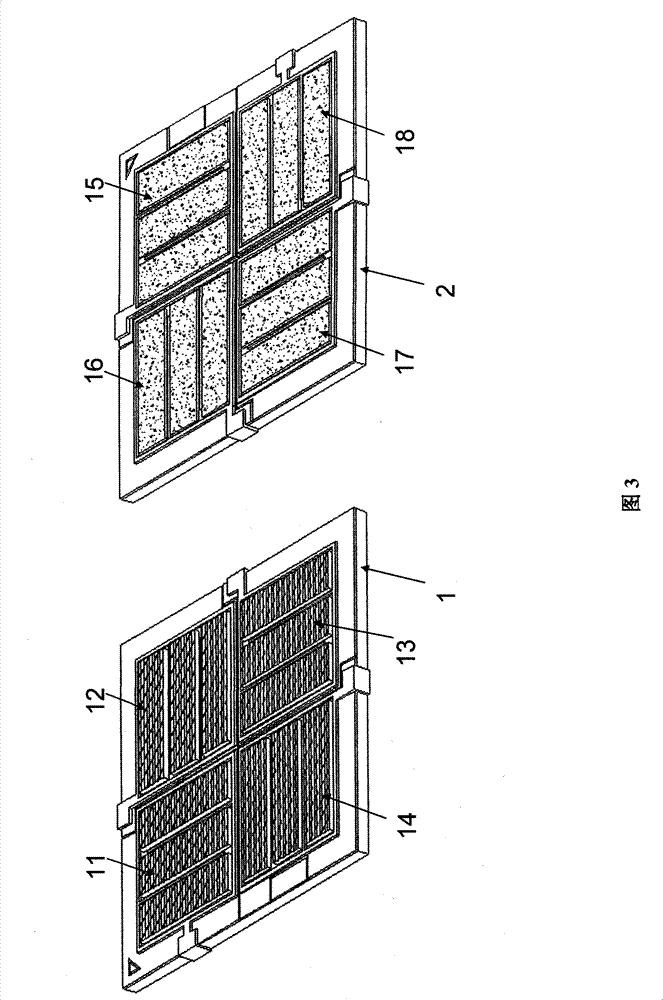
[0037] The dye-sensitized solar cell module of this embodiment is composed of 12 basic battery units, of which 3 basic battery units form a parallel component, and 4 parallel components are sequentially connected in series to form the battery module.

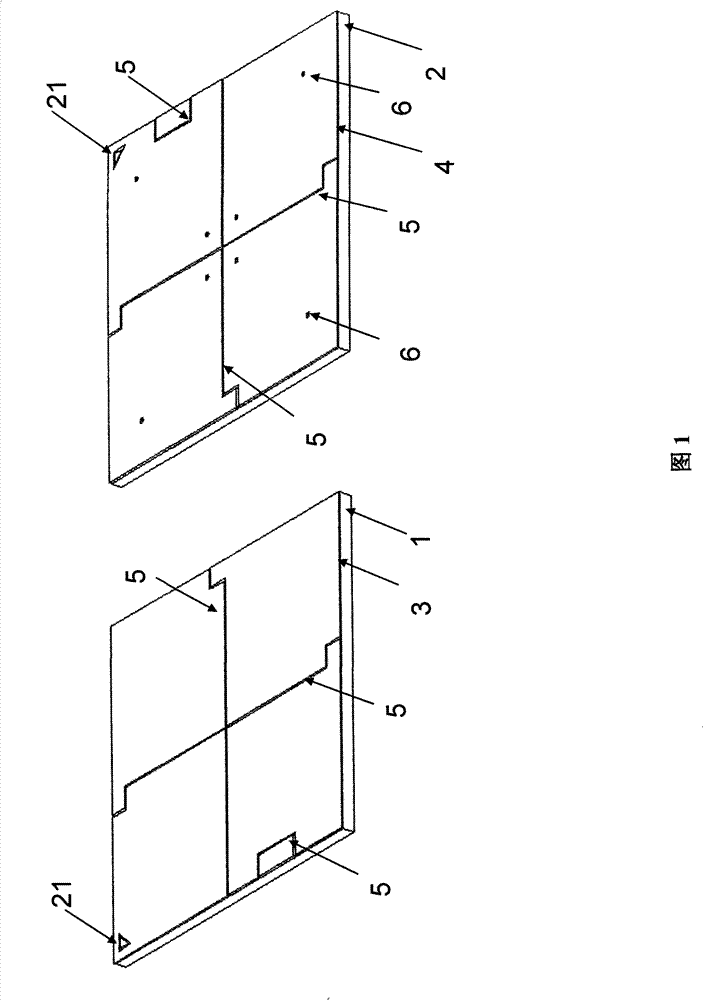
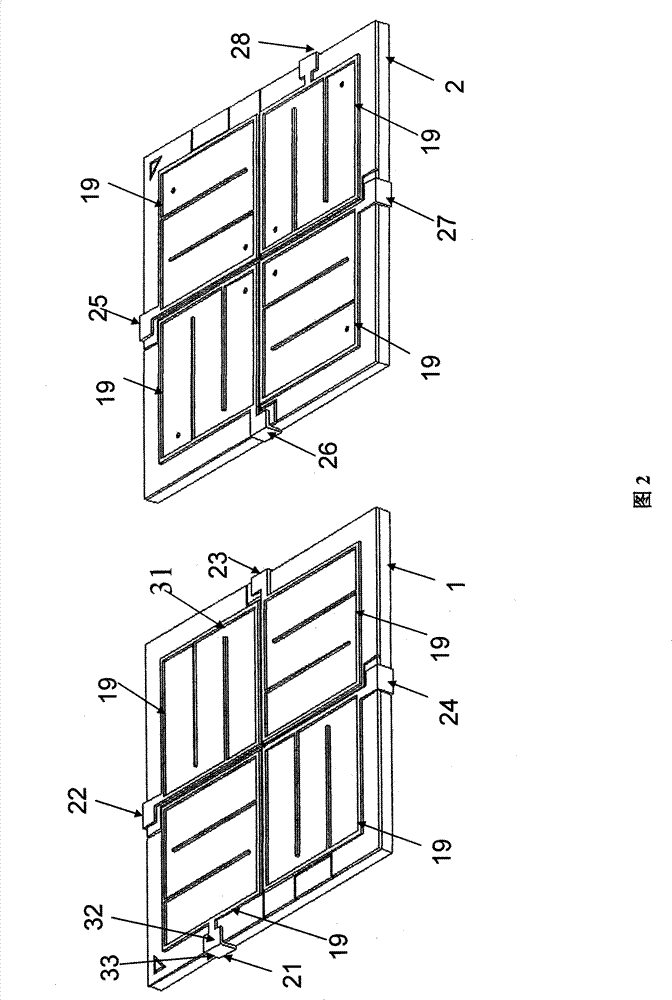
[0038] refer to Figure 7 , The basic battery unit of this embodiment includes from bottom to top: a lower substrate 2 , a lower substrate conductive layer 4 , a counter electrode 8 , an electrolyte 9 , a photoanode 7 , an upper substrate conductive layer 3 and an upper substrate 1 . Both the conductive layer 3 of the upper substrate and the upper substrate 1 are made of transparent materials. Conductive mesh 19 (refer to figure 2 ). On the one hand, the conductive grid 19 increases the conductivity of the conductive layer, and on the other hand, it separates each basic battery unit. The conductive grid 19 is covered with an encapsulation isolation layer 10 for sealing and isolating the electrolyte 9 . In this implementatio...

the structure of the environmentally friendly knitted fabric provided by the present invention; figure 2 Flow chart of the yarn wrapping machine for environmentally friendly knitted fabrics and storage devices; image 3 Is the parameter map of the yarn covering machine
Login to View More

PUM

PropertyMeasurementUnit
thicknessaaaaaaaaaa
thicknessaaaaaaaaaa
thicknessaaaaaaaaaa
Login to View More

Abstract

The invention provides a dye-sensitized solar cell module, comprising a plurality of basic cells which in physically adjacent position form cell components; the adjacent cell components are in series connection or parallel connection; the series connection between the adjacent cell components is as follows: a contact electrode is arranged on an upper substrate conducting layer of the last basic cell unit of the previous cell component; a contact electrode is arranged on an upper substrate conducting layer of the first basic cell unit of the rear cell component; the contact electrodes are bothon the edge of the substrate and the counter electrode of last basic cell unit of the previous cell component is in electrical connection with the photo-anode of the first basic cell unit of the rearcell component by the contact between the contact electrode. The invention further provides a corresponding preparation method for the cell module. The invention has simple technique and high rate offinished product, capable of realizing series and parallel connection flexibly in the cell module.

Description

technical field [0001] The invention relates to solar cell technology, in particular, the invention relates to a dye-sensitized solar cell module and a preparation method thereof. Background technique [0002] Dye-sensitized solar cells are solar cells with simple production process, low cost and environmental friendliness. Dye-sensitized solar cells generally include from bottom to top: lower substrate, lower conductive layer, lower electrode, electrolyte, upper electrode, upper conductive layer and upper substrate; the upper electrode is made of nano-semiconductor porous film adsorbed with dye, and the upper conductive layer And upper substrate and use transparent material. At present, the efficiency of small-area dye-sensitized solar cells can reach more than 11%. At the same time, because of its relatively simple manufacturing process, its cost is much lower than that of silicon-based solar cells. However, there are still some problems in its packaging technology and m...

Claims

the structure of the environmentally friendly knitted fabric provided by the present invention; figure 2 Flow chart of the yarn wrapping machine for environmentally friendly knitted fabrics and storage devices; image 3 Is the parameter map of the yarn covering machine
Login to View More

Application Information

Patent Timeline
no application Login to View More
Patent Type & Authority Patents(China)
IPC IPC(8): H01G9/20H01G9/004H01G9/04H01M14/00H01L51/42H01L51/44H01L51/48
CPCY02E10/542Y02E10/549Y02P70/50
Inventor 孟庆波张一多李冬梅罗艳红黄小铭
Owner INST OF PHYSICS - CHINESE ACAD OF SCI
Features
  • R&D
  • Intellectual Property
  • Life Sciences
  • Materials
  • Tech Scout
Why Patsnap Eureka
  • Unparalleled Data Quality
  • Higher Quality Content
  • 60% Fewer Hallucinations
Social media
Patsnap Eureka Blog
Learn More