Multipoint coordinated beam forming and power allocation method for single base station power constraint

A coordinated multi-point, power-constrained technology, applied in power management, space transmit diversity, diversity/multi-antenna systems, etc.
CN102355294BActive Publication Date: 2014-04-02SOUTHEAST UNIV

Patent Information

Authority / Receiving Office
CN · China
Patent Type
Patents(China)
Current Assignee / Owner
SOUTHEAST UNIV
Publication Date
2014-04-02

Smart Images

  • Figure 1
    Figure 1
  • Figure 2
    Figure 2
  • Figure 3
    Figure 3
Patent Text Reader

Abstract

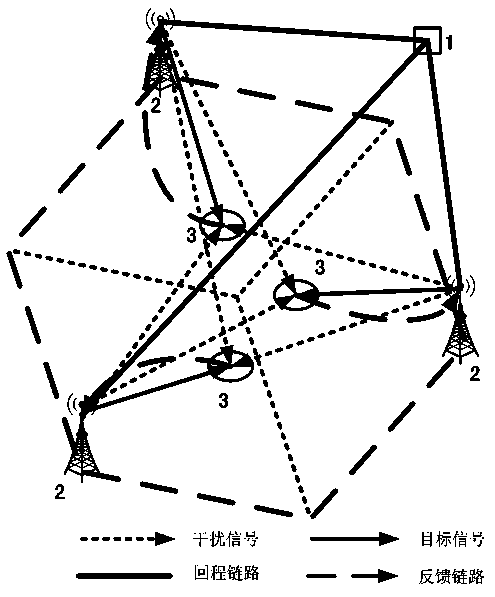
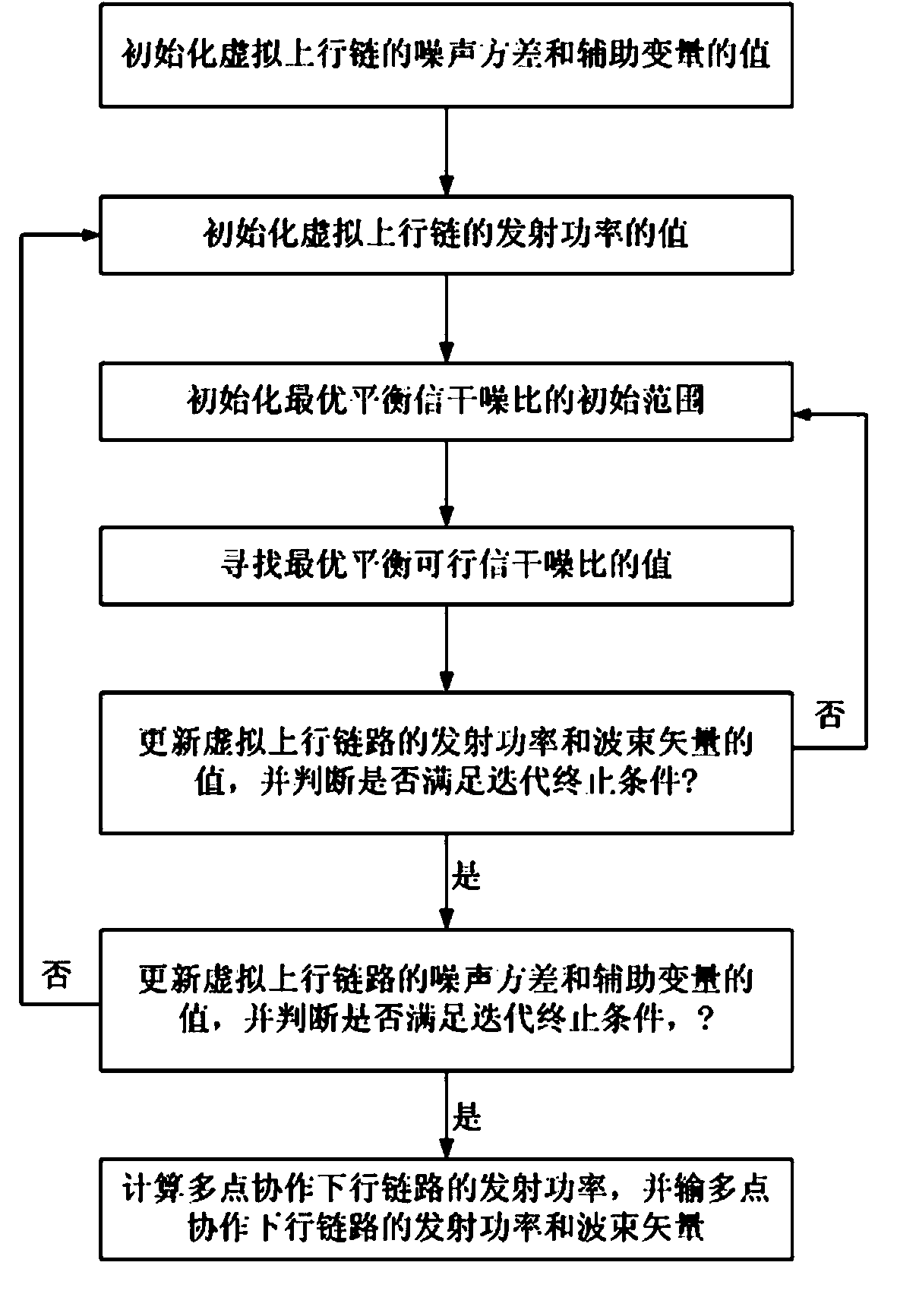
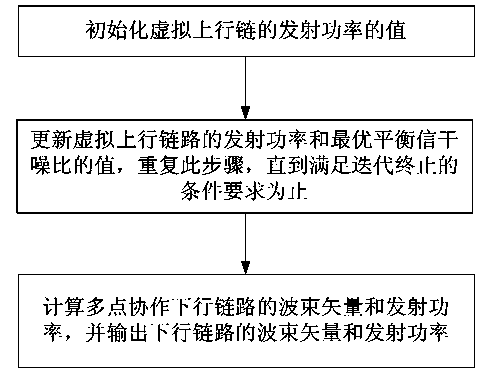
The invention discloses a multipoint coordinated beam forming and power allocation method for single base station power constraint. The method comprises the following steps of: firstly, transforming a multi-cell coordinated downlink minimum user signal-to-noise ratio maximization problem under the single base station power constraint into a virtual uplink optimization problem through a Lagrange duality theory; then, iteratively solving the virtual uplink optimization problem through a binary optimization method and a geometric programming optimization method, and obtaining an optimal receiving beam vector and an optimal user transmitting power of the virtual uplink; and finally, converting the solution of the virtual uplink to an optimized beam forming vector and the transmitting power of the downlink according to the duality theory. In comparison with the existing multipoint coordinated beam forming method, the method provided by the invention has obvious advantages in the aspect of speed per energy consumption and worst user speed performance, and with the method, the transmitting power can be saved by 25-30% at each base station and the impartiality among the users can be ensured.
Need to check novelty before this filing date? Find Prior Art

Description

technical field

[0001] The invention belongs to the technical field of wireless communication, and in particular relates to a multi-point coordinated beam forming and power allocation method under the power constraint of a single base station. Background technique

[0002] In order to improve spectrum utilization efficiency, cellular mobile communication systems generally use spectrum multiplexing with a spectrum reuse factor of 1 to construct a communication network, which not only increases spectrum utilization efficiency, but also relieves the pressure of cell planning and placement of base station nodes. However, the cellular mobile network constructed by this method produces severe inter-cell interference, especially the co-channel interference of the cell edge users is more serious, which leads to a serious impact on the throughput performance of the cellular mobile communication system network. Recently, in order to improve the performance of cell edge users and the s...

Claims

the structure of the environmentally friendly knitted fabric provided by the present invention; figure 2 Flow chart of the yarn wrapping machine for environmentally friendly knitted fabrics and storage devices; image 3 Is the parameter map of the yarn covering machine
Login to View More