
Processor chip emulator capable of setting program pointer value
A technology of program pointers and emulators, applied in the field of smart cards, can solve problems such as user program miswrite operations, user program execution confusion, etc., and achieve the effect of reliable debugging
- Summary
- Abstract
- Description
- Claims
- Application Information
AI Technical Summary
Problems solved by technology
Method used
Image

Examples
Embodiment Construction
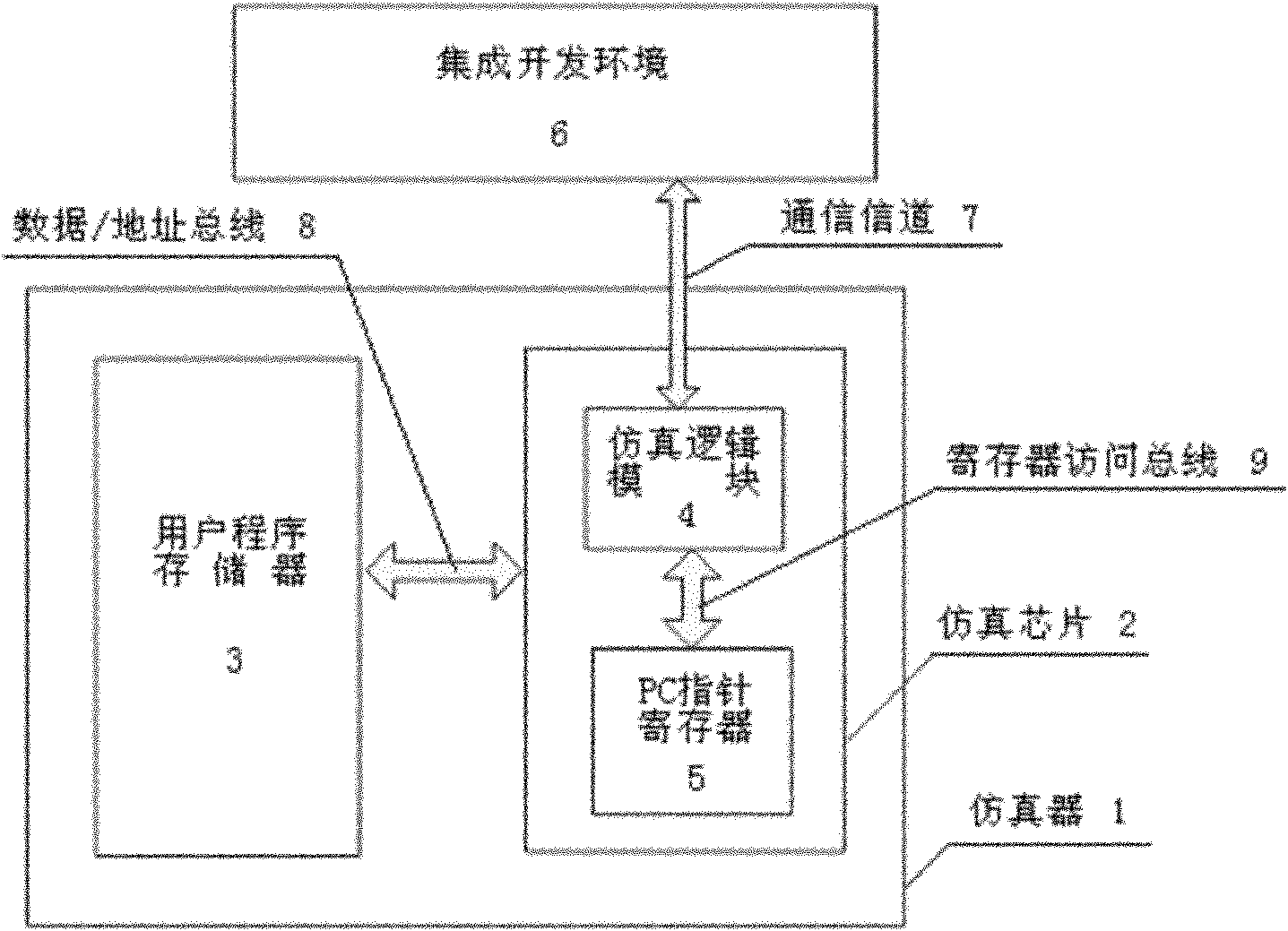
[0014] What needs to be understood first is that the working state of the emulator is divided into two states: running and debugging, and the switching of the working state of the emulator is controlled by the user. When the user controls the emulator to enter the running state, the emulation chip in the emulator runs the user program at full speed. At this time, the integrated development environment debugging software will not interfere with the emulator's execution of the user program. The user program is executed on the actual product processor chip. The effect is basically the same; when the user controls the emulator to stop running the user program, the emulator exits the running state and enters the debugging state, and the emulator no longer executes the user program. At this time, the user can initiate observation / modification of the program code through the integrated development environment debugging software , memory data and other debugging operations.
[0015] A...
PUM
 Login to View More
 Abstract
Description
Claims
Application Information
 Login to View More