
Magnetic fluorescent microsphere immunochromatography quantitative detection method
A technology of immunochromatography and quantitative detection, applied in the field of fluorescence detection, which can solve the problems of low sensitivity and achieve the effects of narrow emission spectrum, good stability and high luminous intensity
- Summary
- Abstract
- Description
- Claims
- Application Information
AI Technical Summary
Problems solved by technology
Method used
Image

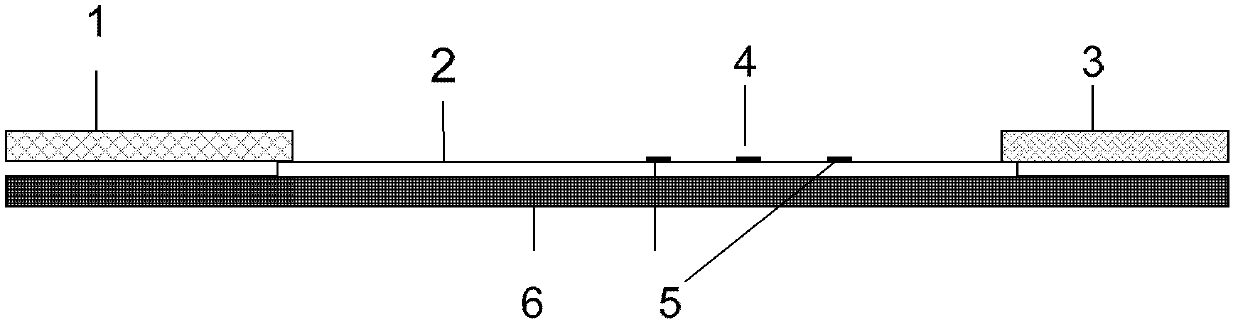
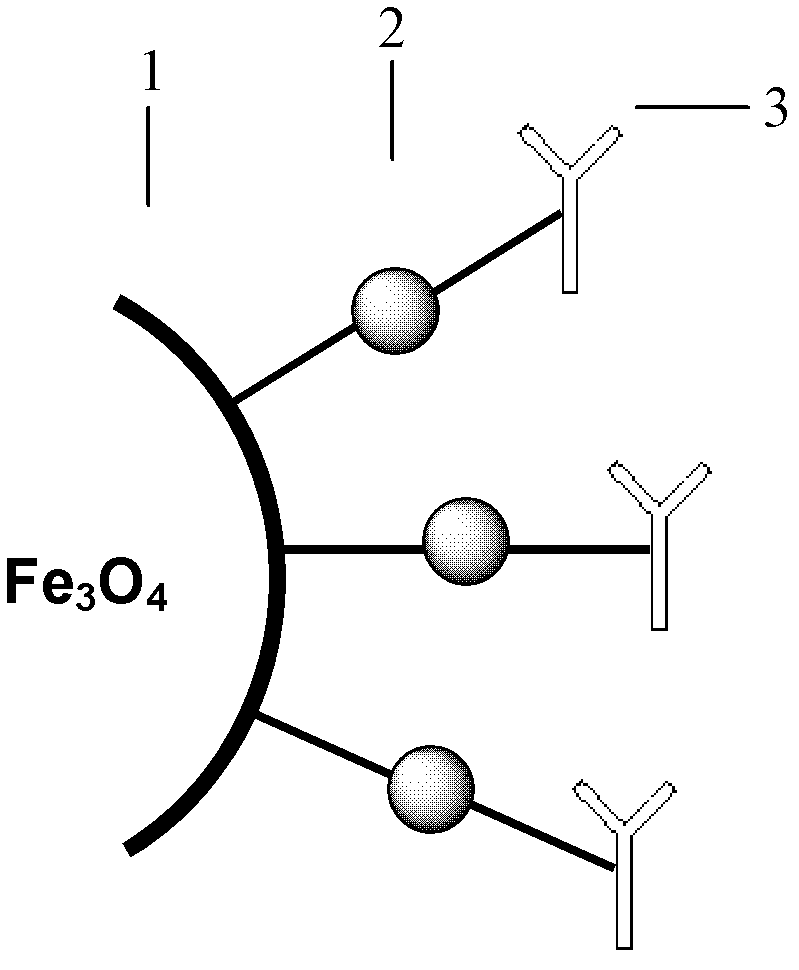
Examples
Embodiment 1
[0059] Example 1: Double-antibody sandwich determination of human chorionic gonadotropin (hCG)
[0060] (1) Synthesis and functionalization of magnetic nanoparticles
[0061] The preparation of magnetic nanoparticles is mainly divided into physical methods and chemical methods, among which chemical methods are more commonly used, and can be mainly divided into co-precipitation method, pyrolysis method, microemulsion method, hydrothermal method and sonochemical method. The co-precipitation method is selected in the embodiment of the present invention, which has the advantages of simple equipment, convenient operation, and low cost, and is a traditional method for preparing magnetic nanoparticles. The specific operation steps are as follows:
[0062] 1) Divalent iron salt (FeCl 2 4H 2 O) and ferric salt (FeCl 3 ·6H 2 O) The solution is ultrasonically mixed according to a mol ratio of 2:1, and added to a three-necked round-bottomed flask, and the precipitant NH in the droppi...
Embodiment 2
[0083] Embodiment 2: Competitive method is determined organophosphorus
[0084] (1) Synthesis of magnetic nanoparticles
[0085] Prepare Fe according to the method of embodiment 1 3 o 4 magnetic nanoparticles.
[0086] (2) Acidification of carboxymethyl chitosan
[0087] Take carboxymethyl chitosan sodium salt and add 1.5M HCl dropwise to dissolve, acidify for 30min, then add dropwise into absolute ethanol, let it stand for 12h to precipitate carboxymethyl chitosan, centrifuge at 15000rpm for 10min, and repeat with absolute ethanol for more times of washing to obtain carboxymethyl chitosan CMCH.
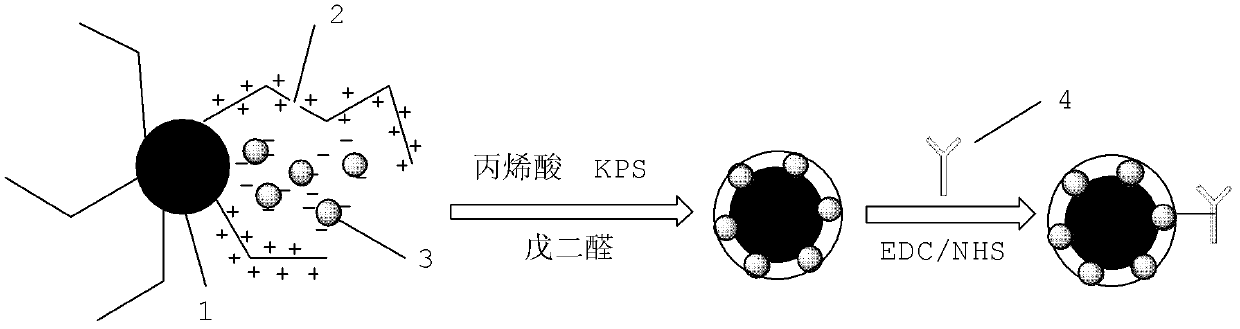
[0088] (3) Preparation of antibody-modified magnetic-fluorescence composite microspheres, the schematic diagram of which is constructed as follows image 3 shown
[0089] Fe 3 o 4 Magnetic nanoparticles were mixed with 1 mL of carboxymethyl chitosan solution, and EDC was used as a cross-linking agent, ultrasonically reacted for 1 h, magnetically separated, washed with ethanol...
PUM
| Property | Measurement | Unit |
|---|---|---|
| diameter | aaaaa | aaaaa |
Abstract
Description
Claims
Application Information
 Login to View More