
Formula and method for manufacturing ceramic tile blank bodies and glazed tiles by utilizing polished waste residues
A technology for polishing waste residue and ceramic tiles, which is applied in the field of manufacturing ceramic tile blanks and glazed tiles, can solve problems such as affecting the internal quality and appearance quality of products, foaming, producing glazed pinholes, air bubbles, etc., and achieves high temperature and high temperature viscosity. , the effect of good ductility
Patent Information
- Authority / Receiving Office
- CN · China
- Patent Type
- Patents(China)
- Current Assignee / Owner
- Publication Date
- 2014-08-06
Smart Images
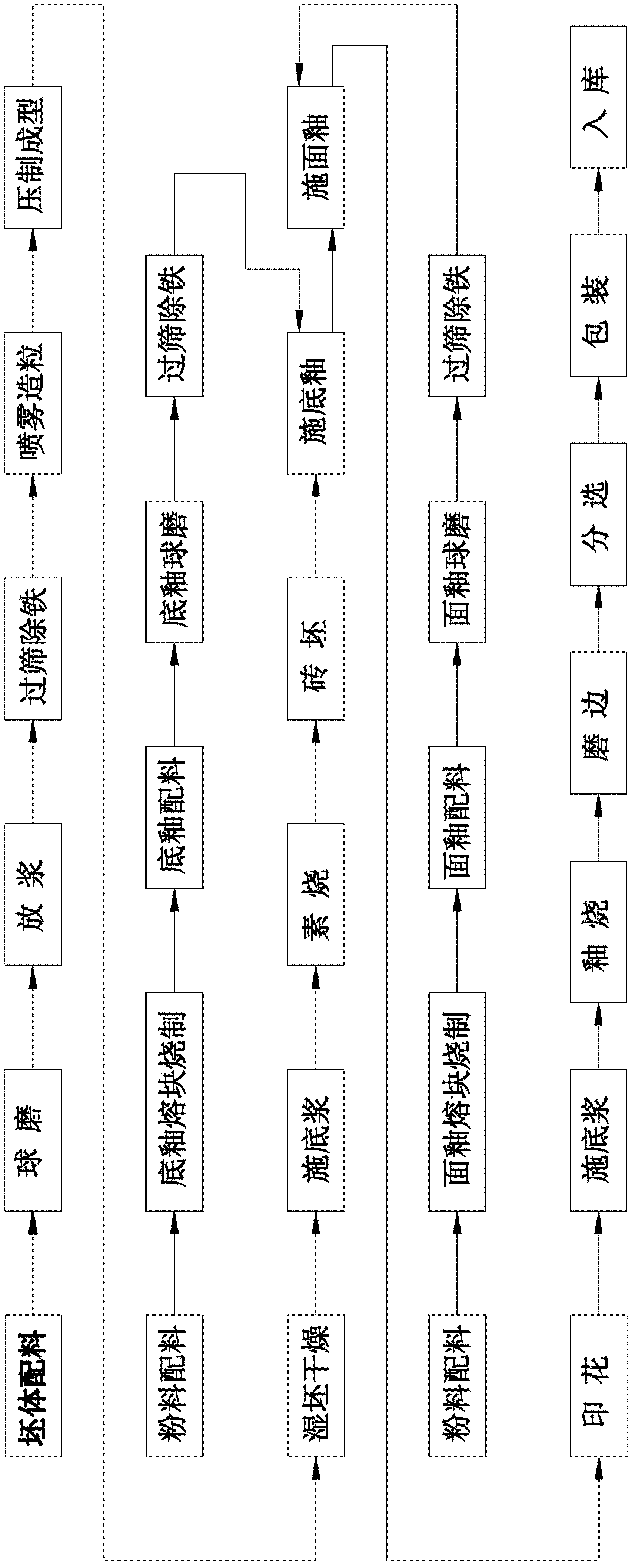
Figure 1 
Figure 2 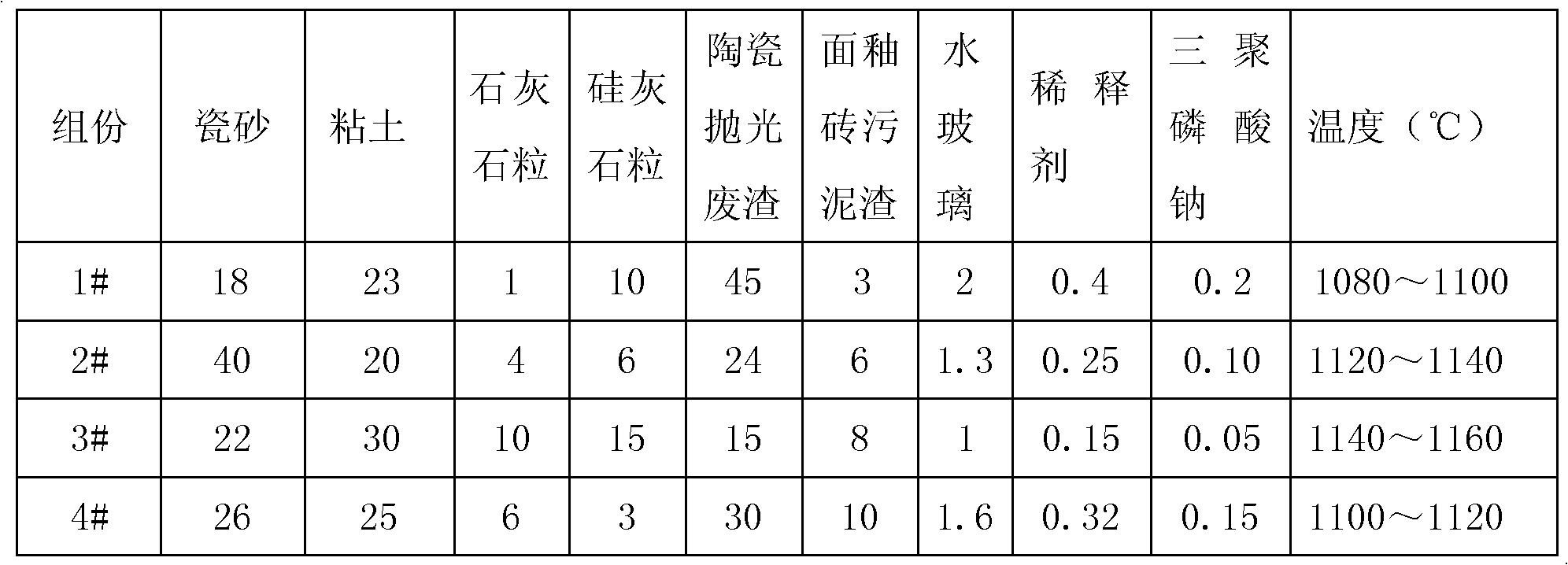
Figure 3
Abstract
Description
Technical field:
[0001] The invention relates to a formula and a method for manufacturing ceramic tile bodies and glazed tiles by using polishing waste slag. Background technique:
[0002] The output of China's building and sanitary ceramics has ranked first in the world for 18 consecutive years. However, with the rapid development of the ceramic industry, ceramic industry waste is increasing, especially ceramic polishing waste. According to incomplete statistics, only the Foshan ceramic production area produces more than 3 million tons of ceramic polishing slag every year, while the national ceramic polishing slag is estimated to be more than 10 million tons per year. Such a large amount of ceramic polishing waste is no longer a problem that can be solved by simple landfill, and with the development of economy and social progress, environmental protection has become the focus of people's attention. The accumulation of ceramic polishing waste occupies land and affects the lo...
Examples
Embodiment Construction
[0040] The present invention is described in further detail below in conjunction with embodiment.
[0041] The present invention relates to a kind of preparation method of using ceramic polishing waste slag to produce glazed tile, which comprises the following steps:
[0042] A. Preparation of green bodies with good high-temperature bonding properties
[0043] The composition of the green body is shown in the following table 2:
[0044] Table 2 Components of green body (parts by weight)
[0045]
[0046] The above-mentioned raw materials are batched according to weight, and an appropriate amount of water is added into a ball mill for ball milling, and ground into a slurry whose fineness, sieve residue, and moisture content meet the parameters in Table 1 below. The moisture content of the material (adjust the moisture content according to the size of the product and the dry and wet weather), and the particle gradation of the powder are the requirements in Table 1 below. I...