Spring-lever energy storage type fatigue tension test machine

A technology of tensile testing machine and testing machine, which is applied in the direction of measuring devices, instruments, scientific instruments, etc., can solve the problems of expensive equipment and high cost of experiments, and achieve the goal of reducing impact, reducing vibration and impact, and reducing costs Effect

CN102914478AInactive Publication Date: 2013-02-06BEIJING INSTITUTE OF TECHNOLOGYGY
4 Cites 23 Cited by

Patent Information

Authority / Receiving Office
CN · China
Current Assignee / Owner
Publication Date
2013-02-06
Estimated Expiration
Not applicable · inactive patent

Smart Images

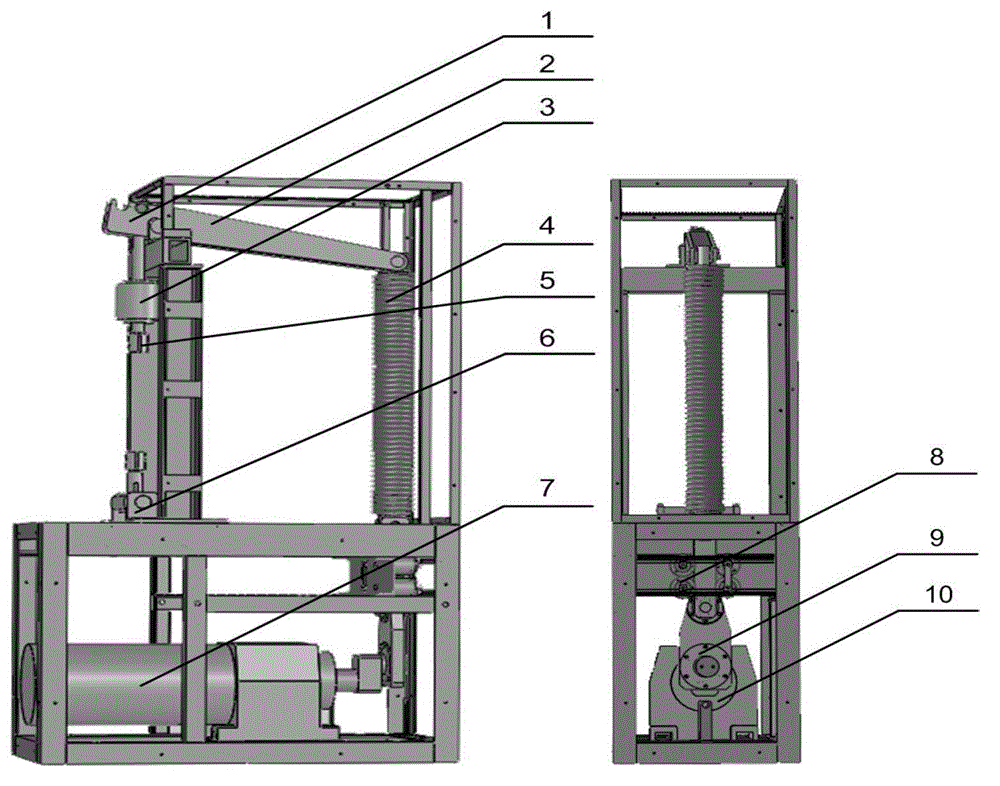
  • Figure 1
    Figure 1
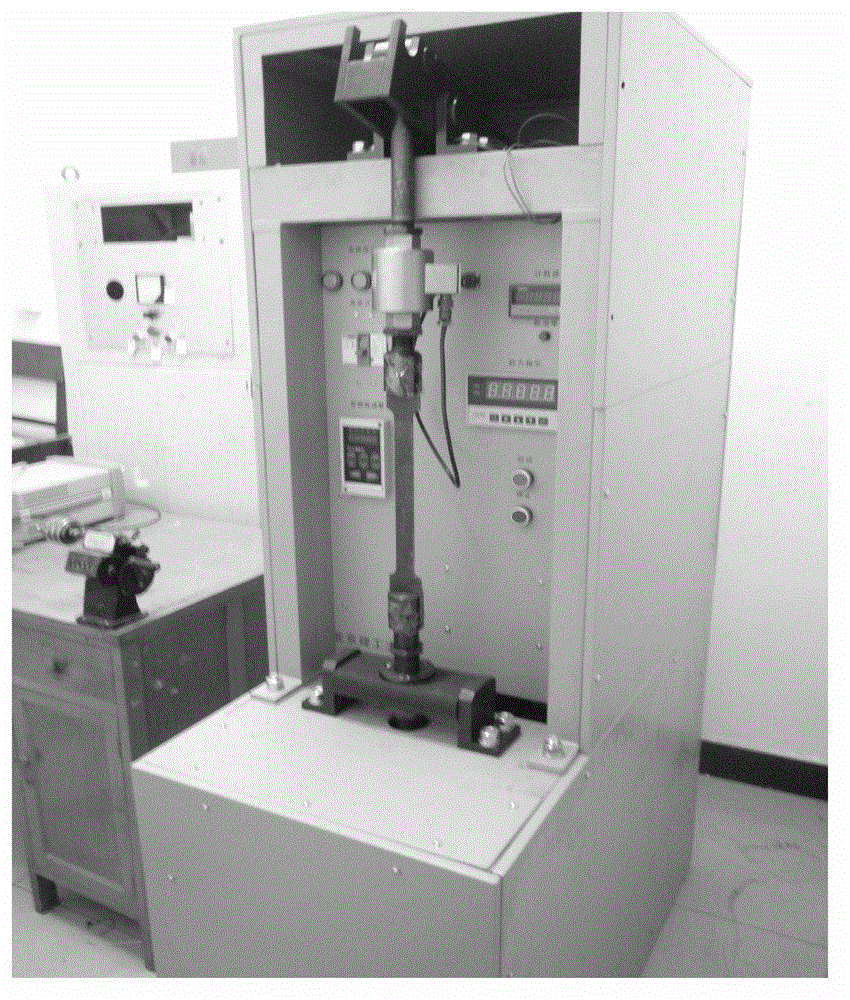
  • Figure 2
    Figure 2
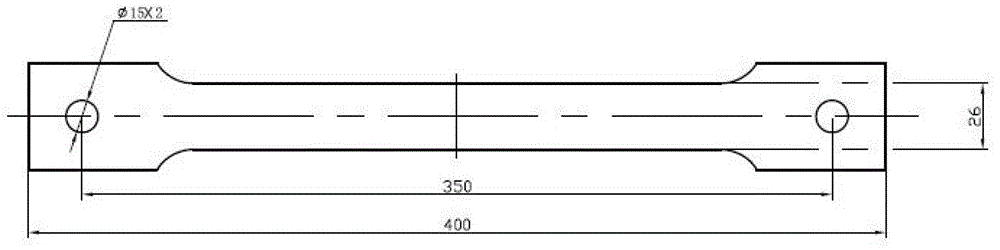
  • Figure 3
    Figure 3
Patent Text Reader

Abstract

The invention relates to a novel mechanical structure design scheme, which is used for testing test pieces made of various metal and alloy materials at room temperature and bearing tension fatigue characteristic, fatigue life and fatigue crack expansion test of mechanical parts (such as various mechanical connecting pieces). According to the scheme, a motor drives a speed reducer to rotate, the spring is subjected to energy storage by an eccentric shaft coupler and a crank connecting rod mechanism, the spring is controlled by four guide wheels to do vertical reciprocating motion, the potential energy of the spring is converted into moment through a lever, and extension and compression of the spring are reinforced by a lever mechanism, so that tension bars are separated vertically and the stretching effect is achieved; and force amplitude is changed through connecting points at different positions of the lever, so that fatigue tension tests of different frequency and different amplitude are realized. The invention is simple in structure and low in manufacturing cost, adopts a mechanical structure, can meet the basic performance requirement of the fatigue tension test, and can be applied to the tensile fatigue test under the lab environment.
Need to check novelty before this filing date? Find Prior Art

Description

technical field

[0001] The invention relates to a design of a simple testing machine for performing material fatigue tensile tests in a laboratory environment, which can realize fatigue tests of tensile test pieces under the action of different frequencies and load values ​​within a certain range, and provides materials for fatigue tests in materials science A simple and convenient solution. Background technique

[0002] Fatigue tensile testing machine is a machine mainly used to determine the fatigue performance of metal or alloy materials when they are subjected to cyclic tensile loads. At present, there are more common electromagnetic tensile testing machines and hydraulic tensile testing machines. The former uses the principle of electromagnetic resonance to achieve periodic tensile loads and requires electromagnetic conversion devices; the latter uses the principle of hydraulic pulsating loads to achieve predetermined pulsating tension. , it is necessary to design hydr...

Examples

Embodiment Construction

[0013] In order to better illustrate the purpose and advantages of the present invention, the present invention will be further described below in conjunction with the accompanying drawings and specific embodiments.

[0014] In the embodiment, the 16MnR material commonly used in the pressure vessel is used to make the tensile test piece. The effective width of the test piece is 26mm, and the thickness of the test piece is 4mm. The main structural dimensions of the test piece figure 2 shown.

[0015] Implementation process: 1. First, pull out the fixing screws of the upper and lower stretching heads 5 and 6 of the stretching machine, and when the specimen is aligned with the upper and lower stretching heads, insert the fixing screws into it. At this time, the specimen has been fixed on the stretching machine. 2. Turn on the power switch, and the power indicator light will be on. 3. Set the pre-tightening force to 10000N by adjusting the base nut, and the pre-tightening force...