
White dust suppressant and preparation method and application thereof
A dust suppressant, white technology, applied in the direction of chemical instruments and methods, other chemical processes, etc., can solve the problems of inconvenient management of coal yards, and achieve the effects of convenient material stacking management, simple construction, and easy spraying
- Summary
- Abstract
- Description
- Claims
- Application Information
AI Technical Summary
Problems solved by technology
Method used
Image

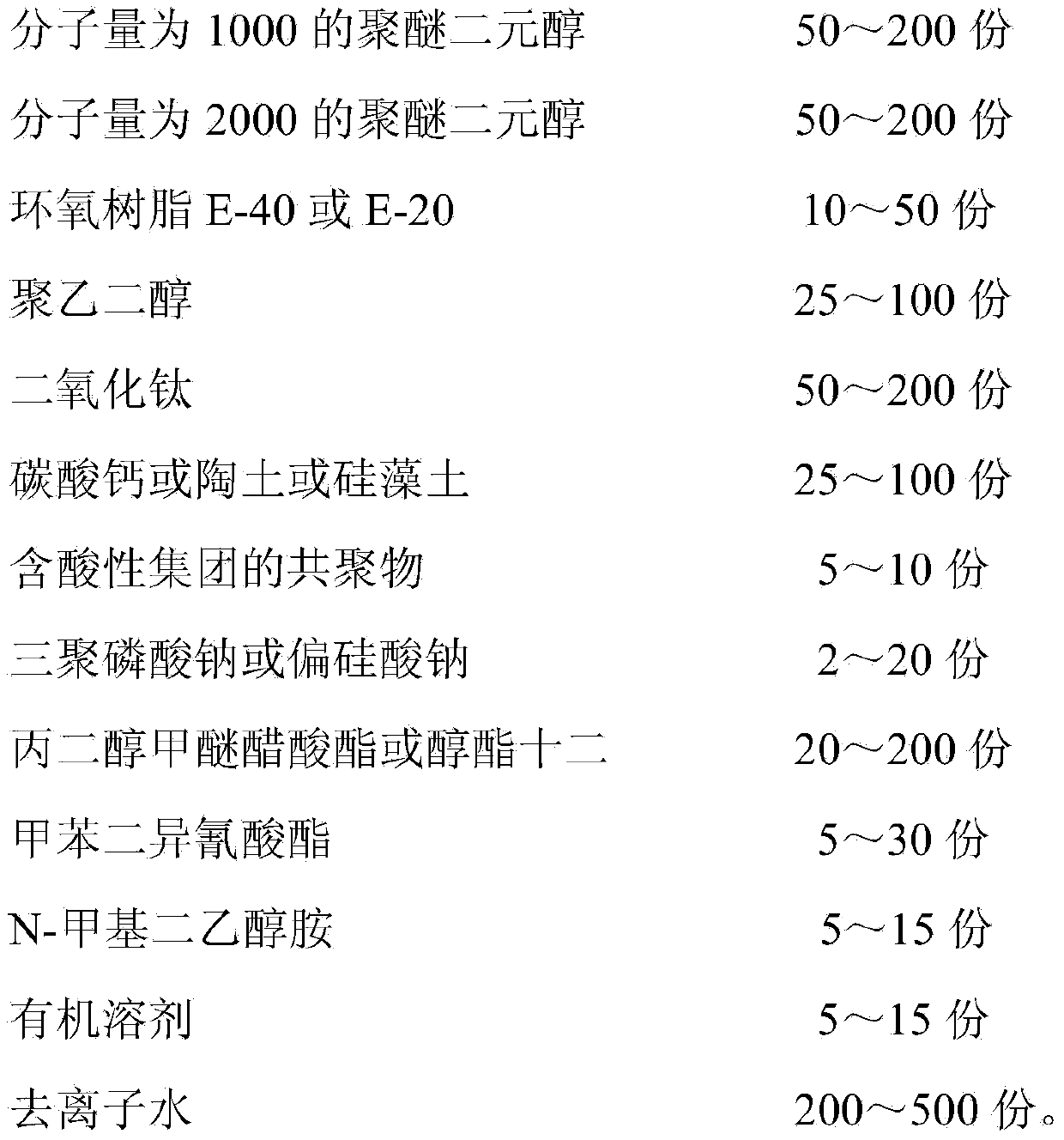
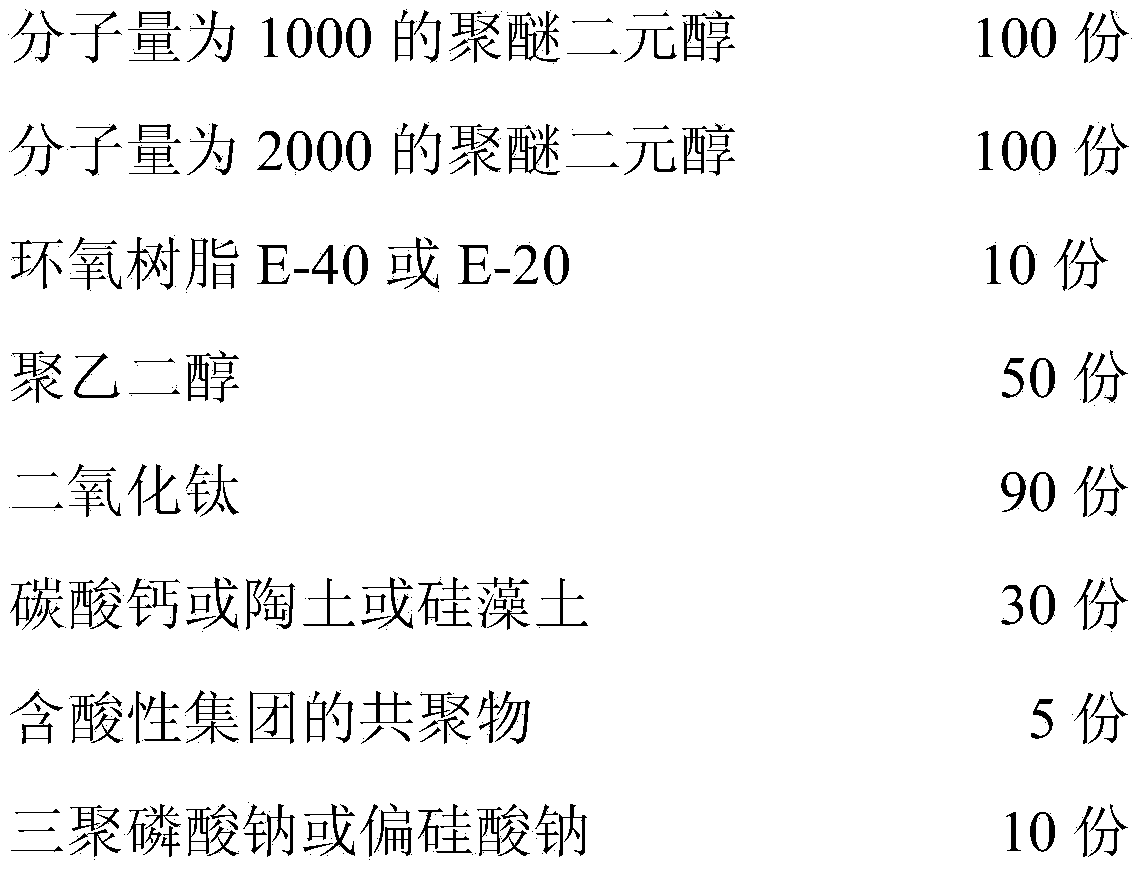
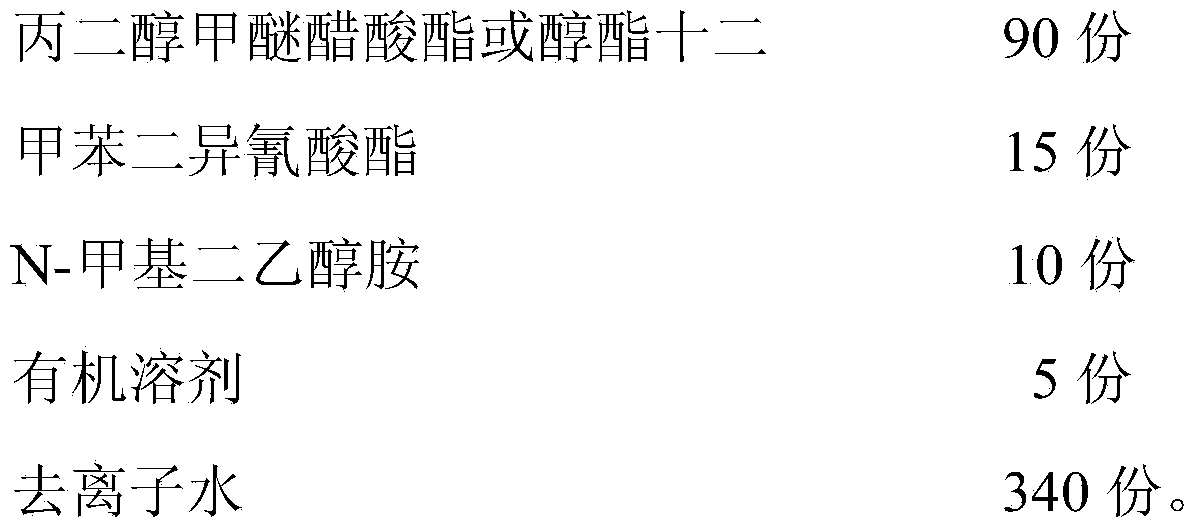
Examples
Embodiment 1
[0037] Under the protection of dry nitrogen, 100 parts by weight of polyether diol with a molecular weight of 1000, 100 parts by weight of polyether diol with a molecular weight of 2000, and 10 parts by weight of epoxy resin E-40 were mixed, and stirred at 2m / s Heating at high speed, then adding 15 parts by weight of toluene diisocyanate and 10 parts by weight of N-methyldiethanolamine, raising the temperature to 82°C, and keeping the temperature for 3 hours; then adding 90 parts by weight of propylene glycol methyl ether acetate, 3 parts by weight of organic solvent three Ethylamine, react at 65°C for 1h, finally add 50 parts by weight of polyethylene glycol, react at 60°C for 0.5h, cool down to below 40°C, and discharge to obtain a prepolymer;
[0038] Add 90 parts by weight of titanium dioxide, 30 parts by weight of calcium carbonate, 5 parts by weight of acid group-containing copolymer Disperbyk-110, 10 parts by weight of sodium tripolyphosphate, 2 parts by weight of organi...
Embodiment 2
[0042] Under the protection of dry nitrogen, 50 parts by weight of polyether diols with a molecular weight of 1000, 150 parts by weight of polyether diols with a molecular weight of 2000, and 15 parts by weight of epoxy resin E-20 were mixed, and stirred at 3m / s Heating at a high speed, then adding 10 parts by weight of toluene diisocyanate and 5 parts by weight of N-methyldiethanolamine, heating up to 80 ° C, and keeping the temperature for 3 hours; then adding 150 parts by weight of alcohol ester twelve, 2 parts by weight of organic solvent ethylene glycol Amine, react at 60°C for 1.5h, finally add 25 parts by weight of polyethylene glycol, react at 55°C for 1h, cool down to below 40°C, and discharge to obtain a prepolymer;
[0043] Add 50 parts by weight of titanium dioxide, 80 parts by weight of clay, 9 parts by weight of acid group-containing copolymer Disperbyk-110, 10 parts by weight of sodium metasilicate, 3 parts by weight of organic solvent ethylenediamine and 480 par...
Embodiment 3
[0047]Under the protection of dry nitrogen, 50 parts by weight of polyether diols with a molecular weight of 1000, 50 parts by weight of polyether diols with a molecular weight of 2000, and 50 parts by weight of epoxy resin E-40 were mixed. Heat up at a stirring speed, then add 15 parts by weight of toluene diisocyanate and 10 parts by weight of N-methyldiethanolamine, heat up to 85°C, and keep warm for 0.5h; then add 20 parts by weight of propylene glycol methyl ether acetate, 3 parts by weight of organic Solvent triethylamine, react at 60°C for 1h, finally add 80 parts by weight of polyethylene glycol, react at 60°C for 1h, cool down to below 40°C, and discharge to obtain a prepolymer;
[0048] Add 150 parts by weight of titanium dioxide, 25 parts by weight of diatomaceous earth, 10 parts by weight of acid group-containing copolymer Disperbyk-110, 15 parts by weight of sodium metasilicate, 5 parts by weight of organic solvent triethylamine and 230 parts by weight of Parts of...
PUM
 Login to View More
 Abstract
Description
Claims
Application Information
 Login to View More