Image denoising method based on separable total variation model

A total variation model and image technology, applied in the field of image processing, can solve problems such as unsatisfactory signal-to-noise ratio, slow convergence speed, and complex algorithms

CN103955893AInactive Publication Date: 2014-07-30XIAN UNIV OF TECH
4 Cites 8 Cited by

Patent Information

Authority / Receiving Office
CN · China
Patent Type
Applications(China)
Current Assignee / Owner
Publication Date
2014-07-30
Estimated Expiration
Not applicable · inactive patent

Smart Images

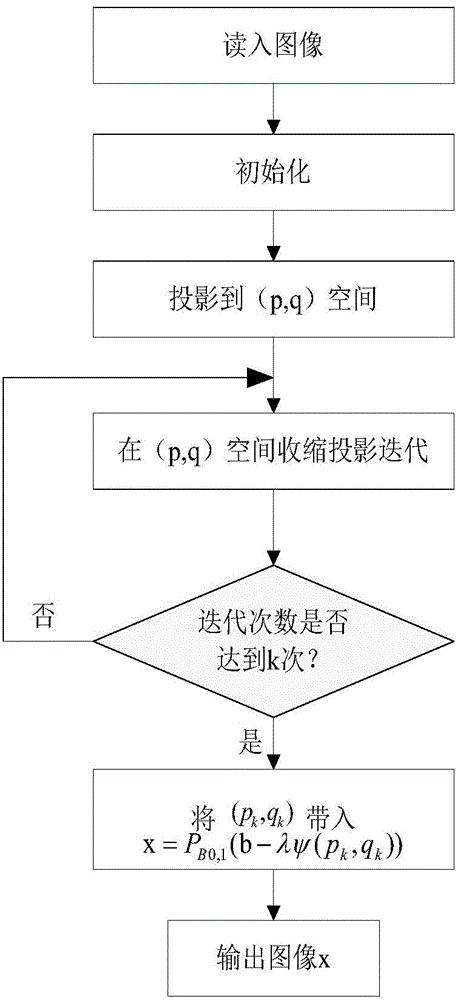
  • Figure 1
    Figure 1
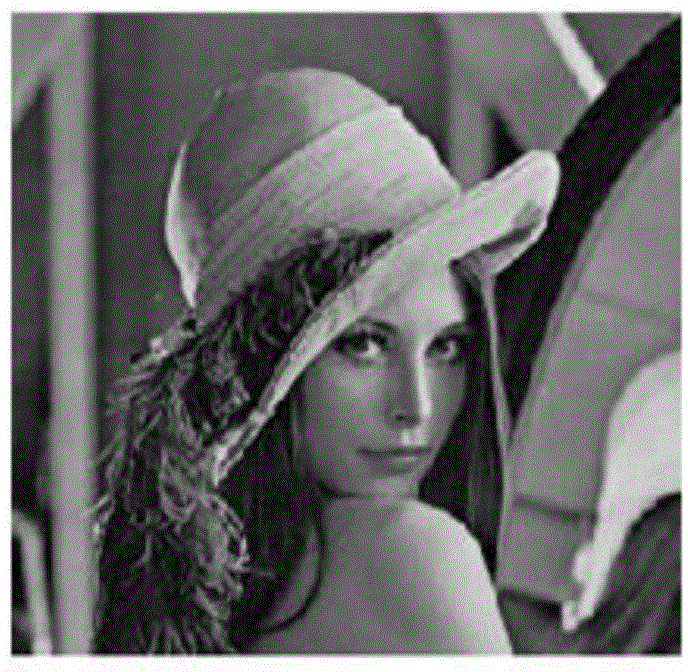
  • Figure 2
    Figure 2
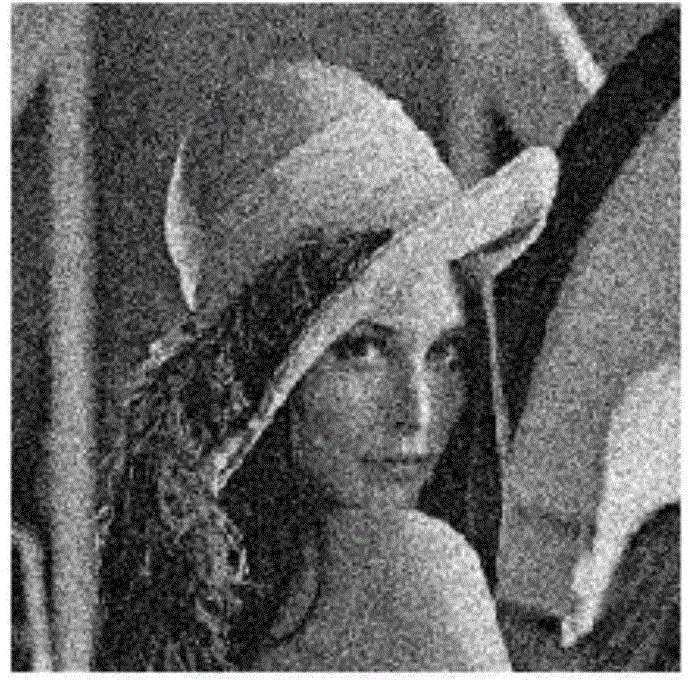
  • Figure 3
    Figure 3
Patent Text Reader

Abstract

The invention discloses an image denoising method based on a separable total variation model. The method includes the steps that elements on an image are projected to (p, q) space, shrinkage projection is conducted on the (p, q) space, and the denoised image is obtained after iteration. The method particularly includes the steps of building the total variation model with separable elements, solving the separable total variation model, and obtaining the denoised image. An energy function of the image is determined based on the variation method thought, the image is in a smooth state by balancing the energy function, the Pseudo-Gibbs phenomenon is eliminated, the defects that in the prior art, an algorithm is complex and large in operand are overcome by building the discrete total variation model, the operation speed is increased, and the convergence speed and the signal to noise ratio are increased. The calculation speed and accuracy are adjusted by changing the number k of iteration times, the method is flexible to use and has the high peak value signal to noise ratio, random noise in the image can be well removed, details and textures are effectively reserved, and the method is especially suitable for processing random noise.
Need to check novelty before this filing date? Find Prior Art

Description

technical field

[0001] The invention belongs to the technical field of image processing and relates to an image denoising method based on a separable total variation model. Background technique

[0002] During the process of acquisition, storage and transmission, images are inevitably polluted by noise, and denoising is needed to improve the quality. The current image denoising methods are mainly divided into the following categories: traditional signal processing methods, such as neighborhood filtering, median filtering, etc., these methods are simple in principle, but the effect is limited; wavelet transform method, wavelet method has a powerful time The frequency positioning function is the most widely used at present, but it lacks translation invariance, and the pseudo-Gibbs phenomenon will be generated in the denoising process, resulting in image distortion; multi-scale geometric analysis (MGA), including ridgelet (Ridgelet) transform, single-scale Ridgelet (Monoscale ...

Examples

Embodiment Construction

[0071] The present invention will be described in detail below in conjunction with the accompanying drawings and embodiments.

[0072] First, a total variation model with separable elements is established.

[0073] The noisy image model can be expressed as

[0074] x+w=b (1)

[0075] In the formula, the matrix x represents the noise-free image, w represents the noise, and b represents the image polluted by noise. The total variation model of image denoising is

[0076] min | | x | | TV subjectto | | x - b | | F ...