
Water treatment method and device for catalytic ozone oxidation
A technology for ozone oxidation and water treatment, applied in the direction of oxidized water/sewage treatment, water/sewage treatment, chemical instruments and methods, etc., can solve problems such as unstable ozone, achieve improved treatment efficiency, fast treatment process, and increased rate Effect
- Summary
- Abstract
- Description
- Claims
- Application Information
AI Technical Summary
Problems solved by technology
Method used
Image

Examples
Embodiment 1
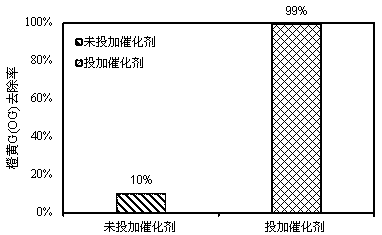
[0037] The printing and dyeing wastewater containing refractory organic matter orange G (OG) was passed into the reaction tower, the pH value of the wastewater was 3.0, the concentration of ozone in the reaction tower was 100 mg / L, the concentration of sodium sulfite was 500 mg / L, and the treatment time was 1 min. Compared with no catalyst, the removal rate of organic matter orange G increased from 10% to 99%.
[0038] figure 2 It is the removal effect diagram of printing and dyeing wastewater containing refractory organic matter orange G (OG) in this example. The left column in the figure shows the removal rate of organic matter without adding catalyst, and the right column shows the removal rate of organic matter when catalyst is added.
Embodiment 2
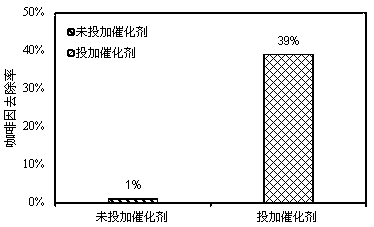
[0040] The pharmaceutical wastewater containing caffeine is passed into the reaction tower, and the pH value of the wastewater is 3.0. The concentration of ozone in the reaction tower was 100 mg / L, the concentration of potassium sulfite was 50 mg / L, and the treatment time was 0.02 min. Compared with that without catalyst, the removal rate of caffeine increased from 1% to 39%.
[0041] image 3 It is the picture of the removal effect of pharmaceutical wastewater containing caffeine in this example. The left column in the figure shows the removal rate of organic matter when no catalyst is added, and the right column shows the removal rate of organic matter when catalyst is added.
Embodiment 3
[0043] The coal chemical industry wastewater containing refractory organic matter phenol is passed into the reaction tower, and the pH value of the wastewater is 4.0. The concentration of ozone in the reaction tower was 50 mg / L, the concentration of sodium bisulfite was 10 mg / L, and the treatment time was 0.01 min. Compared with that without adding catalyst, the removal rate of organic phenol increased from 2% to 35%.
PUM
 Login to View More
 Abstract
Description
Claims
Application Information
 Login to View More