
Power shunting method for synchronous wireless information and power transfer of full duplex relay
A synchronous transmission and full-duplex technology, applied in the field of wireless transmission, can solve the problem of low spectrum efficiency and achieve the effect of improving spectrum efficiency and reducing dependence
- Summary
- Abstract
- Description
- Claims
- Application Information
AI Technical Summary
Problems solved by technology
Method used
Image

Examples
Embodiment Construction
[0082] Below in conjunction with accompanying drawing, the present invention is described in further detail:
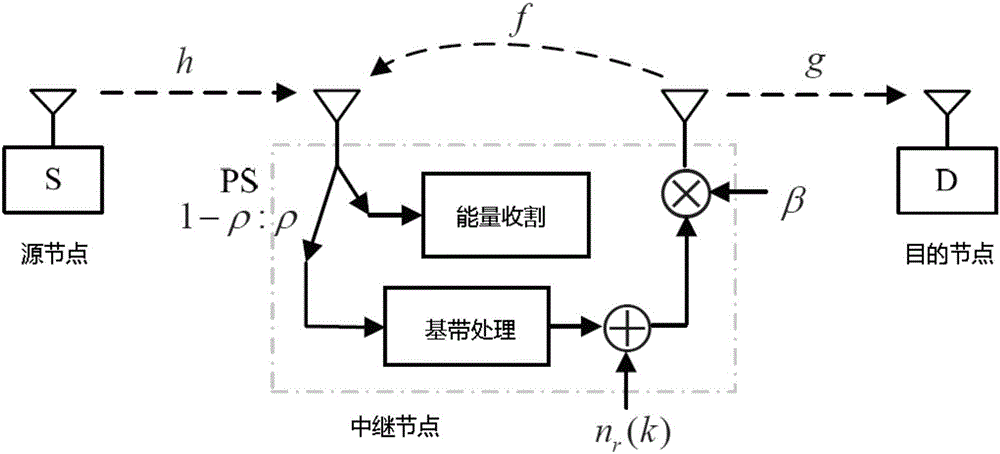
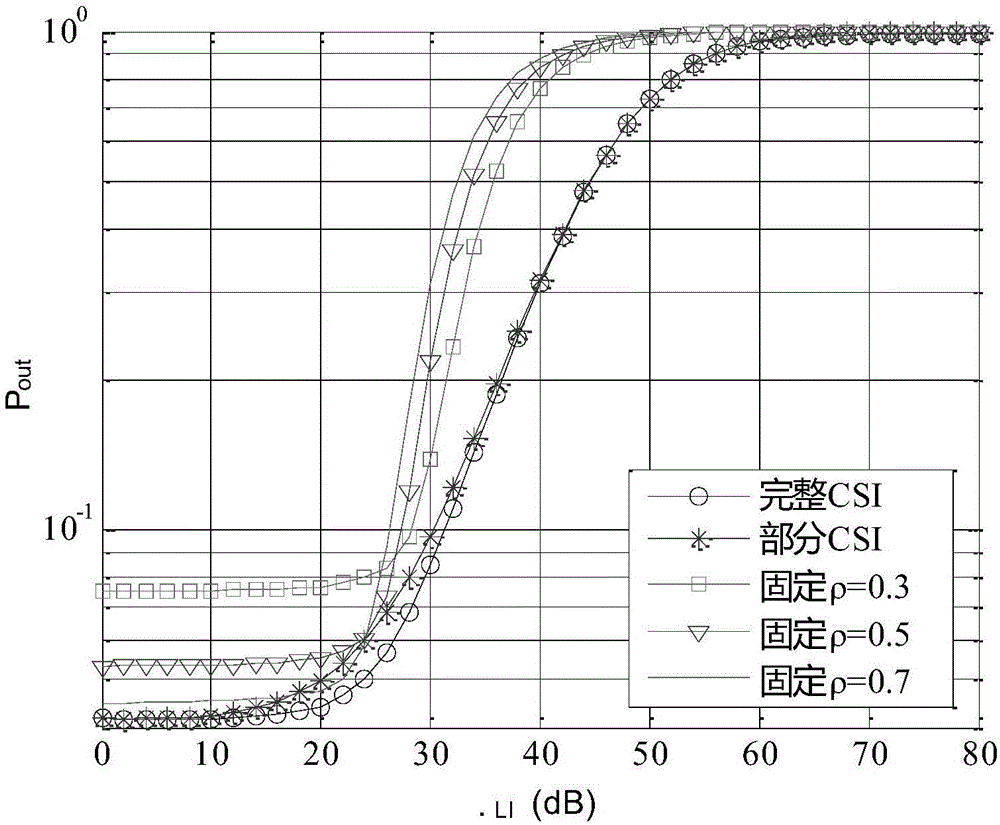
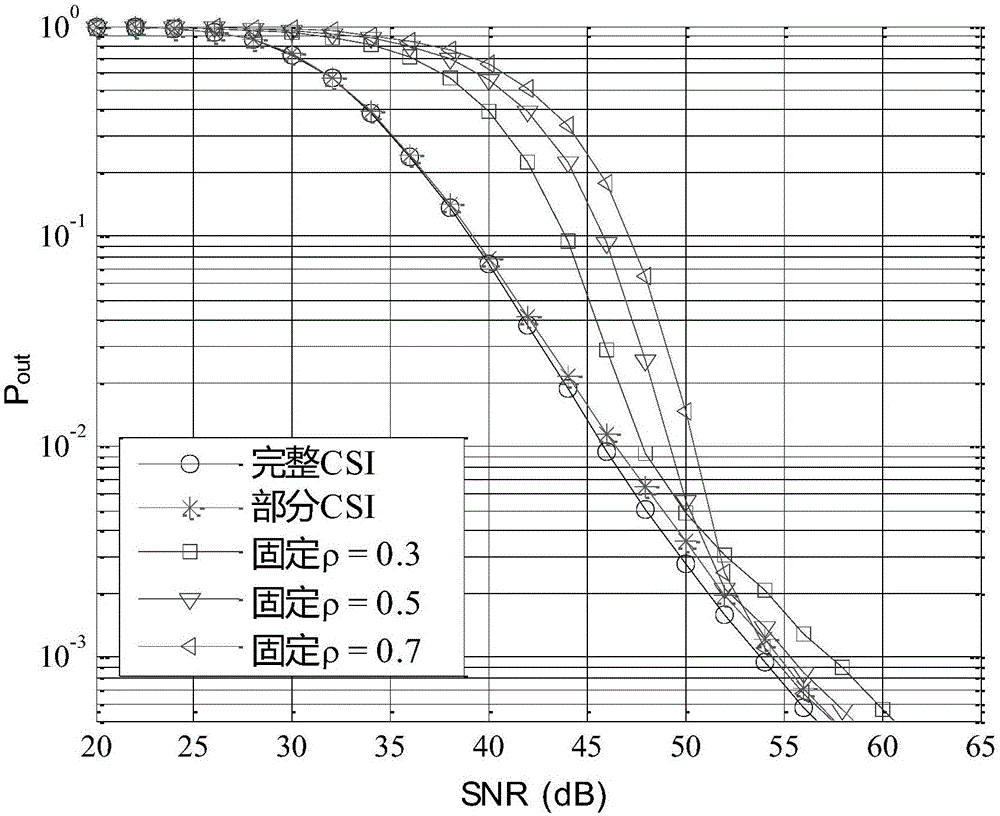
[0083] Since the PSR protocol has better system performance than the TSR protocol, the present invention conducts research on SWIPT based on power splitting for full-duplex relay networks, and proposes a specific implementation method for full-duplex relay SWIPT based on power splitting. In order to minimize the system outage probability, the present invention respectively designs power splitting methods based on complete channel state information (Channel State Information, CSI) and partial CSI; for these two power splitting methods, the analytical solution of the quartic equation is given When determining the power split ratio, the power split method based on partial CSI does not need the CSI of the second hop link, which greatly reduces the cost of CSI estimation and feedback. Simulation results show that the power splitting method proposed in the present invention...
PUM
 Login to View More
 Abstract
Description
Claims
Application Information
 Login to View More