
Sn-containing low-temperature seal glass and preparing and using methods thereof
A sealing glass and low temperature technology, which is applied in the field of low temperature precision packaging glass, can solve the problems of sealing glass refractive index change, valence change, etc., and achieve the effect of low price and stable process
- Summary
- Abstract
- Description
- Claims
- Application Information
AI Technical Summary
Problems solved by technology
Method used
Image

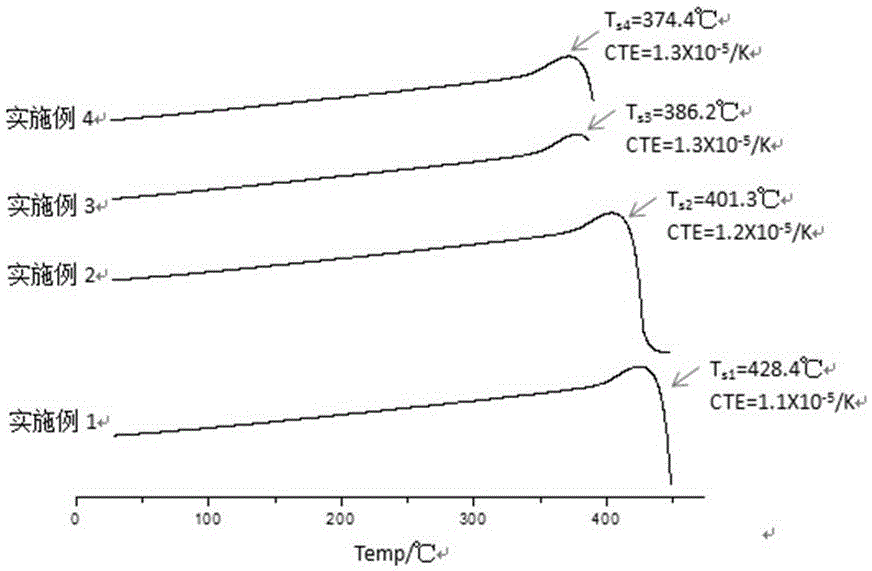
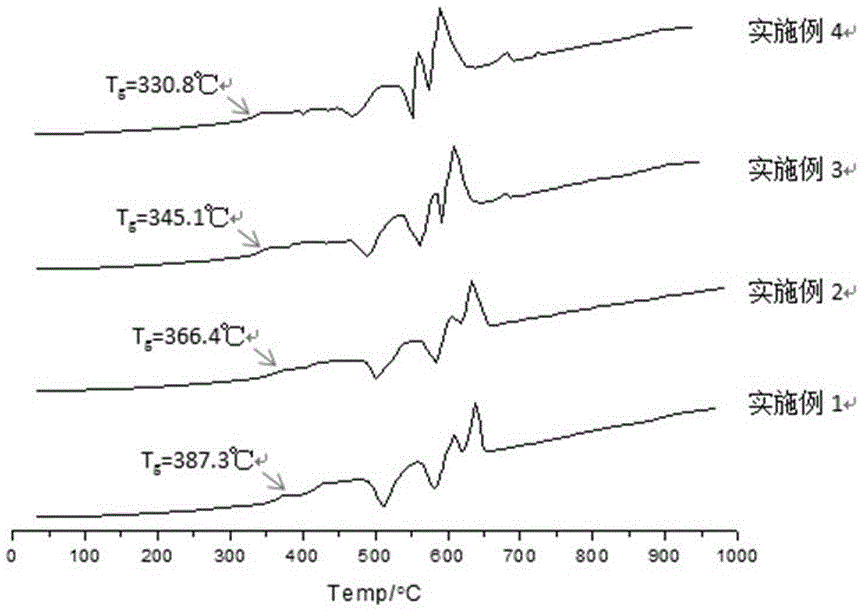
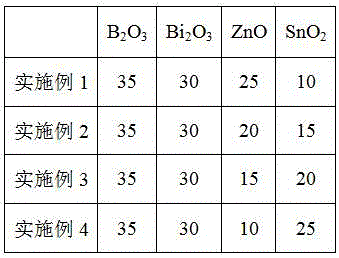
Examples
Embodiment 1
[0030] Embodiment 1: Preparation and sealing of materials
[0031] According to the proportioning of each component of embodiment 1 in table 1, take a certain amount of analytically pure raw material (B 2 o 3 、 Bi 2 o 3 , ZnO, SnO 2 ), use a planetary ball mill for 24 hours to mix evenly; then put the powder into a platinum crucible, place it in the air atmosphere of a box-type resistance furnace, heat it to 1000°C at 3°C / min, and keep it warm for 1 hour; then, take out the crucible, Pour the melt into deionized water for rapid cooling, and dry to obtain fragments of glass melt; grind and pass through a 100-mesh sieve to obtain glass powder. Mix glass powder with polyvinyl alcohol, fish oil, ethanol and toluene (80%, 2%, 1%, 10%, 7% by weight) to form a slurry, and disperse evenly in a ball mill; tape casting, natural Dry, then cut into the embryo body of the desired shape; place the embryo body on the part to be sealed, heat up in an electric furnace at a rate of 2°C / min...
Embodiment 2
[0032] Embodiment 2: Preparation and sealing of materials
[0033] According to the proportioning of each component of embodiment 2 in table 1, take a certain amount of analytically pure raw material (B 2 o 3 、 Bi 2 o 3 , ZnO, SnO 2 ), and mixed evenly with a planetary ball mill for 24 hours; then put the powder into a platinum crucible, place it in the air atmosphere of a box-type resistance furnace, heat it to 980°C at 3°C / min, and keep it warm for 1 hour; then, take out the crucible, Pour the melt into deionized water for rapid cooling, and dry to obtain fragments of glass melt; grind and pass through a 100-mesh sieve to obtain glass powder. Mix glass powder with methylcellulose, polyvinyl alcohol, n-butanol and acetone (82%, 2%, 2%, 8%, 6% by weight) to form a slurry, and disperse evenly in a ball mill; Stretching, drying naturally, and then cutting the embryo body into the desired shape; placing the embryo body on the part to be sealed, heating it in an electric furn...
Embodiment 3
[0034] Embodiment 3: Preparation and sealing of materials
[0035] According to the proportioning of each component of embodiment 3 in table 1, take a certain amount of analytically pure raw material (B 2 o 3 、 Bi 2 o 3 , ZnO, SnO 2 ), use a planetary ball mill for 24 hours to mix evenly; then put the powder into a platinum crucible, place it in the air atmosphere of a box-type resistance furnace, heat it to 950°C at 3°C / min, and keep it warm for 1 hour; then, take out the crucible, Pour the melt into deionized water for rapid cooling, and dry to obtain fragments of glass melt; grind and pass through a 100-mesh sieve to obtain glass powder. Mix glass powder with epoxy resin, polyacrylamide, isopropanol and toluene (84%, 1.5%, 0.5%, 9%, 5% by weight) to form a slurry, and disperse evenly in a ball mill; casting Shaping, drying naturally, and then cutting into the embryo body of the desired shape; place the embryo body on the part to be sealed, heat up at a rate of 2°C / min ...
PUM
| Property | Measurement | Unit |
|---|---|---|
| Softening point | aaaaa | aaaaa |
| Linear expansion coefficient | aaaaa | aaaaa |
| Softening point | aaaaa | aaaaa |
Abstract
Description
Claims
Application Information
 Login to View More