

Face feature extraction method based on heterogeneous tensor decomposition
A face feature and tensor decomposition technology, which is applied in the field of face feature extraction based on heterogeneous tensor decomposition, can solve problems such as the inability to make good use of data internal structure information, avoid tedious steps, and improve feature extraction speed. Effect
Patent Information
- Authority / Receiving Office
- CN · China
- Current Assignee / Owner
- Publication Date
- 2017-11-24
- Estimated Expiration
- Not applicable · inactive patent
Smart Images
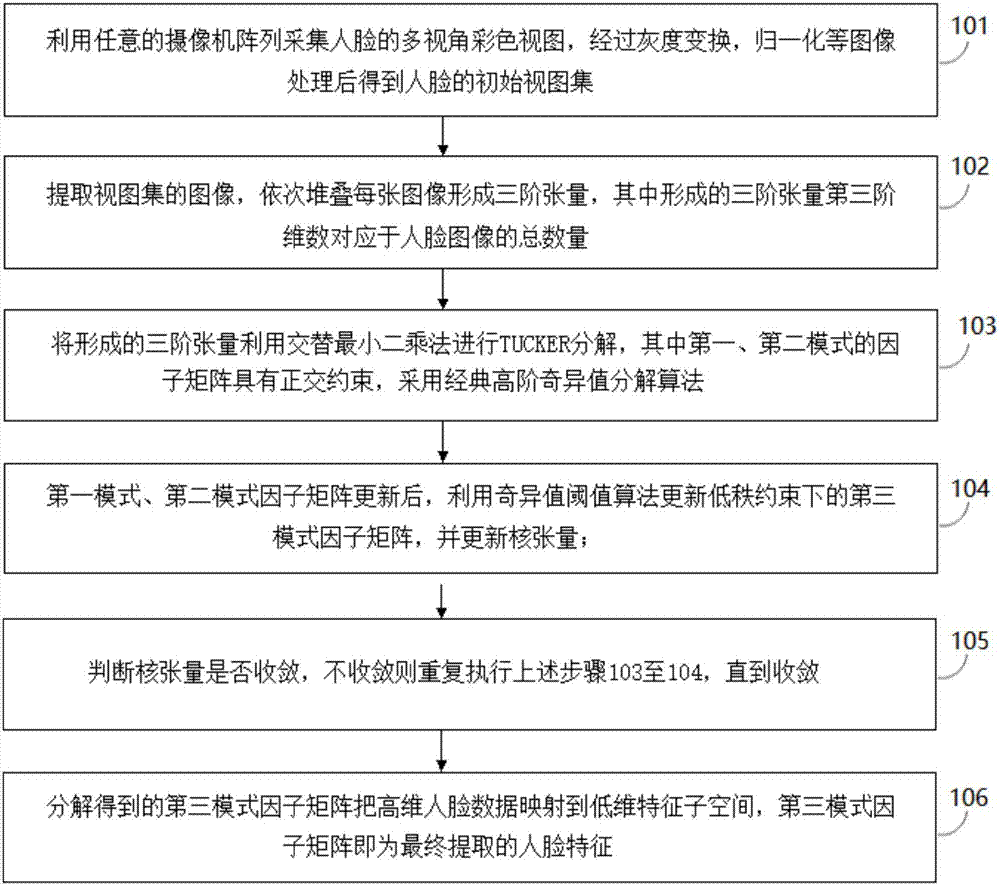
Figure 1 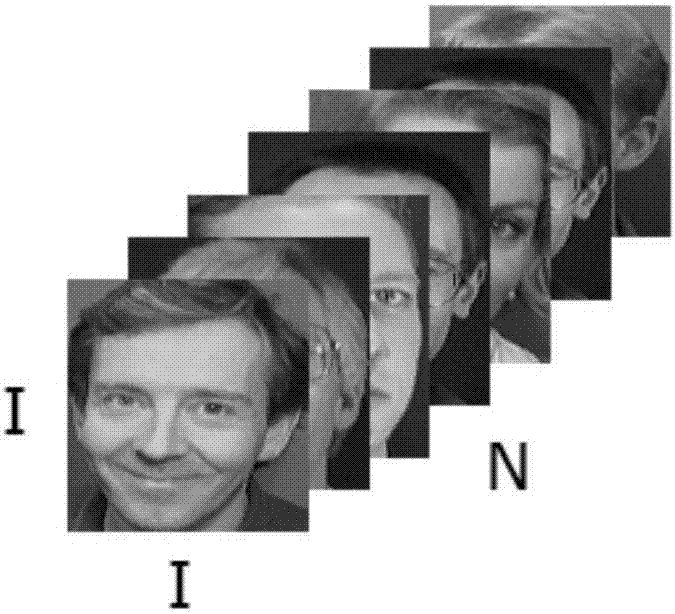
Figure 2 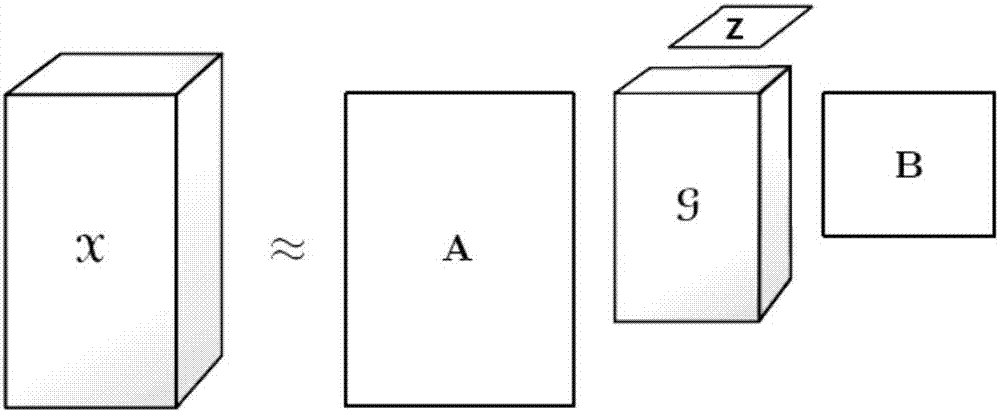
Figure 3
Abstract
Description
technical field
[0001] The invention relates to a method for extracting human face features. In particular, it involves a face feature extraction method based on heterogeneous tensor decomposition. Background technique
[0002] Data from multiple sources are arranged to form a tensor [1]. In order to dig deep into the intrinsic information of the tensor, it is necessary to decompose the tensor. Tensor factorization is an emerging powerful tool for exploring multidimensional data. The TUCKER and PARAFAC models are the most basic models of tensor decomposition. Tensor decomposition extracts and classifies features by capturing the multiple linear and multi-angle structures of large-scale multi-dimensional datasets. Tensor decomposition is widely used in medicine and neuroscience, social network analysis, computer vision [2], recommendation system and other fields.
[0003] Supervised and unsupervised dimensionality reduction and feature extraction based on tensor representa...
Examples
example
[0071] The AT&T ORL dataset [7] includes 40 different people, 10 images of each face, so a total of 400 face images. All images are collected by people standing in front of a black background, under different lighting, and under different facial expressions (eyes open / closed, smiling / not smiling), and facial details (with glasses / without glasses). In our experiments, each image is resized to 32X 32 pixels.
[0072] Evaluation Criteria
[0073] Clustering accuracy accuracy(AC)
[0074] Clustering normalized mutual information normalized mutual information (NMI) [8]
[0075] Comparison Algorithm