[0002] In recent years, with the continuous increase of domestic labor costs, it is a development trend for enterprises to
upgrade their technology to replace humans with machines; at present, most of the manufacturers and
assemblers of electronic products such as mobile phones and computers are located in China, and most domestic enterprises in this industry are still Using the traditional manual assembly production mode, the production efficiency is low and the production cost is high; in the production process of mobile phones, tablet computers and other electronic products, there are many kinds of materials involved, such as vibration motors, receivers, light boards, cameras, etc. Assemble to its PCB board to achieve circuit conduction; adopt the traditional manual assembly method, generally use the assembly cable to equip multiple manual stations for
assembly line assembly, which takes up a lot of space, high labor costs, and it is difficult to ensure assembly consistency and production capacity; The feeding of materials is generally completed by the Feida feeding mechanism. In order to realize the automatic assembly of electronic product parts (materials) such as mobile phones and computers, it is necessary to design the assembly
manipulator and its bearing mechanism, and use the assembly
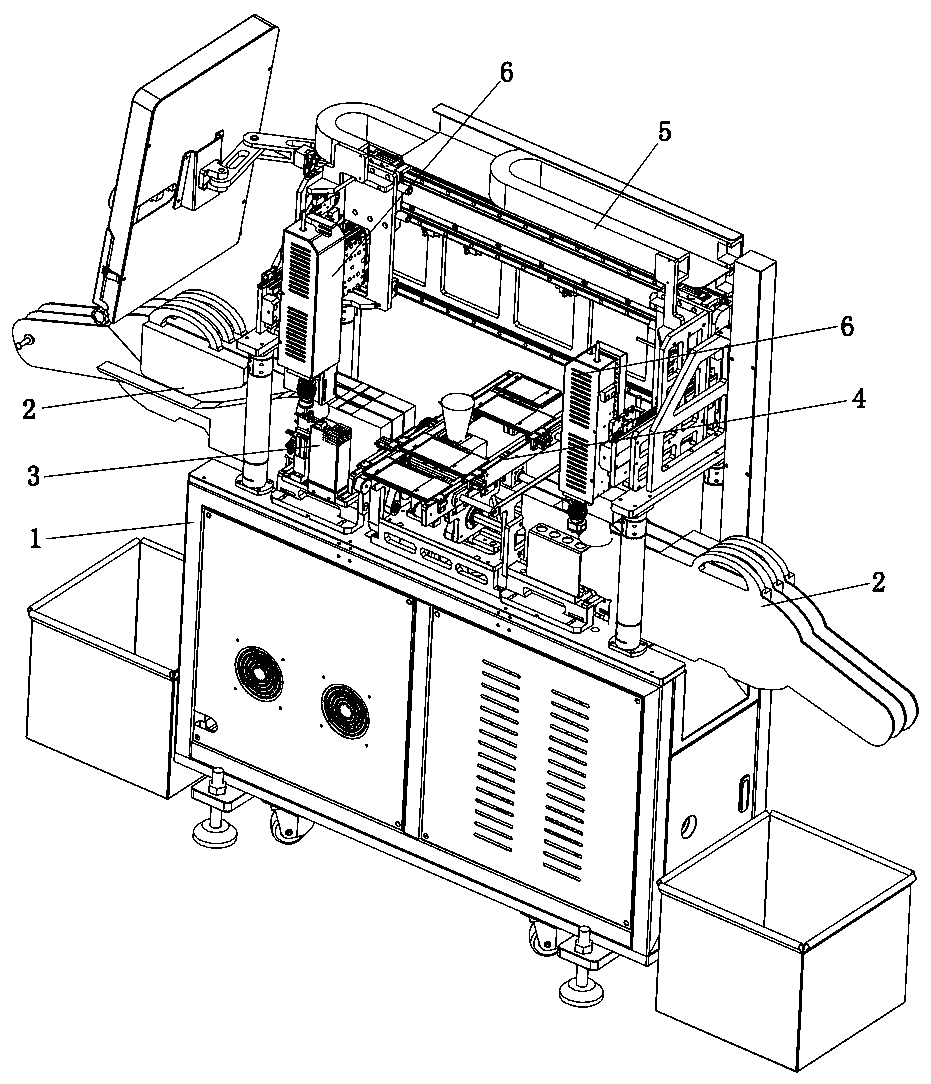
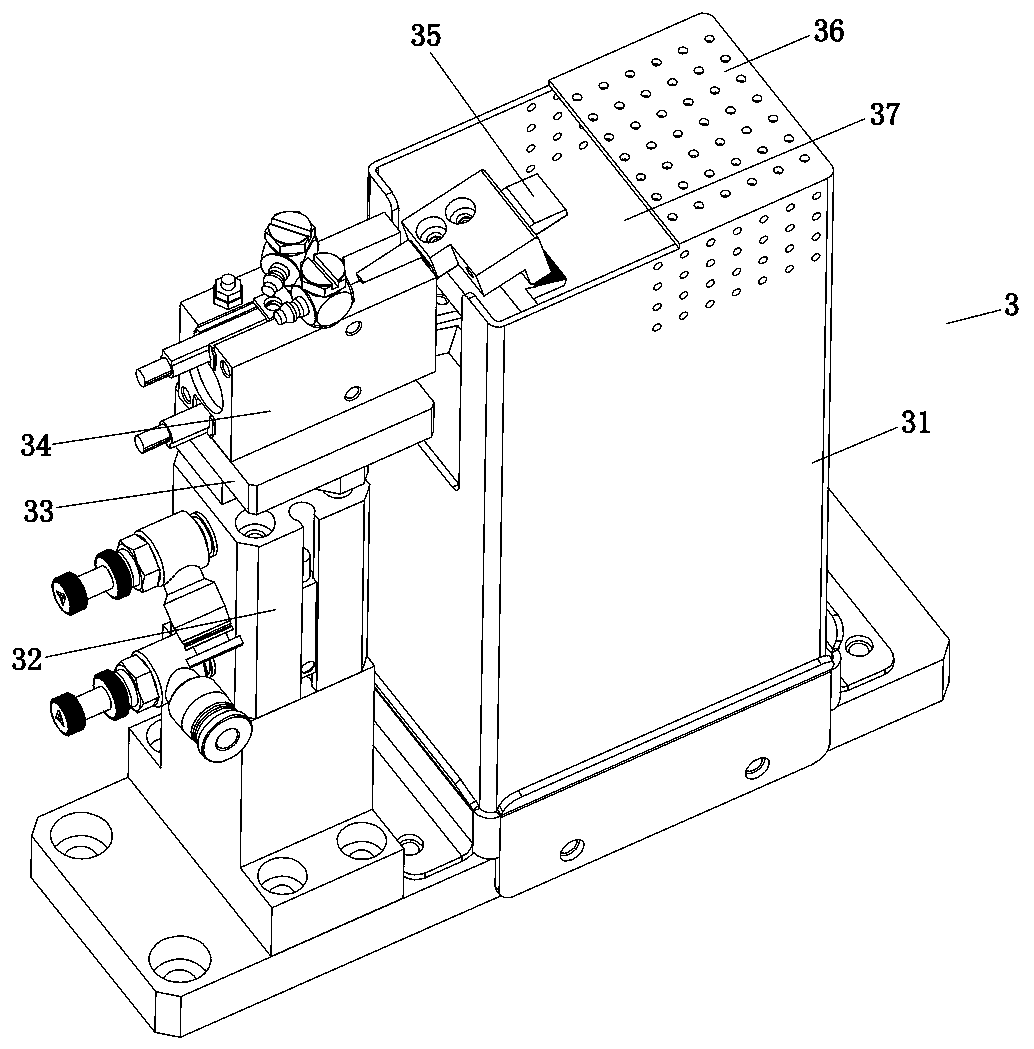
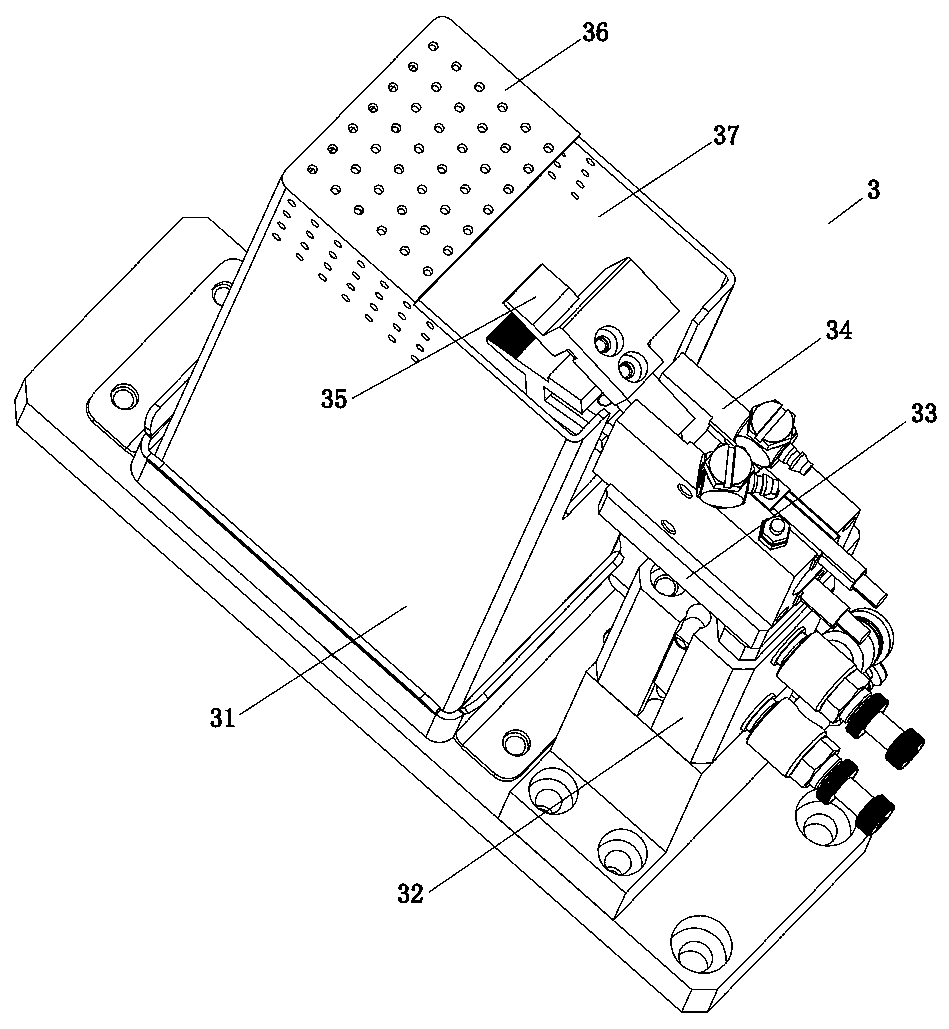
manipulator to transfer the materials from the Feida feeding mechanism. The exported materials are taken out and assembled on the product; in order to ensure the automatic assembly of the product, it is necessary to design the product transmission mechanism for automatic product transmission, and realize the positioning and lifting and fixing functions of the product during assembly; at the same time, for the products that need to be torn first Materials that can only be assembled with a protective film, such as vibration motors, etc., also need to design a tear film assembly between the feeder feeding mechanism and the product delivery mechanism, so that the assembly manipulator can tear the material at the tear film assembly and then transport it to the product delivery mechanism Based on the above background and based on the existing technology in this field, the following technical problems need to be solved in the process of automatic design: 1. Since there are many kinds of materials to be assembled, it is necessary for the equipment to be able to integrate multiple Feeder feeding mechanism, a common single feeder feeding mechanism can provide about three kinds of materials; at the same time, the assembly manipulator needs to be designed correspondingly for different feeder feeding mechanisms to maximize the number of assembled materials; 2. Due to the different shapes and sizes of different materials, in the process of handling and assembling materials, physical clamping is required for bulk materials, while sheet materials cannot be fixed by clamping, but need to be fixed by adsorption. For sheet-like materials, the manipulator needs to have clamping and adsorption functions at the same time, and the existing manipulators cannot meet the above requirements at the same time; Synchronous linkage is realized, the structural design is complicated, and the synchronization of adsorption and clamping during material picking or assembly is poor, and accurate material picking and assembly actions cannot be guaranteed; 4. Existing manipulators are generally driven by cylinders or motors (screw drive). Moving within the horizontal plane cannot guarantee the speed of retrieving materials. For the above-mentioned multi-material assembly requirements, the retrieving efficiency is low and cannot meet the production capacity requirements; 5. The existing manipulator does not have the function of real-
time pressure monitoring. The problem of bad materials or products,
high rate of assembly defective products; 6. The existing automated assembly equipment has a large structure size and a large space occupation, which cannot meet the needs of integrated automated assembly



 Login to View More
  Login to View More