A method for analyzing the geometric structure characteristics of DNA bin protein interface

A technology for binding proteins and analysis methods, which is applied in the field of analysis of the geometric structural characteristics of DNA-binding protein interfaces, and can solve the problems of incomplete elucidation of DNA repair, transcription, recombination, and lack of structural mechanisms.

CN109101784AInactive Publication Date: 2018-12-28HENAN NORMAL UNIV
5 Cites 3 Cited by

Patent Information

Authority / Receiving Office
CN · China
Patent Type
Applications(China)
Current Assignee / Owner
Publication Date
2018-12-28
Estimated Expiration
Not applicable · inactive patent

Smart Images

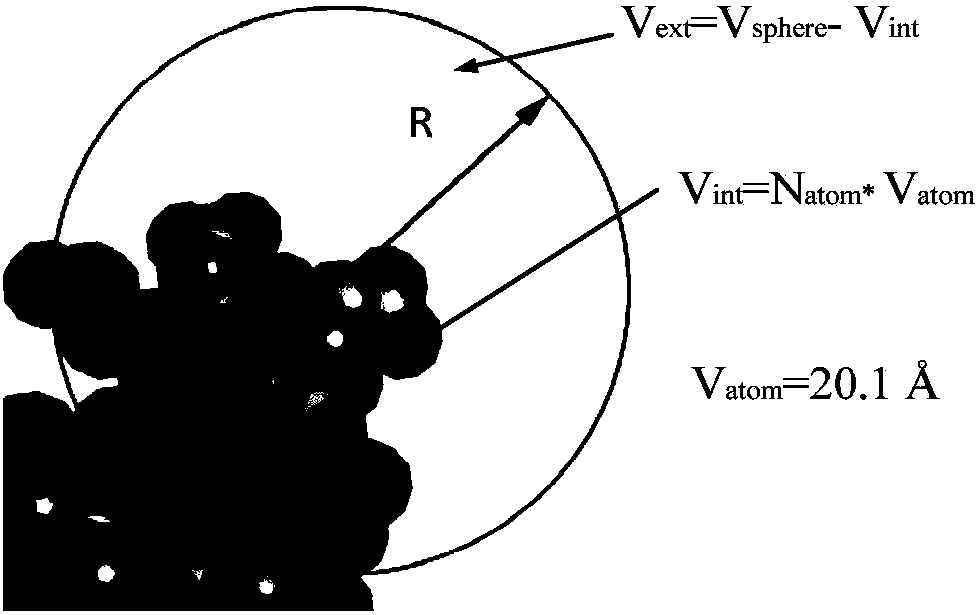
  • Figure 1
    Figure 1
  • Figure 2
    Figure 2
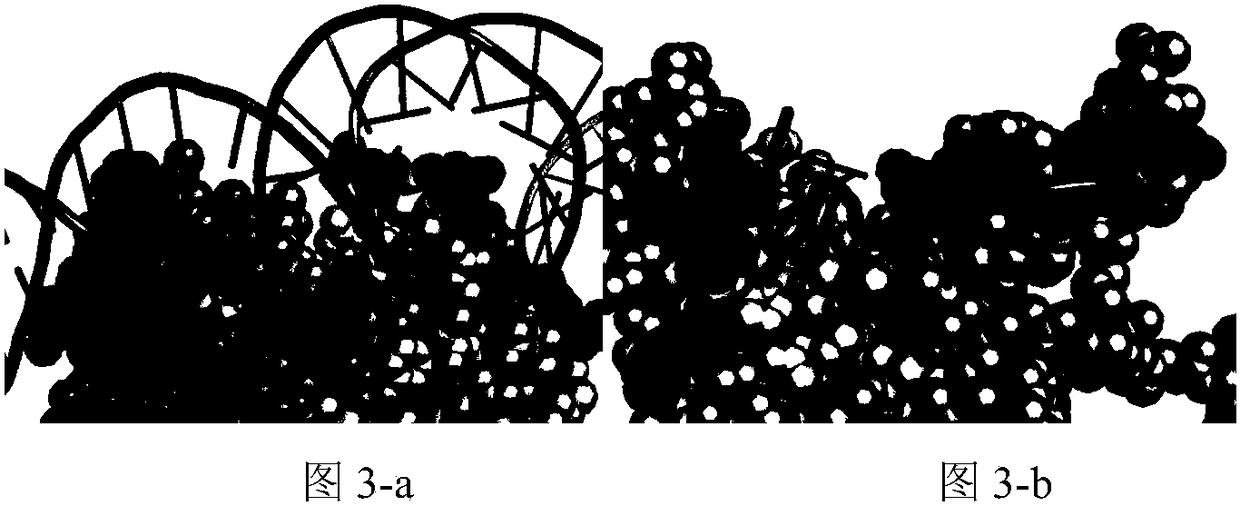
  • Figure 3
    Figure 3
Patent Text Reader

Abstract

The invention relates to an analysis method for the geometrical structure characteristics of DNA binding protein interface, belonging to the technical field of biological computing. The present invention first derives proteins-DNA binding site information from proteins-DNA complex dataset; and then based on the protein-DNA Binding Site Information, residue Morphological Index and Spatial Environment of proteins-DNA Binding Sites are determined; finally, the morphological index and spatial environment of the identified protein-DNA binding sites are used as feature vectors to classify the obtained feature vectors by using classification model. As the binding specificity of double-stranded DNA binding protein (DSBs) and single-stranded DNA binding proteins (SSBs) is analyzed from the angles of the morphological structure of the residues and the characteristics of the space environment, the invention is conducive to the in-depth understanding of the proteins, and the binding specificity ofthe double-stranded DNA binding proteins and the single-stranded DNA binding proteins is analyzed. Based on the DNA binding mechanism, the present invention can also be applied to proteins-RNA, protein-Protein and other fields.
Need to check novelty before this filing date? Find Prior Art

Description

Technical field

[0001] The invention relates to a method for analyzing the geometric structure characteristics of a DNA binding protein interface, and belongs to the technical field of biological computing. Background technique

[0002] The surface of the protein is usually full of wrinkles and presents an irregular structure. The surface of the protein is the contact surface between the protein and other molecules. The binding of the protein surface is not only reflected in the hydrophilicity, hydrophobicity and surface charge of the surface molecules. , And is closely related to the spatial geometry of the surface. Establishing a reasonable surface structure model by applying geometry, graph theory, topology and other methods to the protein surface will help understand the protein docking, recognition and interaction mechanism. Therefore, modeling the protein-DNA contact surface is helpful for us to understand the structural mechanism of its binding. Studies have shown that t...

Examples

Embodiment Construction

[0033] The specific embodiments of the present invention will be further described below in conjunction with the drawings.

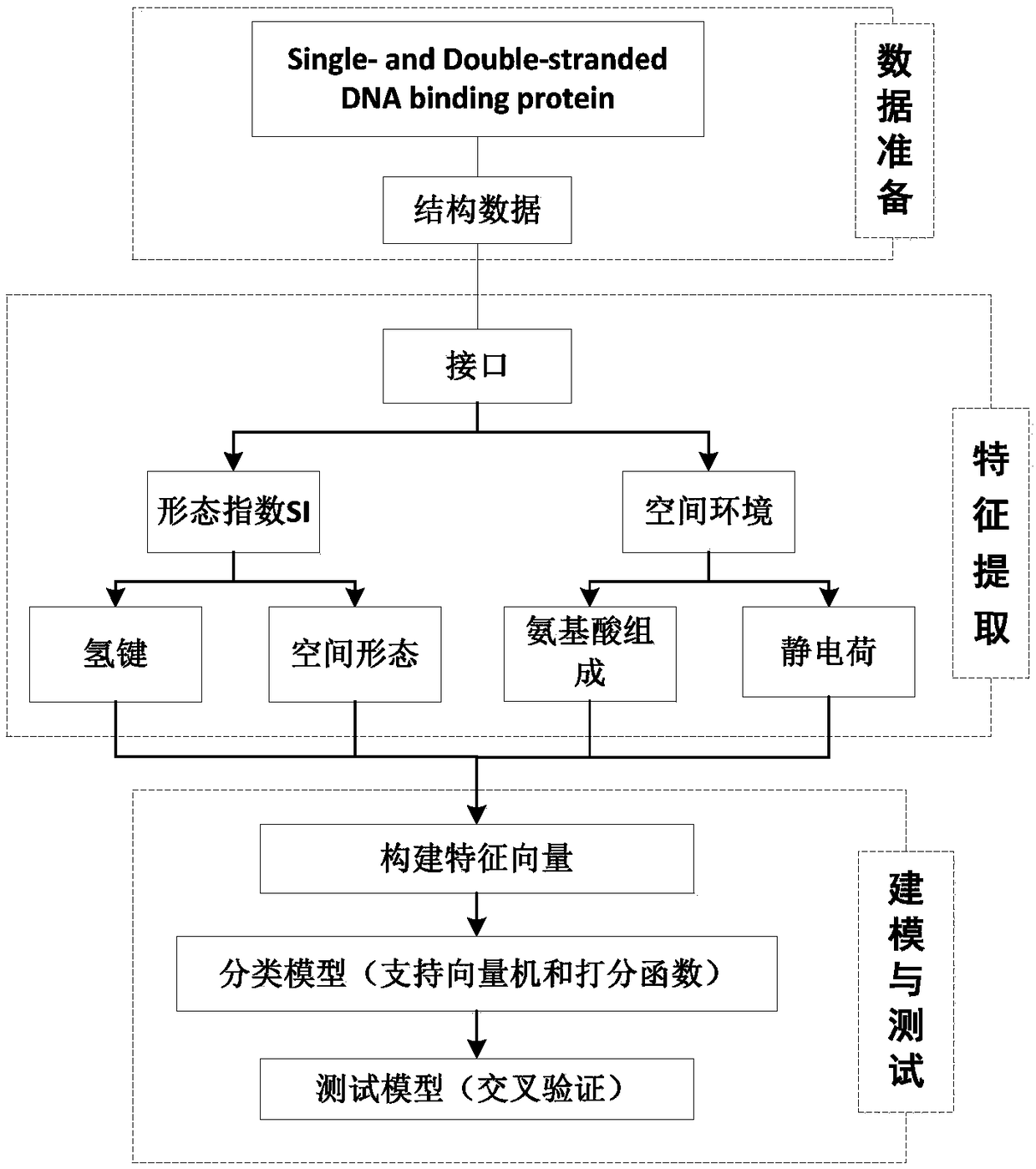
[0034] The present invention extracts protein-DNA binding sites from a protein-DNA composite data set, and extracts structural features of the binding sites according to the binding sites, which are divided into two types of features: morphological index SI features and spatial environment features. On the basis of the morphological index characteristics, the hydrogen bond distribution of the interface and the frequency of the spatial shape are calculated; on the spatial environment characteristics, the composition distribution of amino acid residues and the electrostatic charge distribution characteristics are calculated. Construct a feature vector, and use SVM to build a classification model, and test the distinguishing performance of features. The process is as figure 2 As shown, the specific implementation steps are as follows:

[0035] 1. Extract the p...