Container for cryopreserved samples

A low-temperature storage and container technology, applied in non-pressure containers, applications, household appliances, etc.

A low-temperature storage and container technology, applied in non-pressure containers, applications, household appliances, etc.

CN111479466APending Publication Date: 2020-07-31ASYMPTOTE

Image

Smart Image Click on the blue labels to locate them in the text.
Viewing Examples
Smart Image
  • Container for cryopreserved samples
  • Container for cryopreserved samples
  • Container for cryopreserved samples

Examples

Experimental program
Comparison scheme
Effect test

Embodiment Construction

[0021] Many types of biological materials are cryopreserved for subsequent applications in medicine, biotechnology and veterinary science. To ensure long-term viability, it was considered necessary to maintain the samples at a temperature below 150K. An easy way to achieve such low temperatures is through the use of liquid nitrogen (which has a boiling point of 77K). After a controlled freezing rate with the addition of cryoprotective additives, the samples in a dedicated freezing vessel are immersed in or into the gas phase above liquid nitrogen, usually contained in a Dewar vessel. The liquid nitrogen is evaporated and replenished with fresh liquid nitrogen, which can be performed manually or by an automatic top-up system from a large dewar or storage tank. As an alternative to liquid nitrogen, mechanical freezers operating at 120K have been developed.

[0022] However, current low-temperature storage methods suffer from many problems. For example, liquid nitrogen is expe...

the structure of the environmentally friendly knitted fabric provided by the present invention; figure 2 Flow chart of the yarn wrapping machine for environmentally friendly knitted fabrics and storage devices; image 3 Is the parameter map of the yarn covering machine
Login to View More

PUM

No PUM Login to View More

Abstract

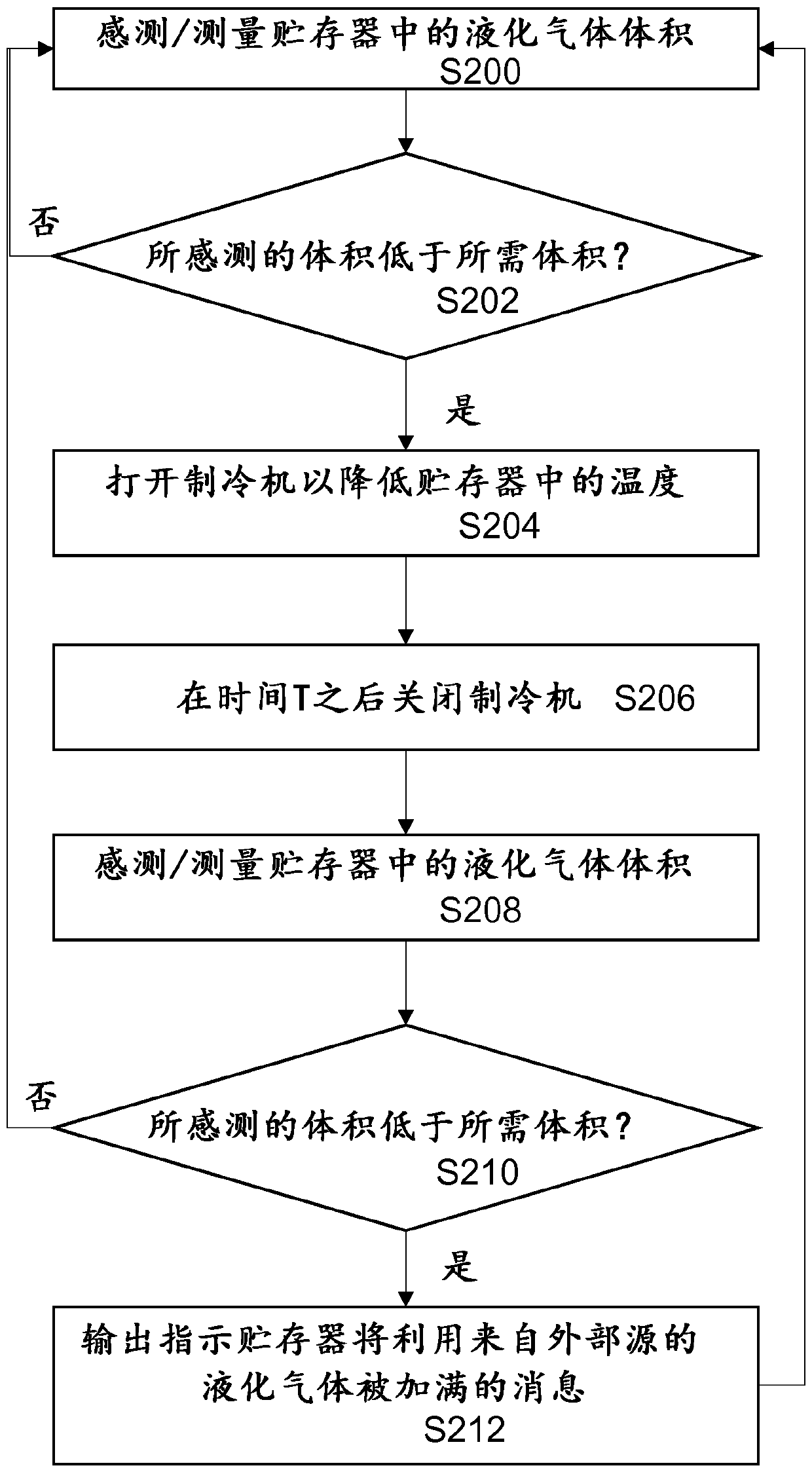
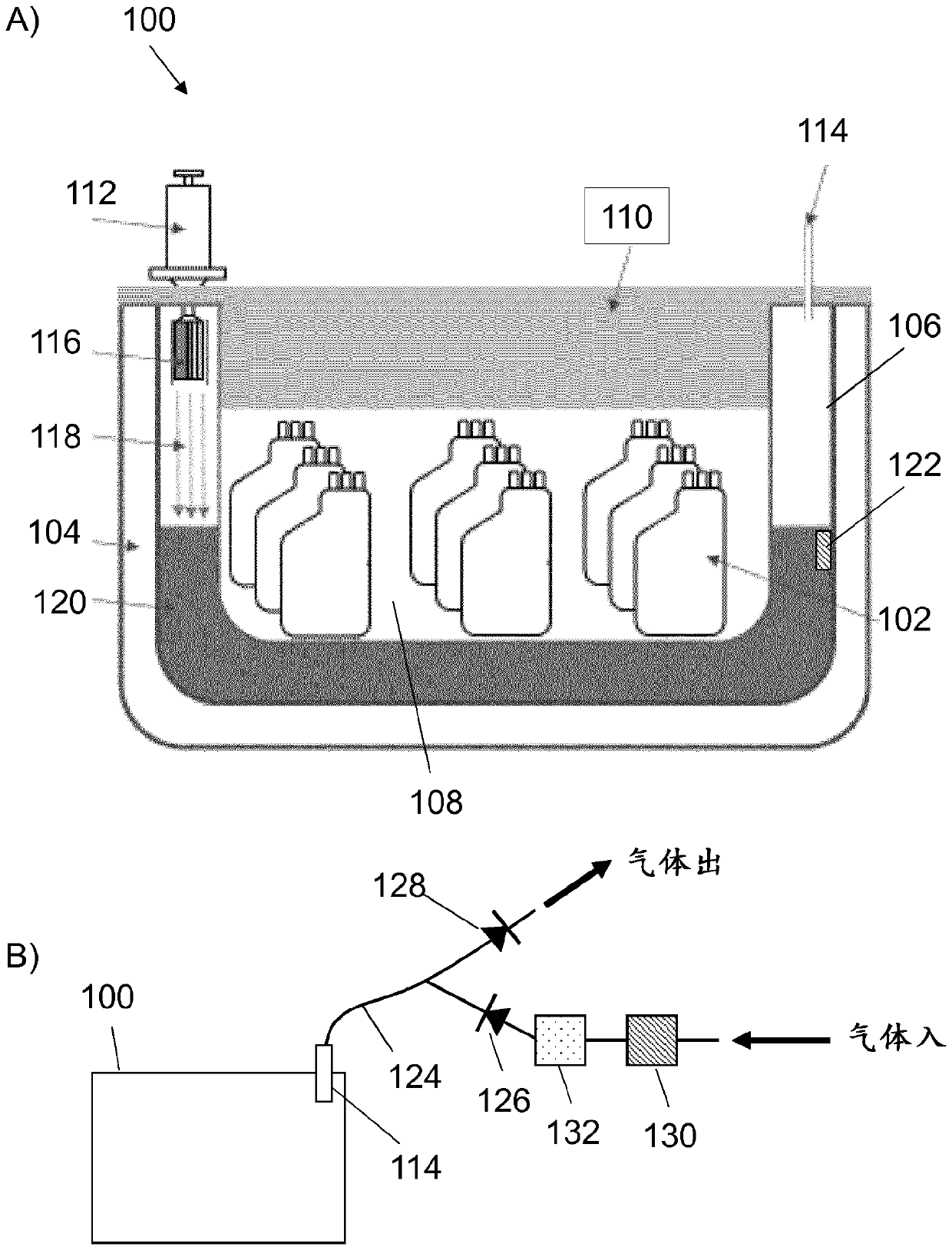
Disclosed are containers (100) for cryopreserved biological samples (102), which comprise an insulated housing comprising a cavity (108) for containing at least one cryopreserved biological sample; and a sealed reservoir (106) at least partly surrounding the cavity, the sealed reservoir comprising liquified gas (120) such as liqified air, the gas being kept largely liquified by means of a heat transfer engine (112) such as a Stirling cryocooler. A valve (114) may be provided to function as both a pressure relief valve and an inlet valve. The inlet valve may be coupled to a sensor (122) for sensing a volume of liquified gas within the sealed reservoir. The container may further comprise a heat exchanger (116) coupled to the heat engine and extending into the sealed reservoir.

Description

technical field [0001] The present invention relates to a container for cryopreserved samples, such as biological samples, where the cryopreserved samples can be maintained for extended periods of time, such as months, upon reaching their destination, and may also be capable of being used in controlled Freezing and thawing rates. The containers of the present invention can also be used to ship other types of samples that require cryogenic storage without the use of conventional cryogenic materials such as liquid nitrogen or solid carbon dioxide. Background technique [0002] Cryopreservation is a technique used to preserve biological samples that involves cooling samples to very low temperatures (eg -78.5°C to -196°C) and maintaining them for extended periods of time. By cooling a biological sample to a low temperature, the kinetics of chemical or enzymatic reactions that would otherwise degrade the sample are slowed down to such an extent that the sample no longer degrades...

Claims

the structure of the environmentally friendly knitted fabric provided by the present invention; figure 2 Flow chart of the yarn wrapping machine for environmentally friendly knitted fabrics and storage devices; image 3 Is the parameter map of the yarn covering machine
Login to View More

Application Information

Patent Timeline
31 Jul 2020
Publication
CN111479466A
IPC
A01N1/02; F25D3/10; F17C3/08
CPC
A01N1/0257; F25D3/105; F25D11/04; F25B9/14; F25B2700/15; F25B2700/04; F25B2500/24; F25D2201/14
Inventors
G.莫里斯; C.克雷西