
Application of IER3 as biomarker in early prediction of sepsis
A biomarker and sepsis technology, applied in the biological field, can solve the problems of large changes in results, short retention time of inflammatory cytokines, difficult detection timing, etc., and achieve the effect of improving prognosis and reducing the incidence of sepsis.
- Summary
- Abstract
- Description
- Claims
- Application Information
AI Technical Summary
Problems solved by technology
Method used
Image

Examples
Embodiment 1
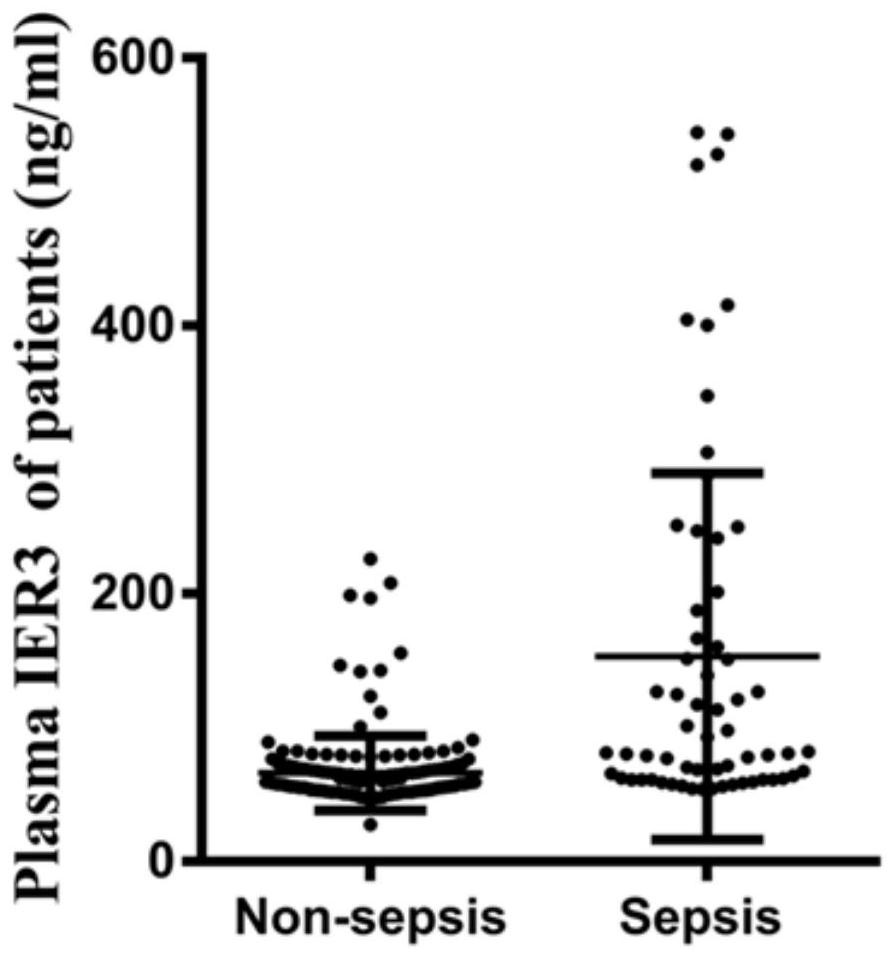
[0032] Detection of plasma IER3 level in trauma patients and its correlation analysis with the occurrence of sepsis
[0033] Peripheral blood samples were collected from 243 patients with severe multiple injuries on the day of injury (Table 1), and were divided into a sepsis group of 67 cases and a non-sepsis group of 176 cases according to whether sepsis occurred. company, product number abx252651) to detect plasma IER3 expression, the kit uses double antibody sandwich ELISA method. The anti-human IER3 antibody is used to coat the microtiter plate, and the human IER3 in the sample or standard is combined with the coated antibody during the experiment, and the free components are washed away. Biotinylated anti-human IER3 antibody and horseradish peroxidase-labeled avidin were added sequentially. The anti-human IER3 antibody binds to the human IER3 bound to the coated antibody, biotin and avidin specifically bind to form an immune complex, and the free components are washed aw...
Embodiment 2
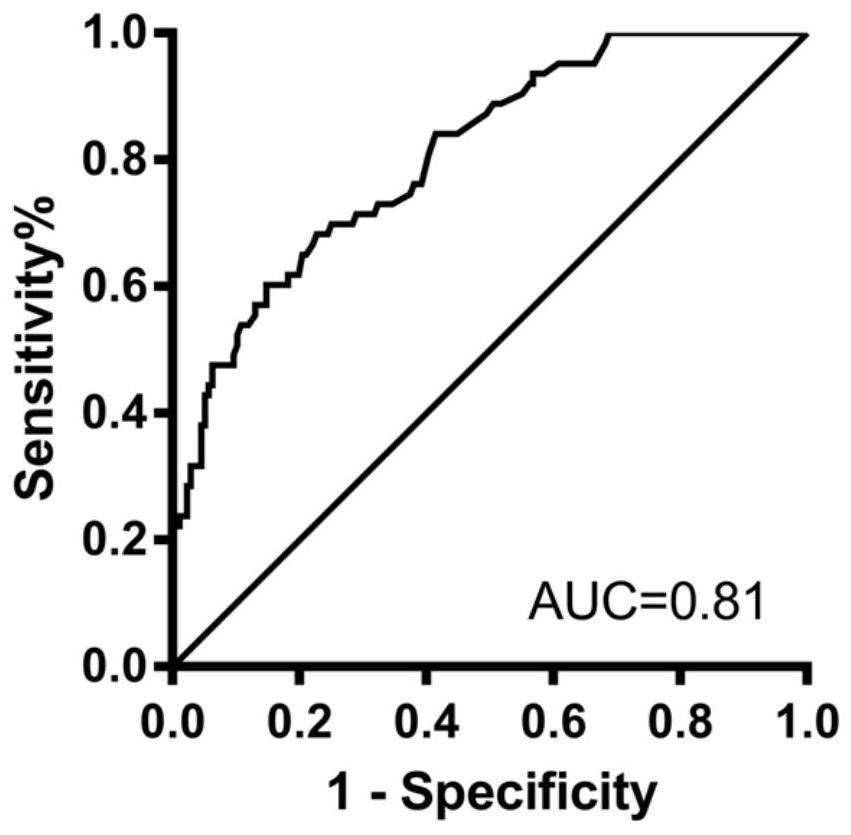
[0040] Further use of ROC curve to analyze the early predictive value of plasma IER3 on the risk of sepsis
[0041] According to the IER3 expression level value detected in the blood plasma of trauma patients in Example 1, the ROC curve was drawn using SPSS22.0 software.
[0042] figure 2 Shown is a receiver operating curve (ROC) analysis of the early prediction effect of plasma IER3 on the risk of sepsis. The results showed that the area under the curve (AUC) of IER3 was 0.81, indicating that IEX has a good predictive value for early sepsis. AUC reflects predictive power (AUC=0.5, no predictive power: 0.5<AUC<0.7, little predictive value: 0.7<AUC<0.9 fairly accurate predictive value: 0.9<AUC<1, very accurate predictive value).
Embodiment 3
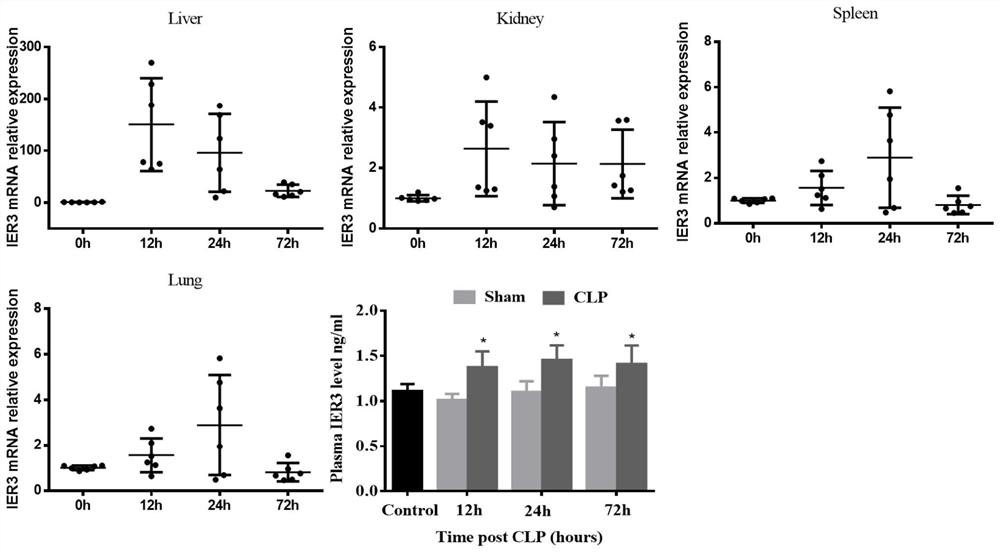
[0044] Detection of IER3 expression in various tissues and organs of mice:
[0045] Select adult C57 mice, and first establish a sepsis model. The sepsis model is established by cecal ligation and puncture (CLP). Anesthetized by intraperitoneal injection of barbital sodium at a concentration of 40 mg / kg, fixed on the operating board, shaved and disinfected the skin on the abdomen, made a 1 cm long incision in the middle of the abdomen, found the colon ligation, punctured through the cecum at the ligated end with a 26-gauge syringe needle, and put it back The wound was sutured retroperitoneally and the skin was disinfected. This method is a classic modeling method for sepsis animal models, and this model is also a standard animal method for sepsis research. Divided into 2 groups according to sepsis and sham operation (only laparotomy and laparotomy were performed), and mouse plasma, liver, lung, kidney and spleen tissues were obtained 12, 24, and 72 hours after model establish...
PUM
 Login to View More
 Abstract
Description
Claims
Application Information
 Login to View More