Check patentability & draft patents in minutes with Patsnap Eureka AI!

Aero-engine blade defect detection method based on convolutional neural network

A convolutional neural network and aero-engine technology, applied in the field of defect detection, can solve the problems of sensitivity to light changes in the detection site, affecting the improvement space, and being susceptible to interference, etc., so as to improve the recall rate, improve the detection accuracy, and enhance the universality Effect

Pending Publication Date: 2021-03-09
NORTHWESTERN POLYTECHNICAL UNIV
View PDF8 Cites 8 Cited by
  • Summary
  • Abstract
  • Description
  • Claims
  • Application Information

AI Technical Summary

Problems solved by technology

However, these methods will be affected by noise such as scratches on the actual blade surface and tiny pores in practical applications. The threshold segmentation method can be used to separate defective pixels from the global background. very sensitive to changes in light
To sum up, traditional defect detection algorithms are vulnerable and have limited room for improvement. It is necessary to develop a detection method for aero-engine blade defects in combination with neural network algorithms.

Method used

the structure of the environmentally friendly knitted fabric provided by the present invention; figure 2 Flow chart of the yarn wrapping machine for environmentally friendly knitted fabrics and storage devices; image 3 Is the parameter map of the yarn covering machine
View more

Image

Smart Image Click on the blue labels to locate them in the text.
Viewing Examples
Smart Image
  • Aero-engine blade defect detection method based on convolutional neural network
  • Aero-engine blade defect detection method based on convolutional neural network
  • Aero-engine blade defect detection method based on convolutional neural network

Examples

Experimental program
Comparison scheme
Effect test

specific Embodiment

[0047] Theoretical research shows that the convolutional neural network is more inclined to areas with large pixel changes in the process of automatic feature extraction. Usually, shallow convolution kernels are used to detect low-level features, such as edges, corners, curves, etc., while deep convolutions The accumulation kernel can combine shallow low-level features, such as semicircles, quadrilaterals, etc. However, the layer-by-layer iterative operation of the network makes the model learn the outline information of the object and gradually ignore the texture details. Therefore, the perception ability of the detection model for texture details is bound to have a certain impact on the detection results.

[0048] In addition, the pre-experimental results show that the recall rate of the detection model is usually low, and the visual detection results show that the defect area cannot be effectively determined, the model usually cannot achieve normal detection or there are mu...

the structure of the environmentally friendly knitted fabric provided by the present invention; figure 2 Flow chart of the yarn wrapping machine for environmentally friendly knitted fabrics and storage devices; image 3 Is the parameter map of the yarn covering machine
Login to View More

PUM

No PUM Login to View More

Abstract

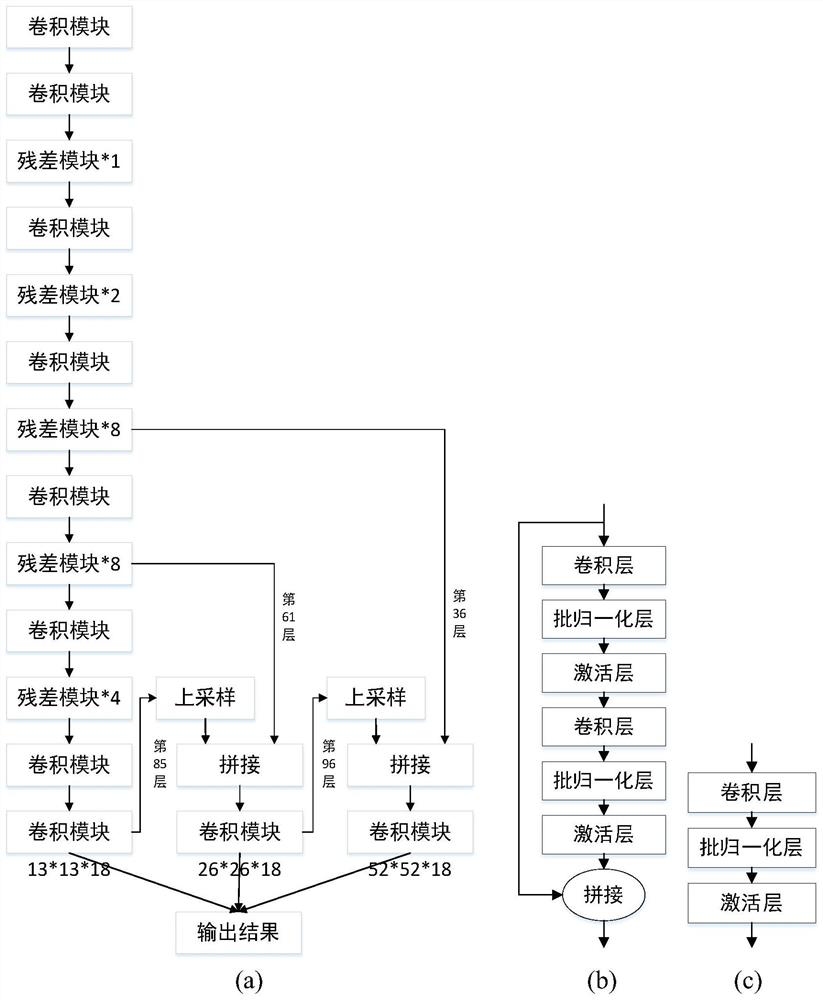
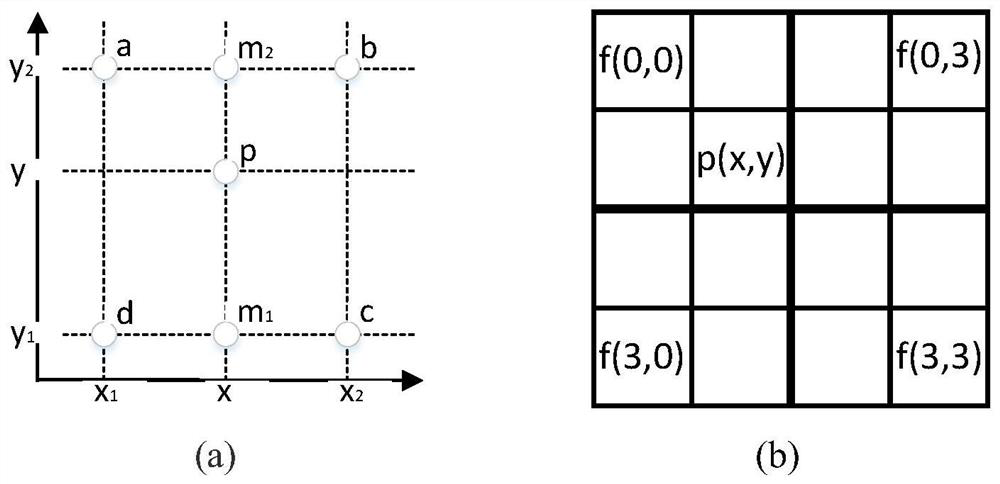
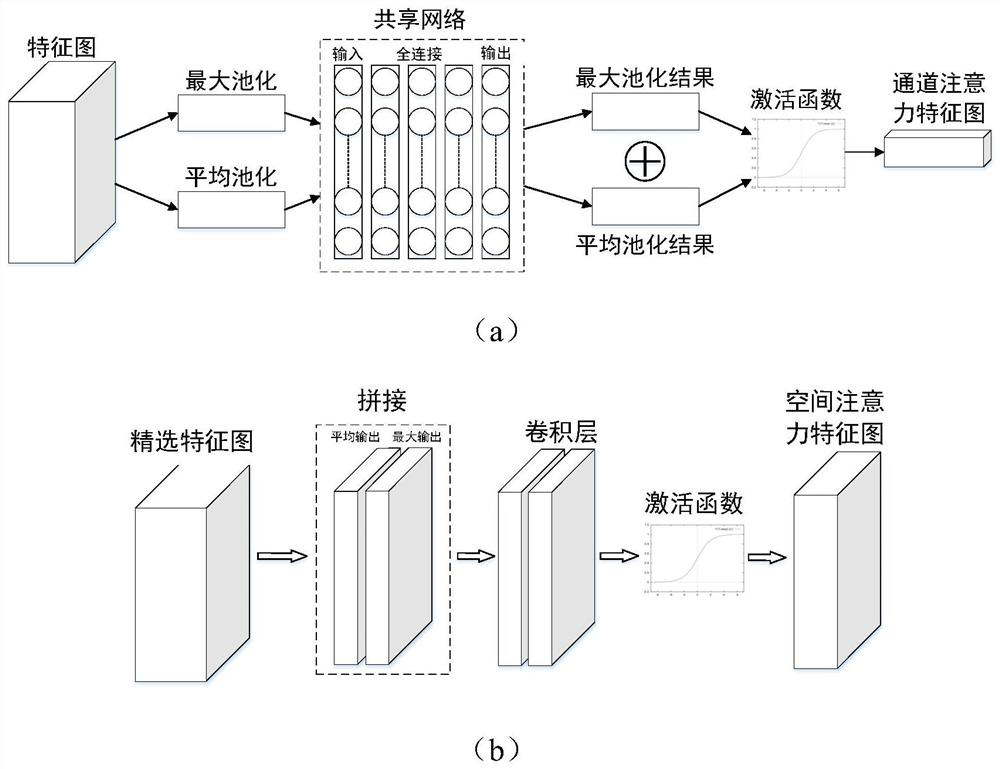
The invention discloses an aero-engine blade defect detection method based on a convolutional neural network, and the method comprises the steps: changing a bilinear interpolation method in an up-sampling structure of a Yolov3 model into a bicubic interpolation method, improving the fusion effect of a bottom-layer feature and a deep-layer feature, and improving the detail perception capability ofa detection model; and meanwhile, adding an attention mechanism into a backbone network of the Yolov3 model, so that the feature expression capability of the region of interest is enhanced, the influence of useless information such as background noise on a detection result is reduced, and the region focusing capability of the detection model is improved. By means of the two methods, the improved Yolov3 model is obtained, the defects of the aero-engine blade can be detected through the improved Yolov3 model, the recall rate of a defect region detection frame in an image is effectively increased, and the detection precision of a defect region is improved.

Description

technical field [0001] The invention belongs to the technical field of machine vision, and in particular relates to a defect detection method. Background technique [0002] Surface defect detection of aircraft engine blades is an important task in aviation quality inspection and maintenance. Common defects include defects, craters, bending and corrosion, etc. Timely and effective detection of damage information can effectively avoid disasters caused by mechanical device damage. At present, defect inspection mainly relies on the human eye observation of ground crew, which is a tedious and labor-intensive work, and the work quality is easily affected by subjective factors. Therefore, in order to improve the detection efficiency and reduce the detection cost, an automatic defect detection method is needed. Traditional defect detection methods can be roughly divided into edge detection-based methods and morphology-based methods. In an ideal situation, traditional methods can d...

Claims

the structure of the environmentally friendly knitted fabric provided by the present invention; figure 2 Flow chart of the yarn wrapping machine for environmentally friendly knitted fabrics and storage devices; image 3 Is the parameter map of the yarn covering machine
Login to View More

Application Information

Patent Timeline
no application Login to View More
IPC IPC(8): G06T7/00G06N3/08G06N3/04
CPCG06T7/0004G06N3/08G06T2207/20081G06T2207/20084G06T2207/30164G06N3/048G06N3/045
Inventor 许悦雷回天周清加尔肯别克张悦马林华
Owner NORTHWESTERN POLYTECHNICAL UNIV
Features
  • R&D
  • Intellectual Property
  • Life Sciences
  • Materials
  • Tech Scout
Why Patsnap Eureka
  • Unparalleled Data Quality
  • Higher Quality Content
  • 60% Fewer Hallucinations
Social media
Patsnap Eureka Blog
Learn More