Passive exoskeleton robot for upper limb assistance in carrying operation

An exoskeleton robot and exoskeleton technology, applied in the direction of manipulators, program-controlled manipulators, joints, etc., can solve the problem of less research on passive exoskeleton-assisted robots, and achieve the effect of increasing work efficiency

CN113580109AActive Publication Date: 2021-11-02SOUTH CHINA UNIV OF TECH
5 Cites 0 Cited by

Patent Information

Authority / Receiving Office
CN · China
Patent Type
Applications(China)
Current Assignee / Owner
Publication Date
2021-11-02

Smart Images

  • Figure 1
    Figure 1
  • Figure 2
    Figure 2
  • Figure 3
    Figure 3
Patent Text Reader

Abstract

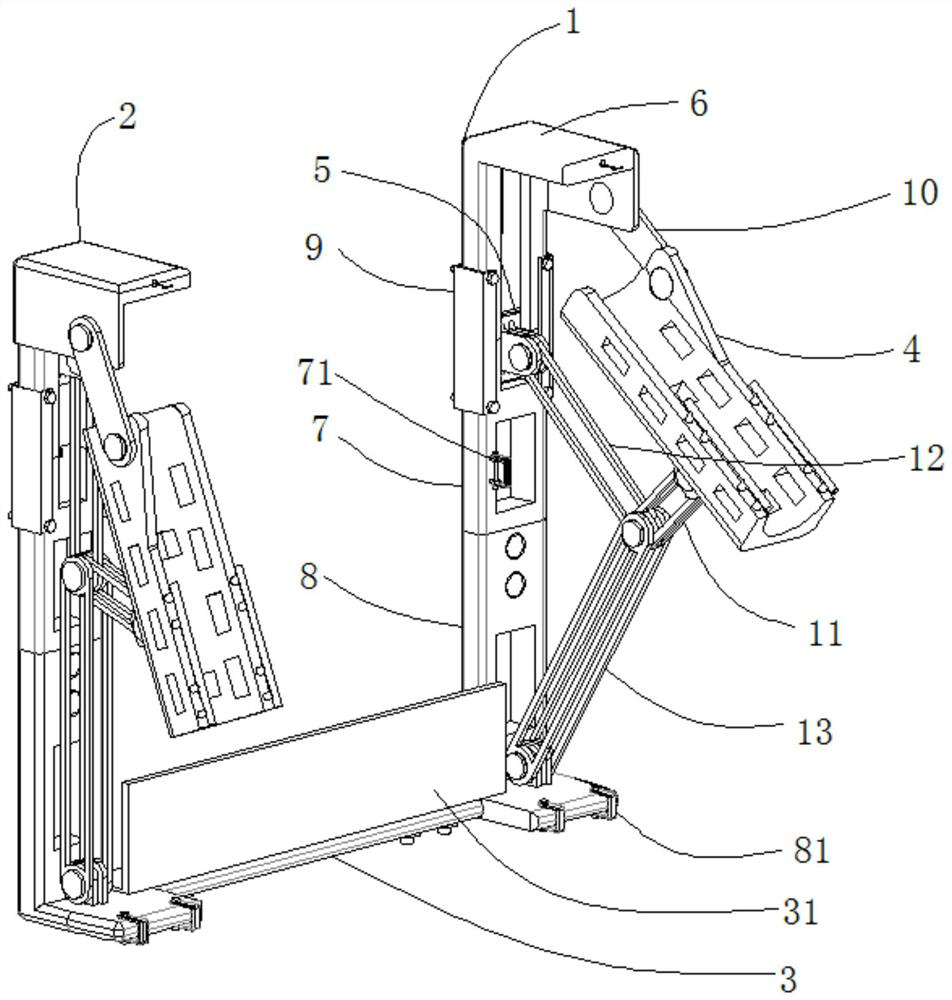
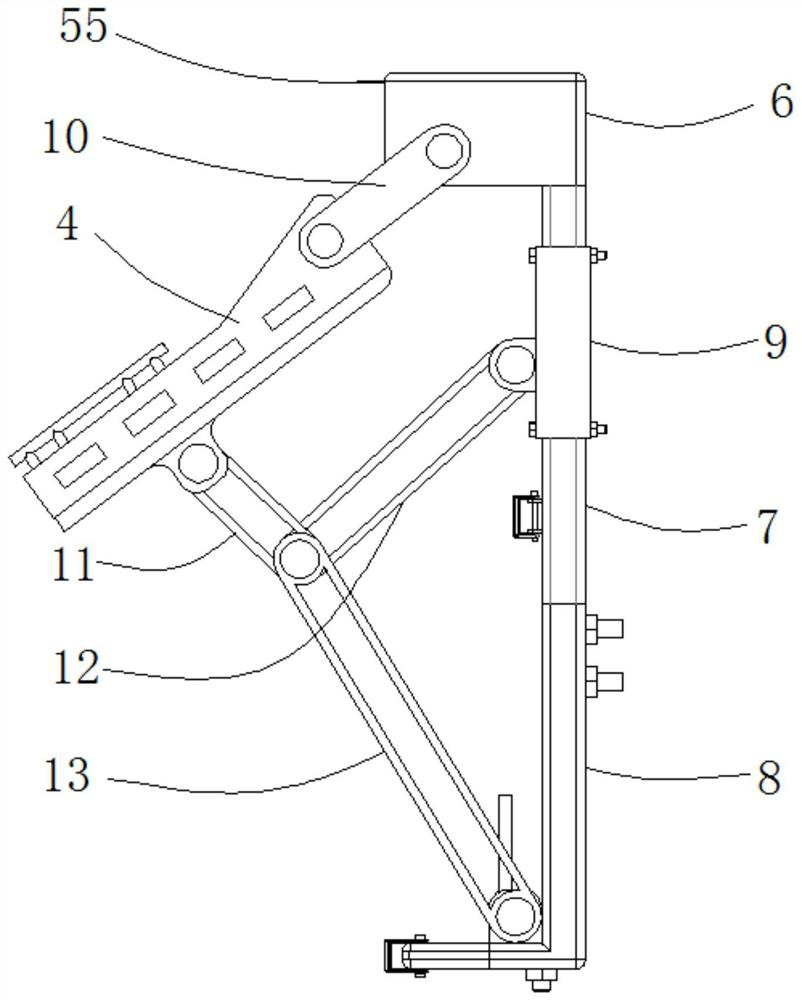
The invention discloses a passive exoskeleton robot for upper limb assistance in carrying operation. The passive exoskeleton robot for upper limb assistance in carrying operation comprises a first back mechanism, a second back mechanism and a connecting block, wherein the first back mechanism is connected with the second back mechanism through the connecting block, and the first back mechanism and the second back mechanism are identical in structure. The first back mechanism comprises an upper arm exoskeleton, a connecting rod mechanism, a shoulder exoskeleton, a sliding block and a waist exoskeleton, wherein one end of the upper arm exoskeleton is connected with the center of the sliding block through the connecting rod mechanism, the two sides of the sliding block are connected with sliding grooves of the shoulder exoskeleton in a sliding mode, one end of the upper arm exoskeleton is further connected with the waist exoskeleton through the connecting rod mechanism, the other end of the upper arm exoskeleton is connected with the shoulder exoskeleton through a first connecting rod, and the shoulder exoskeleton is connected with the waist exoskeleton through the back exoskeleton. In this way, the working efficiency of carrying operation is improved, and the power assisting effect of the exoskeleton robot can be achieved without any external power assisting system.
Need to check novelty before this filing date? Find Prior Art

Description

technical field

[0001] The invention relates to the technical field of power-assisted robots, in particular to a passive exoskeleton robot for assisting upper limbs in carrying operations. Background technique

[0002] In the context of the upgrading of the robot industry, automation equipment has fully entered the production of agriculture and manufacturing, but for workers in specific working environments, manual work is still required. At the same time, with the further improvement of work requirements, for The requirements of workers are getting higher and higher, and the load on the upper limbs is also gradually increasing. Faced with a large number of repetitive and high-intensity work, workers are very prone to muscle fatigue and physical decline, and further muscle damage and a series of occupational diseases, making it difficult to meet the requirements for work intensity and efficiency, and even affecting normal life.

[0003] An exoskeleton robot is a wearable mo...

Examples

Embodiment Construction

[0026] The purpose of the invention of the present invention will be described in further detail below in conjunction with the accompanying drawings and specific embodiments, and the embodiments cannot be repeated here one by one, but the implementation of the present invention is not therefore limited to the following embodiments.

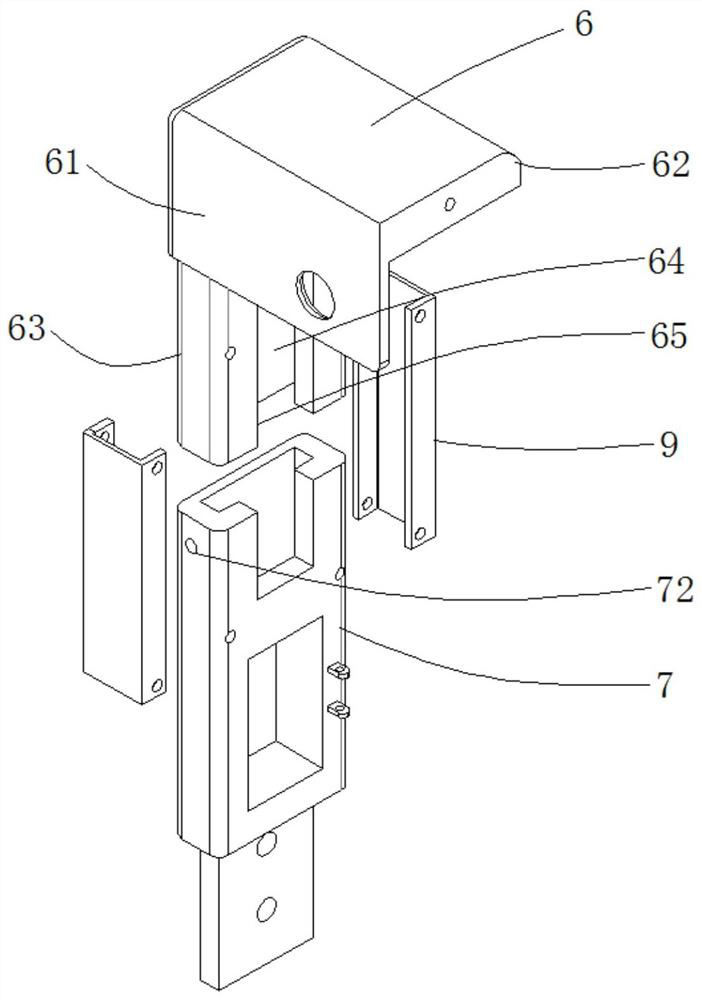
[0027] Such as Figures 1 to 4 As shown, a passive exoskeleton robot for assisting upper limbs in carrying operations, including a first back mechanism 1, a second back mechanism 2 and a connecting block 3, the first back mechanism 1 connects with the second back mechanism through the connecting block 3 Mechanisms 2 are connected, and the connecting block 3 makes the structural integrity of the first back mechanism 1 and the second back mechanism 2 better. The connecting block 3 is also provided with a back plate 31, which is used to make the wearer more comfortable to bear the exoskeleton. The pressure of the robot, the first back mechanism 1 and...