Check patentability & draft patents in minutes with Patsnap Eureka AI!

Ethylene-(vinyl alcohol) copolymer and method for producing same

A vinyl alcohol copolymer and copolymer technology, which is applied in the field of resin compositions and molded bodies, can solve the problems of complex melt viscosity change behavior over time, the problem of molded body performance, and the variation of molded body thickness distribution, and achieves stable melt molding process. Chemical resistance, excellent coloring resistance, and excellent viscosity stability

Pending Publication Date: 2022-01-11
KURARAY CO LTD
View PDF4 Cites 0 Cited by
  • Summary
  • Abstract
  • Description
  • Claims
  • Application Information

AI Technical Summary

Problems solved by technology

However, EVOH having multiple active reactive groups at the molecular end and in the molecular chain competes for multiple cross-linking reactions and decomposition reactions, so the change in melt viscosity over time is complicated.
Due to such a change in melt viscosity over time, the resin pressure, resin temperature, and thickness distribution of the molded article during melt molding may also vary, causing problems in the melt molding process and the performance of the resulting molded article.

Method used

the structure of the environmentally friendly knitted fabric provided by the present invention; figure 2 Flow chart of the yarn wrapping machine for environmentally friendly knitted fabrics and storage devices; image 3 Is the parameter map of the yarn covering machine
View more

Image

Smart Image Click on the blue labels to locate them in the text.
Viewing Examples
Smart Image
  • Ethylene-(vinyl alcohol) copolymer and method for producing same
  • Ethylene-(vinyl alcohol) copolymer and method for producing same
  • Ethylene-(vinyl alcohol) copolymer and method for producing same

Examples

Experimental program
Comparison scheme
Effect test

Embodiment

[0100] Hereinafter, although an Example etc. demonstrate this invention concretely, this invention is not limited to these Examples etc. at all. In addition, each analysis and evaluation in this Example etc. were performed by the following method.

[0101] (1) Ethylene unit content and saponification degree of EVOH

[0102] In deuterated dimethyl sulfoxide (DMSO-d) containing tetramethylsilane (TMS) as internal standard substance and trifluoroacetic acid (TFA) as additive 6 ) by dissolving the dry pellets obtained in each example and comparative example, using a 500MHz 1 H-NMR (manufactured by JEOL Ltd.: "GX-500") was measured at 80°C, and the ethylene unit content and saponification degree were determined from the peak intensity ratios of ethylene units, vinyl alcohol units, and vinyl ester units.

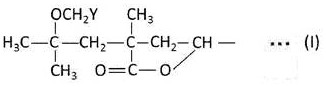
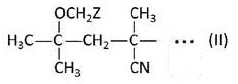
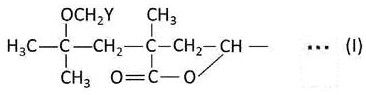
[0103] (2) Content of structure (I) and structure (II)

[0104] In DMSO-d containing TMS as internal standard substance 6 Dissolve the dry pellets obtained by each of the Exam...

Synthetic example 1

[0122] Using a pressurized reaction tank with a capacity of 250 L, polymerization was carried out under the following raw materials and conditions to obtain an ethylene-vinyl acetate copolymer.

[0123] ・Vinyl acetate: 83.0 kg

[0124] ・Methanol: 26.6kg

[0125] ・Polymerization initiator: 2,2'-azobis(4-methoxy-2,4-dimethylvaleronitrile) (2.5g / L methanol solution) initial supply volume: 362mL, continuous supply volume: 1120mL / hr

[0126] ・Polymerization temperature: 60℃

[0127] ・Ethylene pressure in the polymerization tank: 3.6MPa.

[0128] When the polymerization rate of vinyl acetate reached about 40%, sorbic acid was added, and the polymerization was stopped by cooling. Next, the reaction tank is opened to the atmospheric pressure, and after removing ethylene from the reaction system, the reaction solution is supplied to the recovery tower, and methanol vapor is introduced from the lower part of the tower, thereby removing unreacted vinyl acetate from the top of the to...

Synthetic example 2

[0130] A methanol solution of an ethylene-vinyl acetate copolymer having an ethylene unit content of 24 mol % was obtained in the same manner as in Synthesis Example 1 except that the polymerization conditions were changed as follows.

[0131] ・Vinyl acetate: 102.0 kg

[0132] ・Methanol: 17.7kg

[0133] ・Polymerization initiator: 2,2'-azobis(4-methoxy-2,4-dimethylvaleronitrile) (2.5g / L methanol solution) initial supply volume: 280mL, continuous supply volume: 850mL / hr

[0134] ・Ethylene pressure in the polymerization tank: 2.9MPa.

the structure of the environmentally friendly knitted fabric provided by the present invention; figure 2 Flow chart of the yarn wrapping machine for environmentally friendly knitted fabrics and storage devices; image 3 Is the parameter map of the yarn covering machine
Login to View More

PUM

No PUM Login to View More

Abstract

An ethylene-(vinyl alcohol) copolymer has an ethylene unit content of 15 to 60 mol% and a degree of saponification of 85 mol% or more, wherein the copolymer contains, at terminals thereof, a molecule containing structure (I) shown below and a molecule containing structure (II) shown below, the total content of the structures (I) and (II) relative to the total amount of all of monomer units is 0.002 to 0.020 mol%, and the molar ratio R[I / (I+II)] of the structure (I) to the sum total of the structures (I) and (II) satisfies formula (1) shown below. The ethylene-(vinyl alcohol) copolymer has excellent viscosity stability in an early stage of the start of melting so that the melt molding step can be stabilized, and also has excellent discoloration resistance at a high temperature (e.g., 80 DEG C) under alkaline conditions. [In formula (I), Y represents a hydrogen atom or a methyl group.] [In formula (II), Z represents a hydrogen atom or a methyl group.] 0.8 < R+Et / 100 (1) [In formula (1), Et represents the ethylene unit content (mol%).].

Description

technical field [0001] The present invention relates to an ethylene-vinyl alcohol copolymer, a resin composition and a molded article containing the same, and a method for producing the same. Background technique [0002] Ethylene-vinyl alcohol copolymer (hereinafter sometimes abbreviated as "EVOH") has excellent gas barrier properties and melt formability, so it can be formed into films, sheets, pipes, and tubes by various melt forming methods , bottles, etc., are widely used as packaging materials in the food field and industrial fields that require gas barrier properties. In order to stably produce a packaging material with uniform performance and quality such as gas barrier properties, mechanical properties, and appearance properties, it is preferable that the change in melt viscosity of EVOH with time is small. However, EVOH having multiple active reactive groups at molecular terminals and molecular chains competes with various crosslinking reactions and decomposition ...

Claims

the structure of the environmentally friendly knitted fabric provided by the present invention; figure 2 Flow chart of the yarn wrapping machine for environmentally friendly knitted fabrics and storage devices; image 3 Is the parameter map of the yarn covering machine
Login to View More

Application Information

Patent Timeline
no application Login to View More
Patent Type & Authority Applications(China)
IPC IPC(8): C08F8/48
CPCC08F216/06C08F8/12C08F8/48C08F210/02C08F18/08C08F4/04C08F218/08C08F2500/27C08L29/04C08L23/0861C08F4/463C08K5/09C08L2201/14C08L2203/30
Inventor 吉田健太郎片山真佐子
Owner KURARAY CO LTD
Features
  • R&D
  • Intellectual Property
  • Life Sciences
  • Materials
  • Tech Scout
Why Patsnap Eureka
  • Unparalleled Data Quality
  • Higher Quality Content
  • 60% Fewer Hallucinations
Social media
Patsnap Eureka Blog
Learn More