
Connecting device
A technology of connecting device and inner joint, which is applied in the direction of hose connecting device, non-detachable pipe connection, pipe/pipe joint/pipe fitting, etc., can solve problems such as difficulty in available space, and achieve the effect of realizing cost and simple connection
- Summary
- Abstract
- Description
- Claims
- Application Information
AI Technical Summary
Problems solved by technology
Method used
Image

Examples
Embodiment Construction
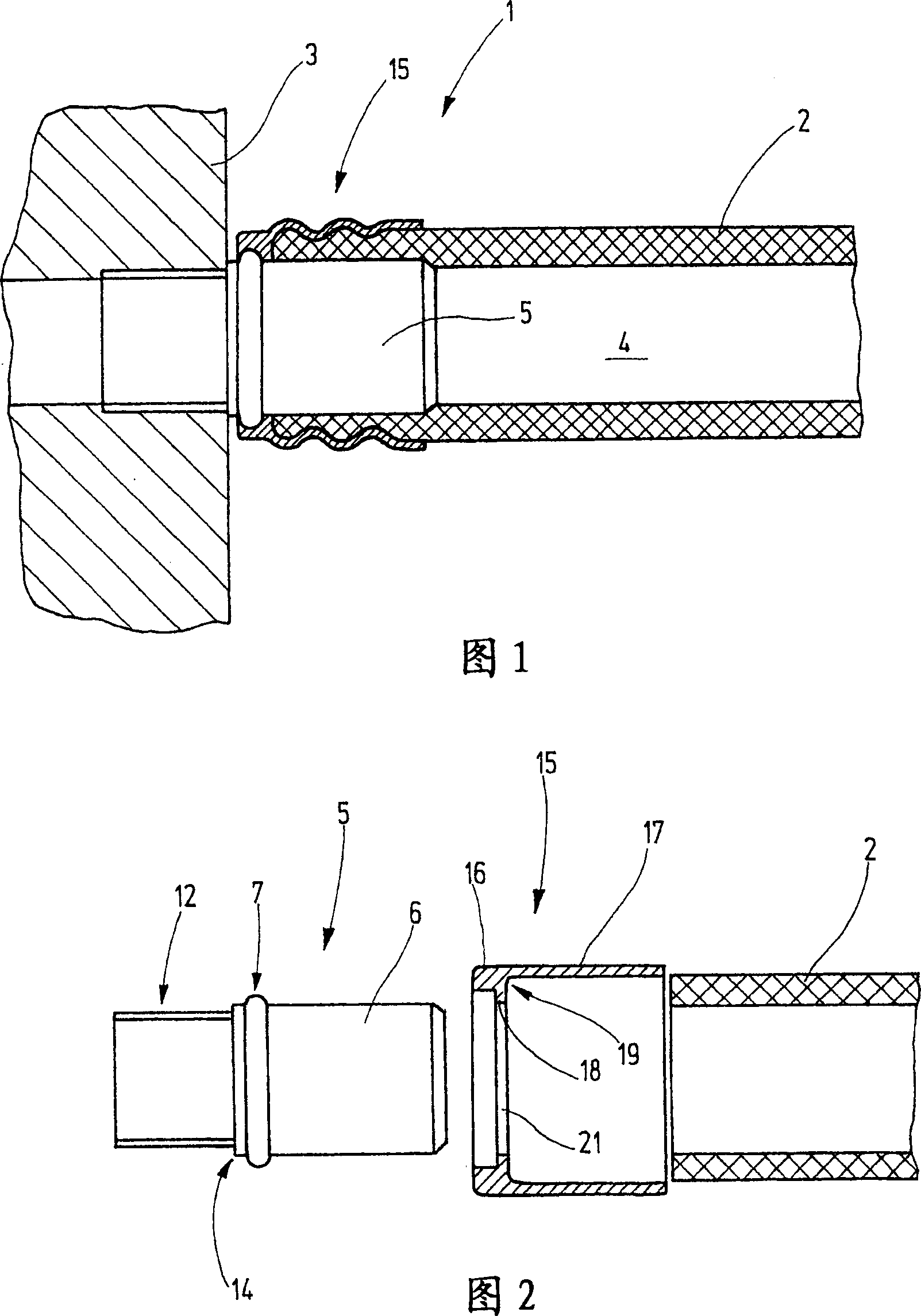
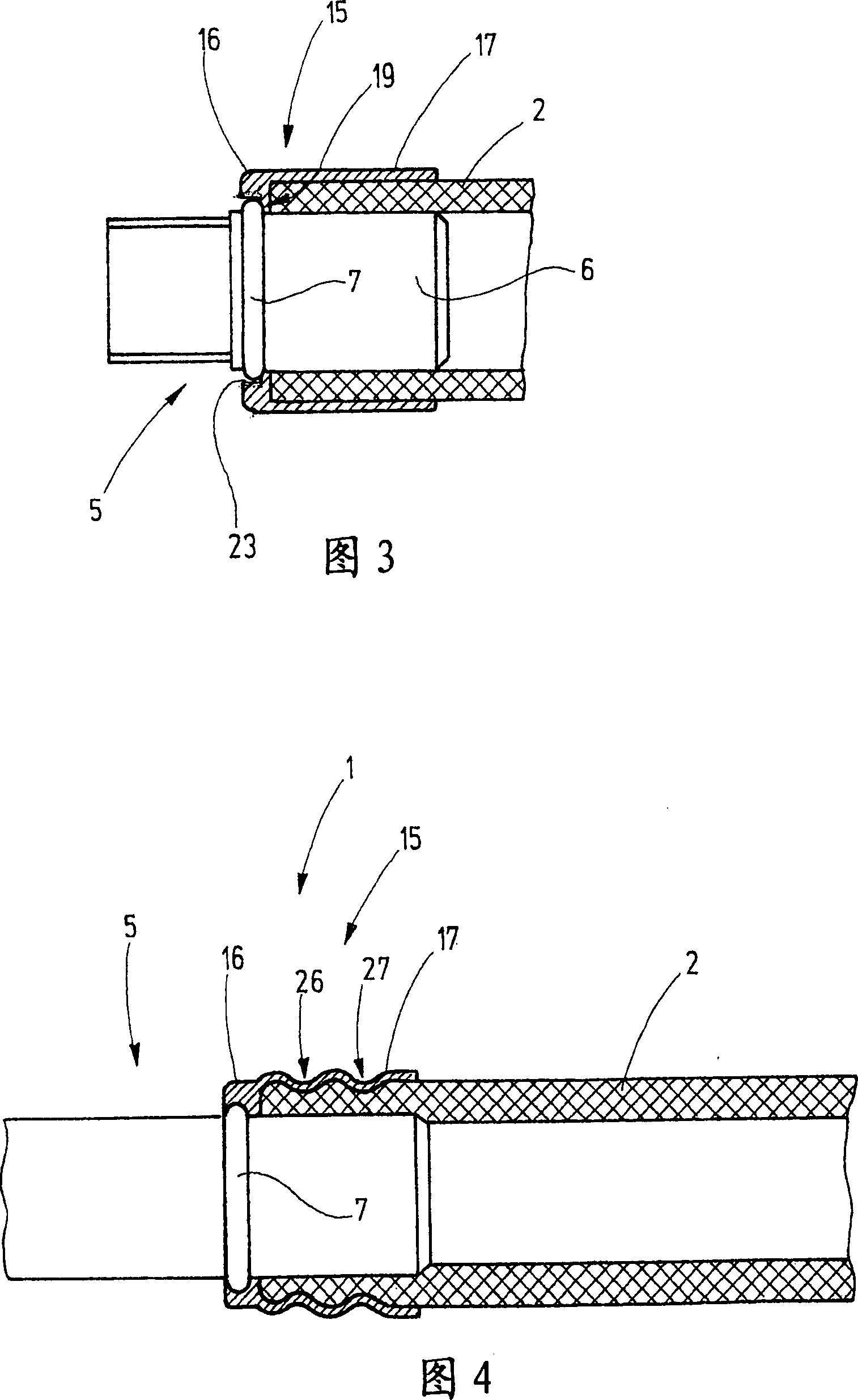
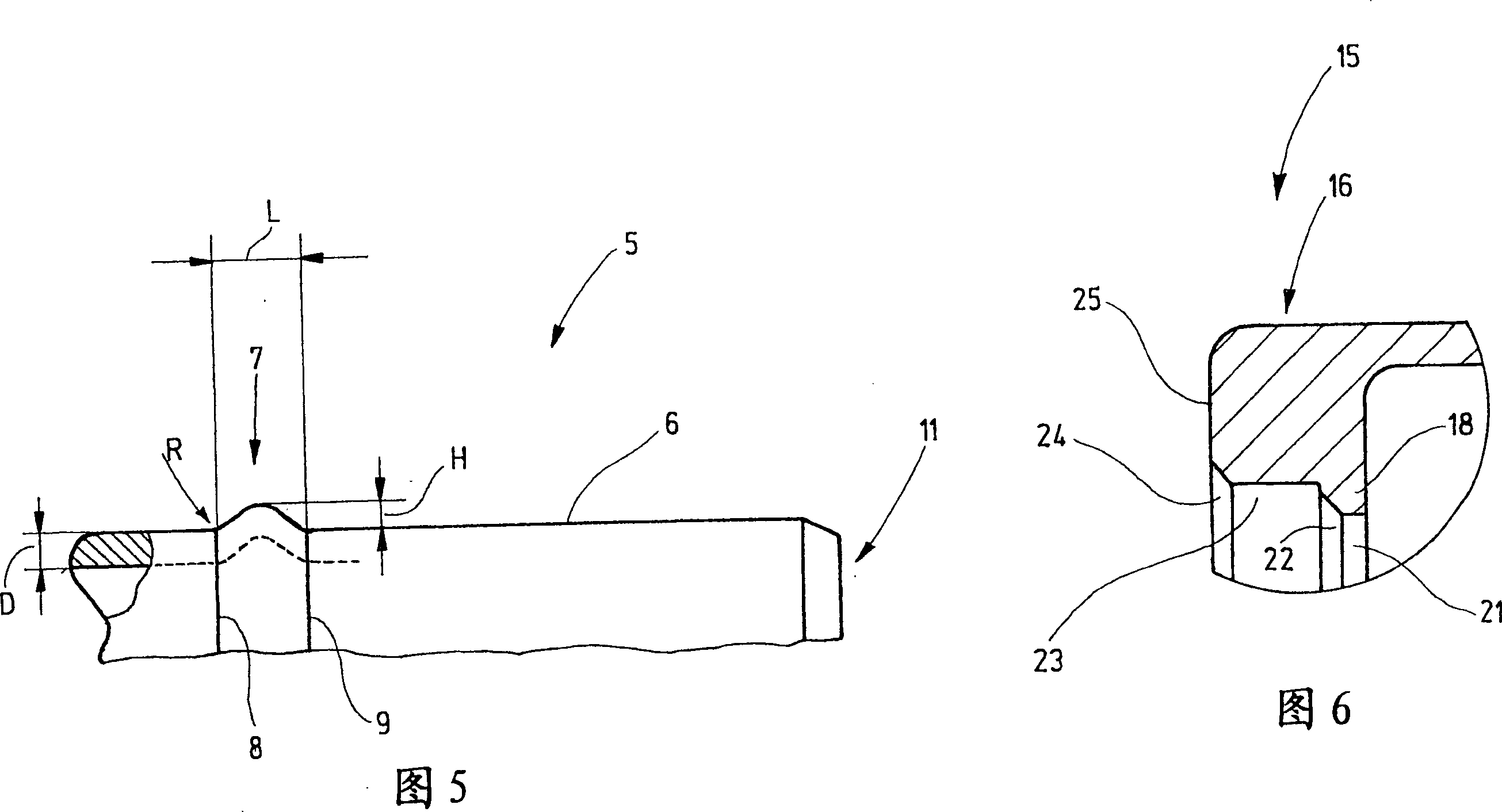
[0019] FIG. 1 shows a connection device 1 via which a hose 2 , in particular a hose 2 for conducting fluid, is connected to a component 3 , such as an oil-conducting component configured as a coolant compressor, such as a hydraulic device etc. The hose 2 and the assembly 3 enclose a fluid-conducting channel 4 . This channel runs through a connecting nipple 5 - which is shown separately in FIG. 2 . The connection nipple is substantially tubular and encloses a fluid channel (not shown in detail) which extends from one end side to the other. The connecting nipple has a cylindrical shell surface 6 on the outside, which can also be designed in a frusto-conical shape. But in this case, the cone angle is very small. On one end of the cylindrical shell 6, precisely on the end facing away from the hose, an annular flange 7 is formed on the connection nipple 5, the shape of which can be seen from FIG. 5 detail. The annular flange has a substantially arcuate cross section and a heig...
PUM
 Login to View More
 Abstract
Description
Claims
Application Information
 Login to View More