
Method and system for controlling motor torque
a technology of motor torque and control function, applied in the direction of motor/generator/converter stopper, dynamo-electric converter control, dc-ac conversion without reversal, etc., can solve the problems of failure of total system, failure of control function, saturation of current control output,
- Summary
- Abstract
- Description
- Claims
- Application Information
AI Technical Summary
Benefits of technology
Problems solved by technology
Method used
Image

Examples
Embodiment Construction
The present invention provides a system and method for controlling motor torque that avoids the above-described disadvantages of the prior art.
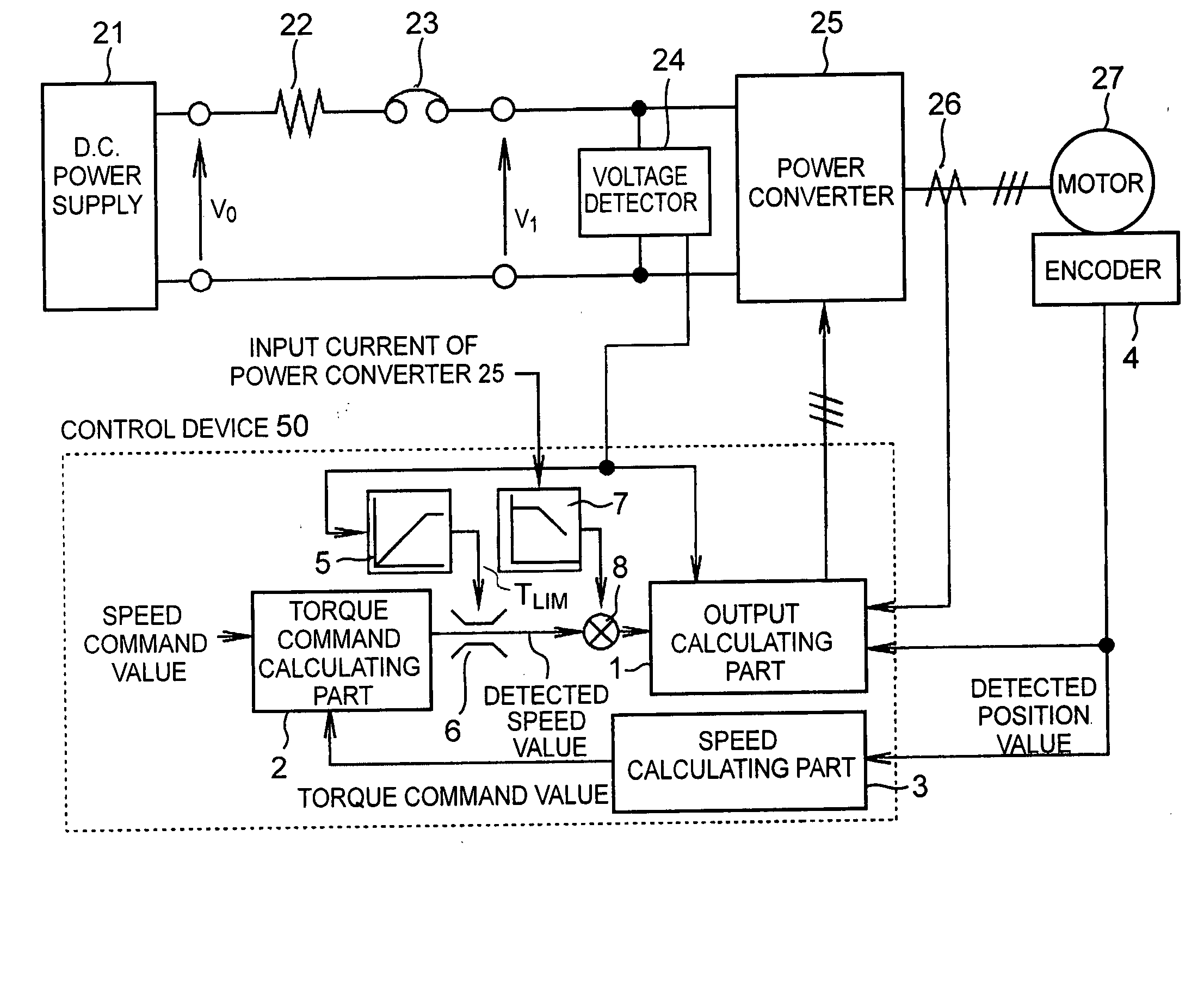
FIG. 1 depicts a system in accordance with an embodiment of the present invention that maintains a high responsiveness of torque control even when a power source voltage drop due to input impedance or a variation in power supply voltage occurs at the input of the system. In all of the depicted embodiments, constituent elements that are the same as those in FIG. 8 have been given the same reference numerals and the following description will center on the elements and functionality, which differ from those in FIG. 8.
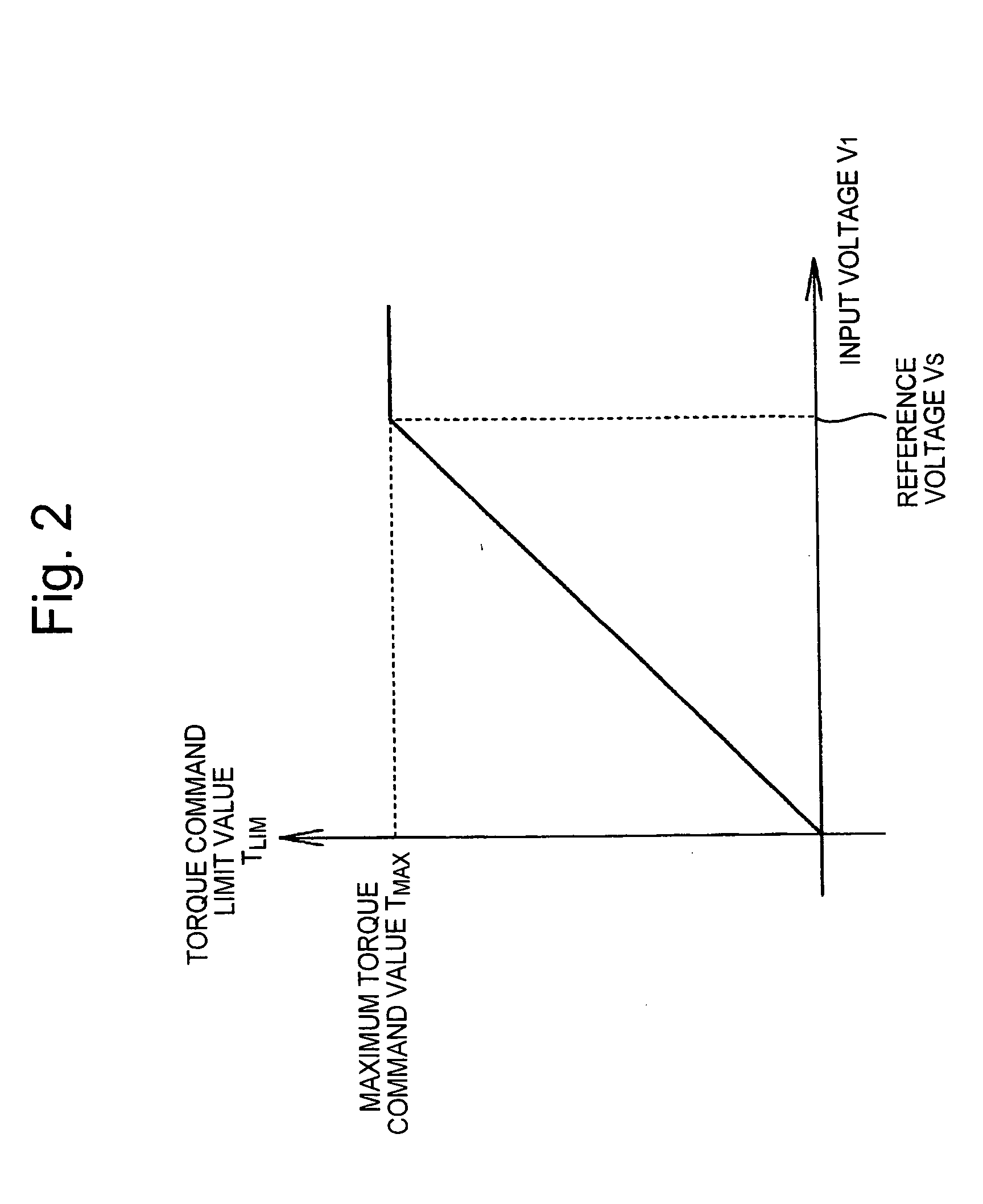
The input voltage at a power converter 25 that supplies power to motor 27 is detected via a voltage detector 24. A control device 50 provides for control of motor in conformity with the detected voltage, permitting control device 50 to set a limit on the commanded torque that avoids control function saturation problems by provi...
PUM
 Login to View More
 Abstract
Description
Claims
Application Information
 Login to View More