
Clutch release bearing and method of manufacture
a technology of hydraulic operation and bearings, which is applied in the direction of fluid-actuated clutches, clutches, non-mechanical actuated clutches, etc., can solve the problems of high cost of components and mounting, and the nature is likely to give rise to wear, so as to reduce and be particularly robust and reliable. , to achieve the effect of reducing the risk of deformation and creep
- Summary
- Abstract
- Description
- Claims
- Application Information
AI Technical Summary
Benefits of technology
Problems solved by technology
Method used
Image

Examples
Embodiment Construction
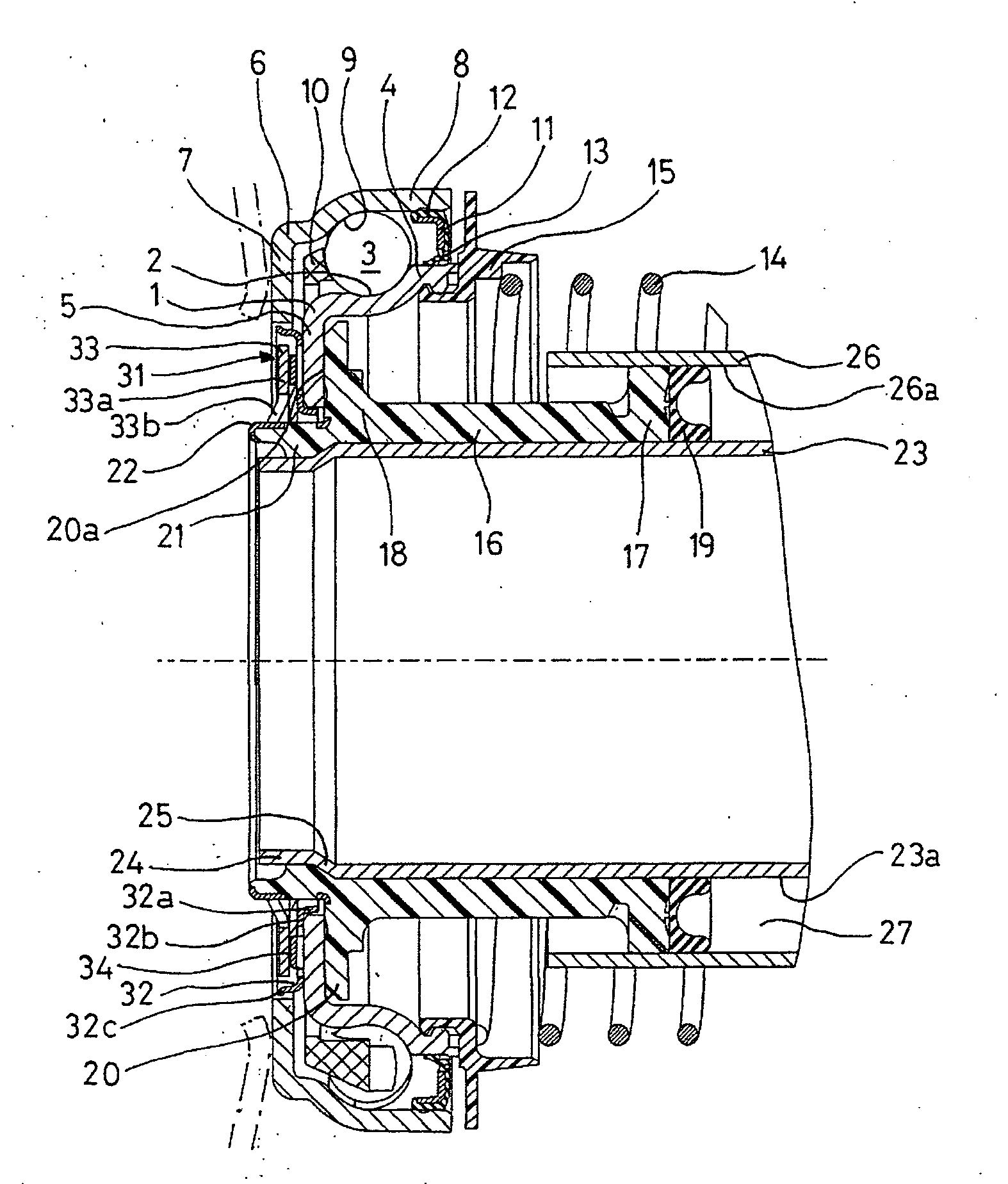
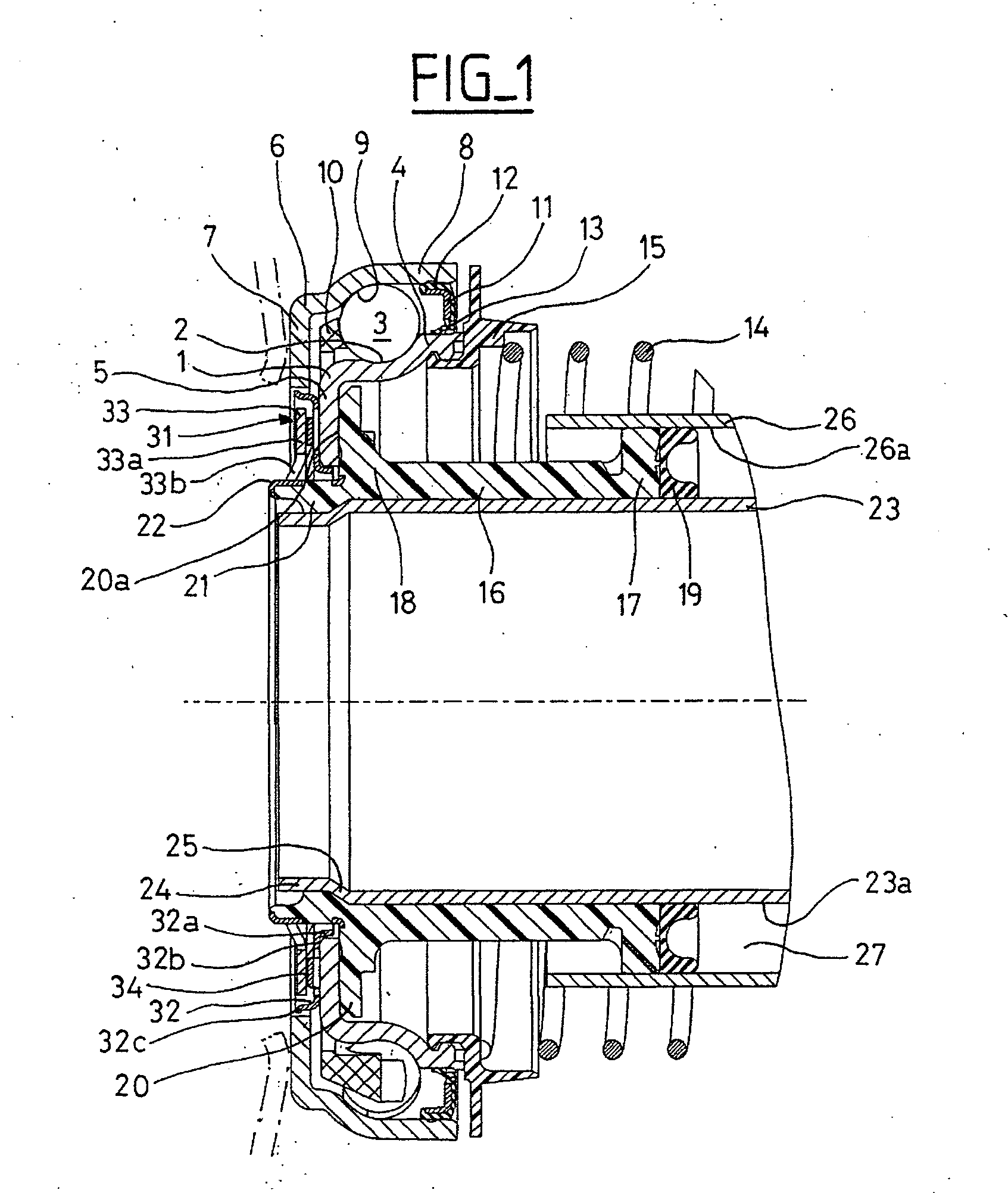
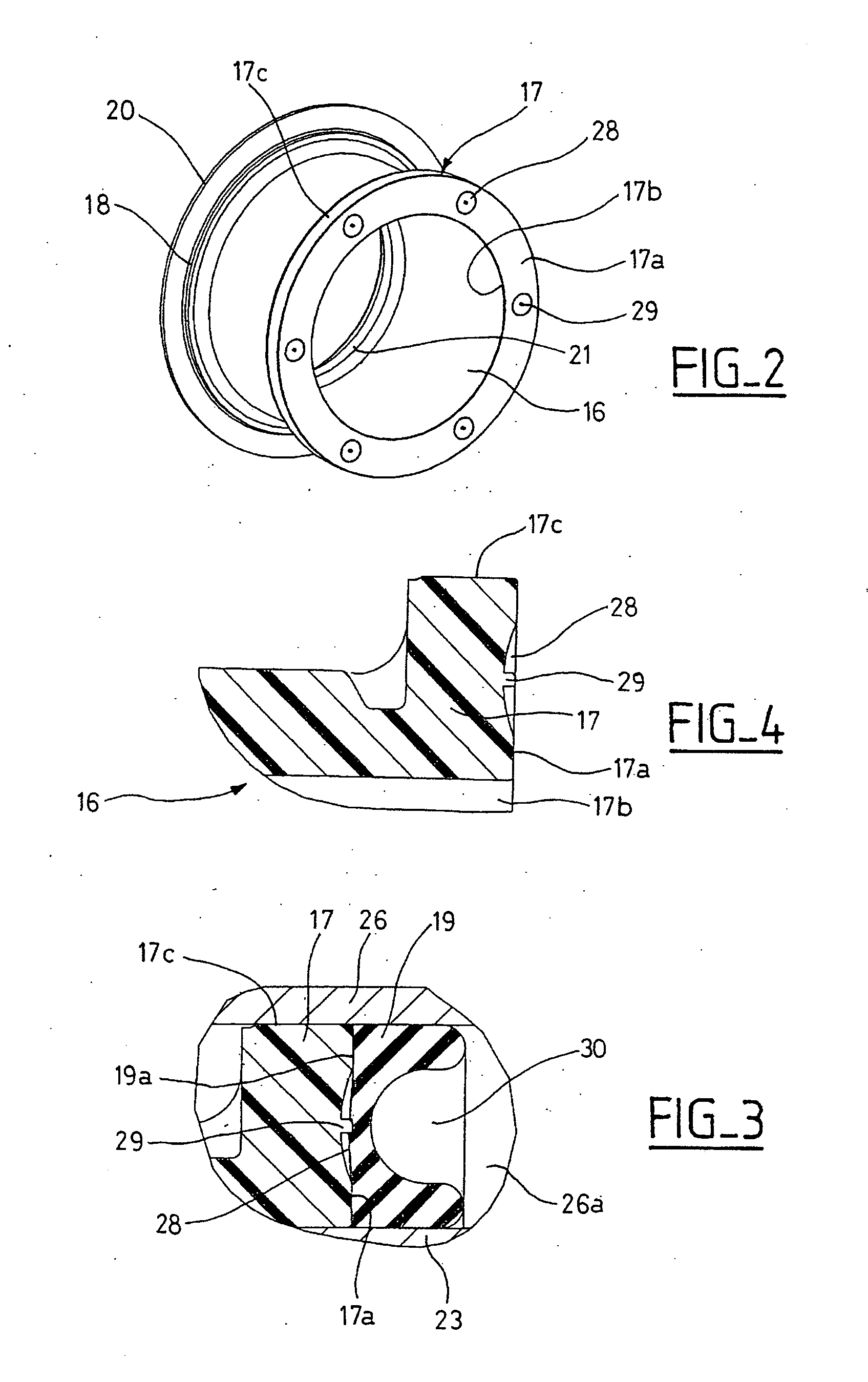
[0032] As can be seen in FIG. 1, the clutch release bearing includes a thin-walled rolling bearing non-rotating ring 1 made by pressing a metal sheet or a tube having a circular raceway in the form of a portion of torus 2 for a row of rolling elements, in this instance balls 3, the said raceway having a central axial cross section with a profile in the shape of a concave arc of a circle. The inner ring 1 includes an axial portion 4 and a radial portion 5 directed inwards, said portions 4 and 5 being arranged on each side of the rolling elements 3. The non-rotating ring 1 is an inner ring. As an alternative, the non-rotating ring 1 may be an outer ring.
[0033] The rolling-contact bearing is completed by an outer ring 6 having a radial portion 7 projecting towards the inside of the entity and a cylindrical portion 8 on the same side as the radial portion 4. The radial portion 7 is capable of coming into contact with the surface of a diaphragm or equivalent element, depicted in chain l...
PUM
 Login to View More
 Abstract
Description
Claims
Application Information
 Login to View More