
Modeling linear and non-linear system response to a pulse train
- Summary
- Abstract
- Description
- Claims
- Application Information
AI Technical Summary
Benefits of technology
Problems solved by technology
Method used
Image

Examples
Embodiment Construction
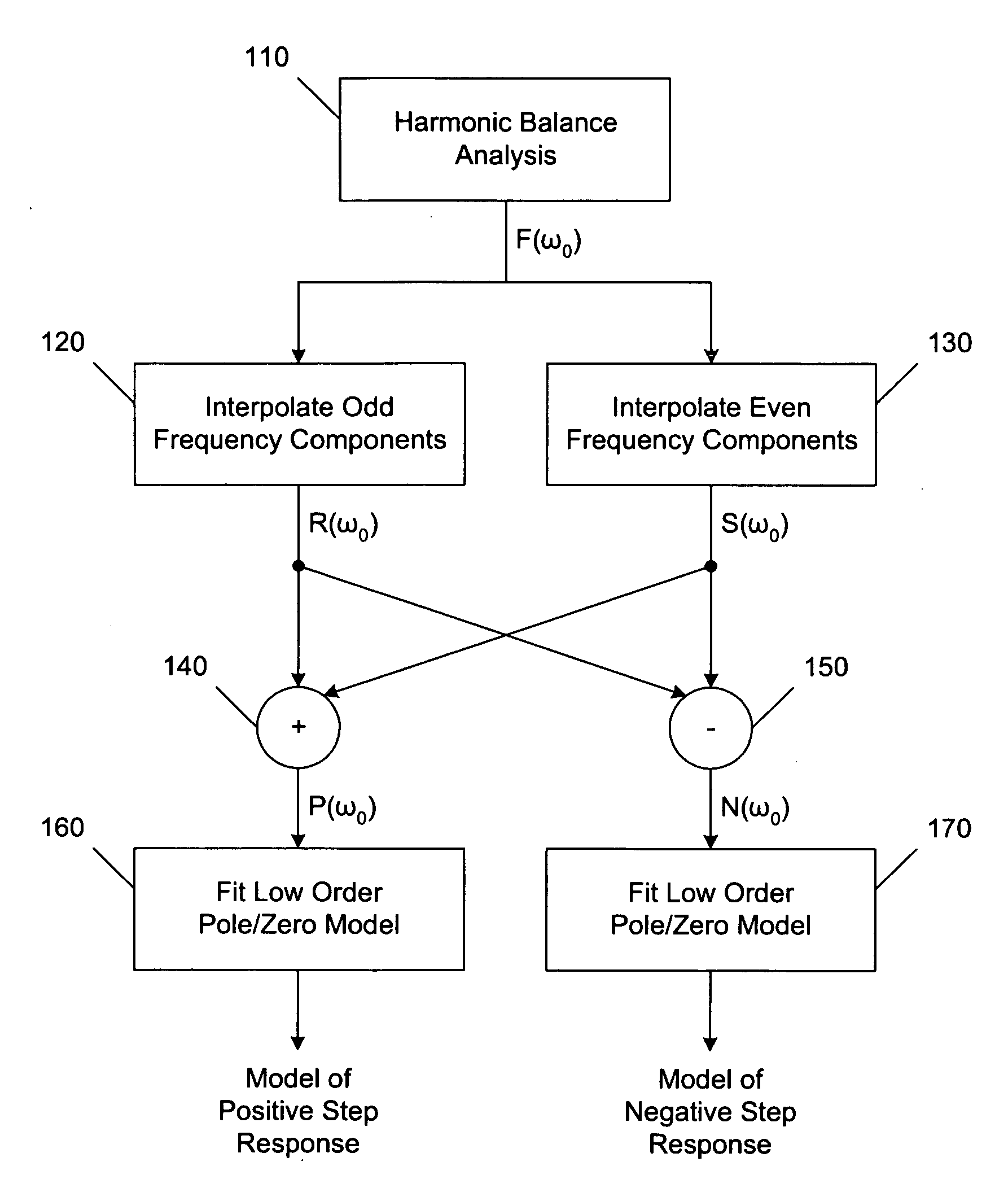
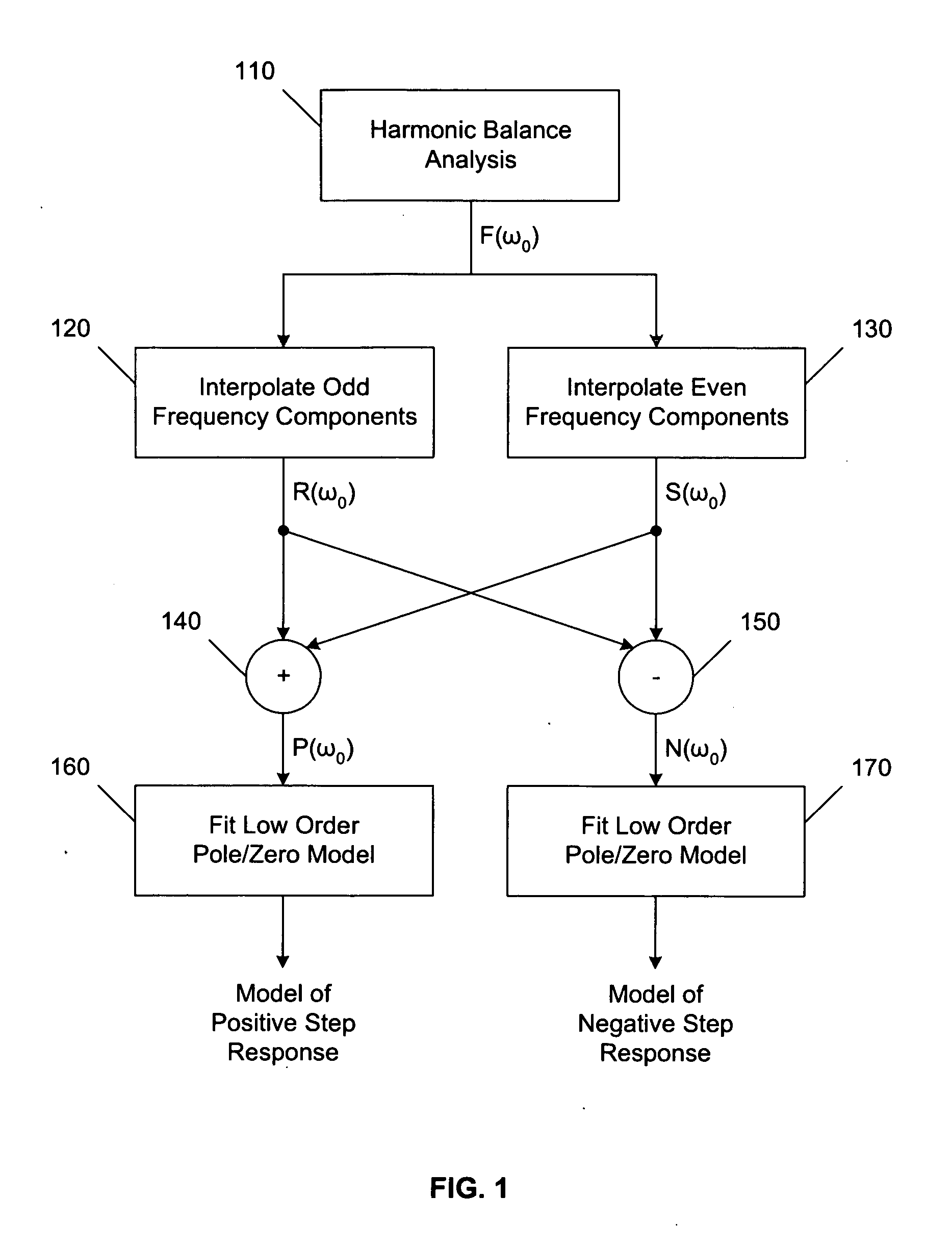
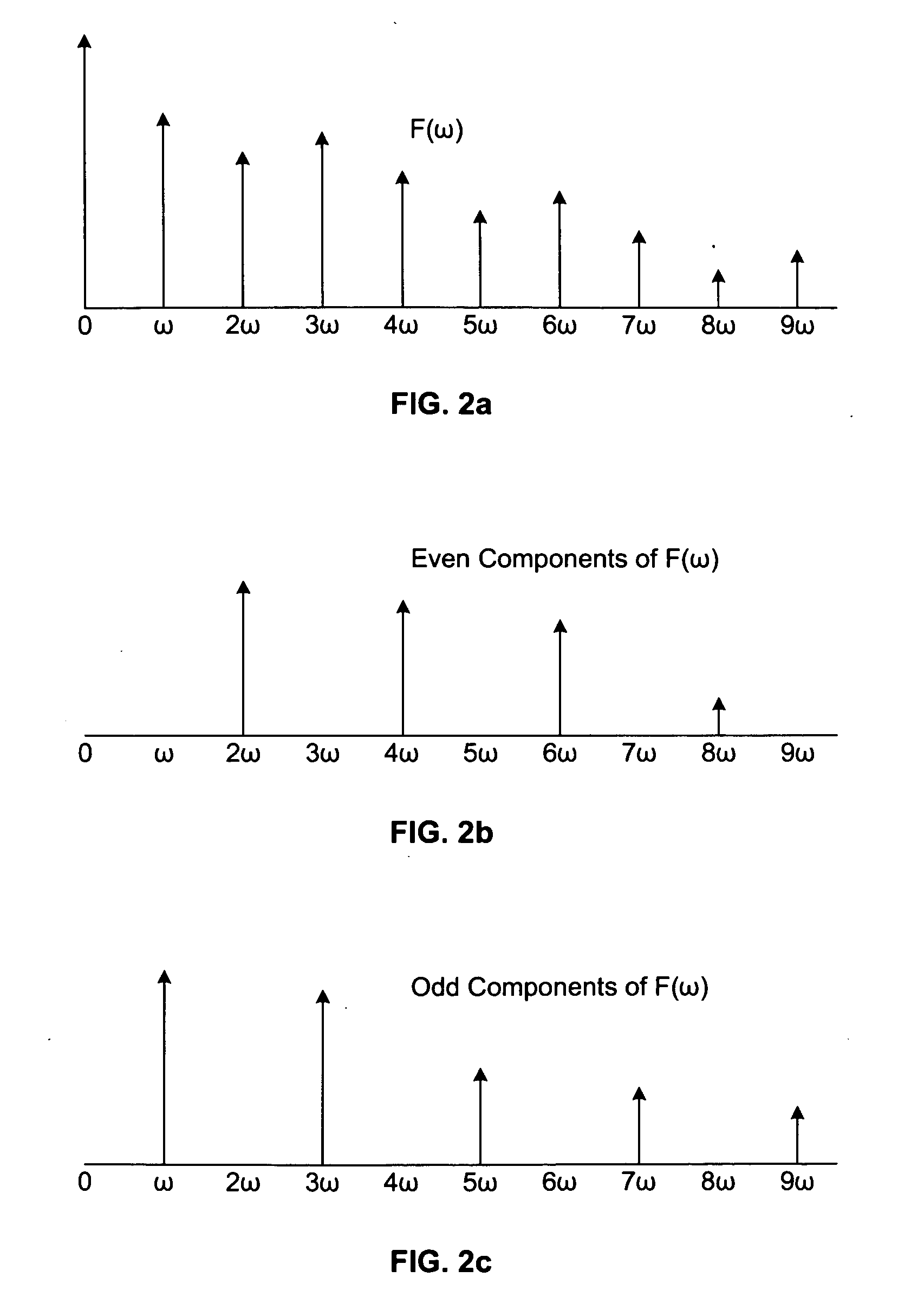
[0020] A method for performing time domain simulations of integrated circuits is described that is both highly accurate and has low computational overhead and is therefore efficient as well. The method is particularly well suited for integrated circuits comprising both analog and digital components, where there is a desire to accurately characterize the interface between the analog and the digital components. In particular, digital signals typically involve the transition of signals between two states (low to high and high to low) while analog signals can be at arbitrary voltages for arbitrary lengths of time.
[0021] It is often necessary to characterize the behavior of an analog circuit to an arbitrary digital input, i.e., a pulse train that is not periodic and can constitute arbitrary sequences of high to low or low to high transitions at arbitrary times.
[0022] The method described allows the development of accurate pole / zero models of the positive and negative step responses of ...
PUM
 Login to View More
 Abstract
Description
Claims
Application Information
 Login to View More