
Extraction and matching of characteristic fingerprints from audio signals
a fingerprint and audio signal technology, applied in the field of audio signal processing, can solve the problems of comparing the characteristics of recorded analog audio to others, identifying data signals or comparing them to others raise significant technical difficulties, and the direct comparison of such files is poor choice for efficient file or signal recognition or comparison, and achieves real-time media content auditing and other reporting.
- Summary
- Abstract
- Description
- Claims
- Application Information
AI Technical Summary
Benefits of technology
Problems solved by technology
Method used
Image

Examples
Embodiment Construction
[0028] Overview
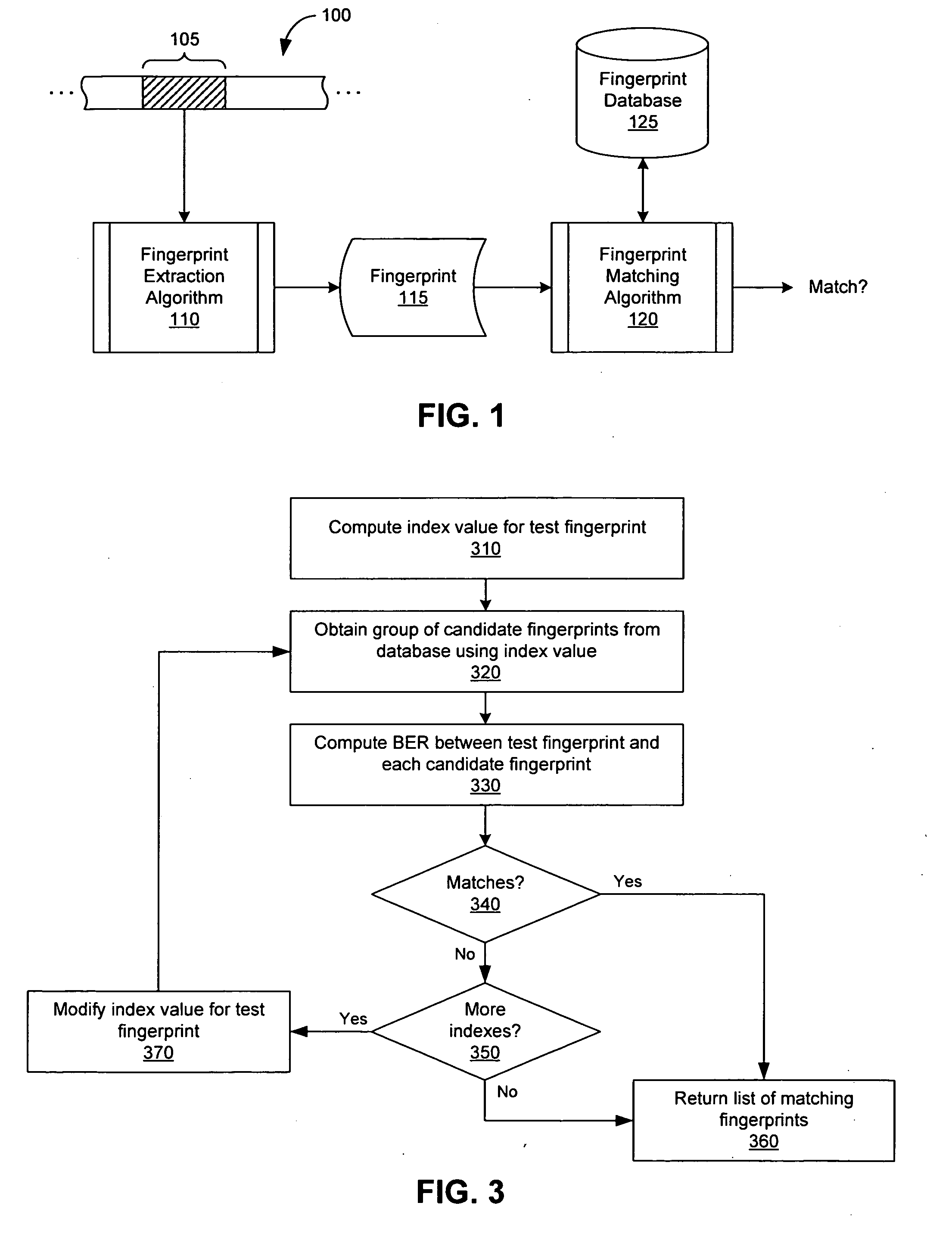
[0029] Embodiments of the invention enable the extraction of characteristic information (e.g., an audio fingerprint) from a sample of audio as well as the matching or identification of the audio using that extracted characteristic information. As illustrated in FIG. 1, a frame 105 of audio taken from an audio sample 100 is input into a fingerprint extraction algorithm 110. The audio sample 100 may be provided by any of a wide variety of sources. Using the sequence of audio frames 105, the fingerprint extraction algorithm 110 generates one or more audio fingerprints 115 that are characteristic of the sequence. Serving as a distinguishing identifier, the audio fingerprint 115 provides information relating to the identity or other characteristics of the sequence of frames 105 of the audio sample 100. In particular, one or more fingerprints 115 for the audio sample 100 may allow the audio sample 100 to be uniquely identified. Embodiments of the fingerprint extraction alg...
PUM
 Login to View More
 Abstract
Description
Claims
Application Information
 Login to View More