
Device and method for capturing speckles
a technology of speckles and devices, applied in measurement devices, instruments, computing, etc., can solve problems such as speckle patterns, and achieve the effects of improving speckle pattern imaging configuration and techniques, improving accuracy, and more certainty
- Summary
- Abstract
- Description
- Claims
- Application Information
AI Technical Summary
Benefits of technology
Problems solved by technology
Method used
Image

Examples
Embodiment Construction
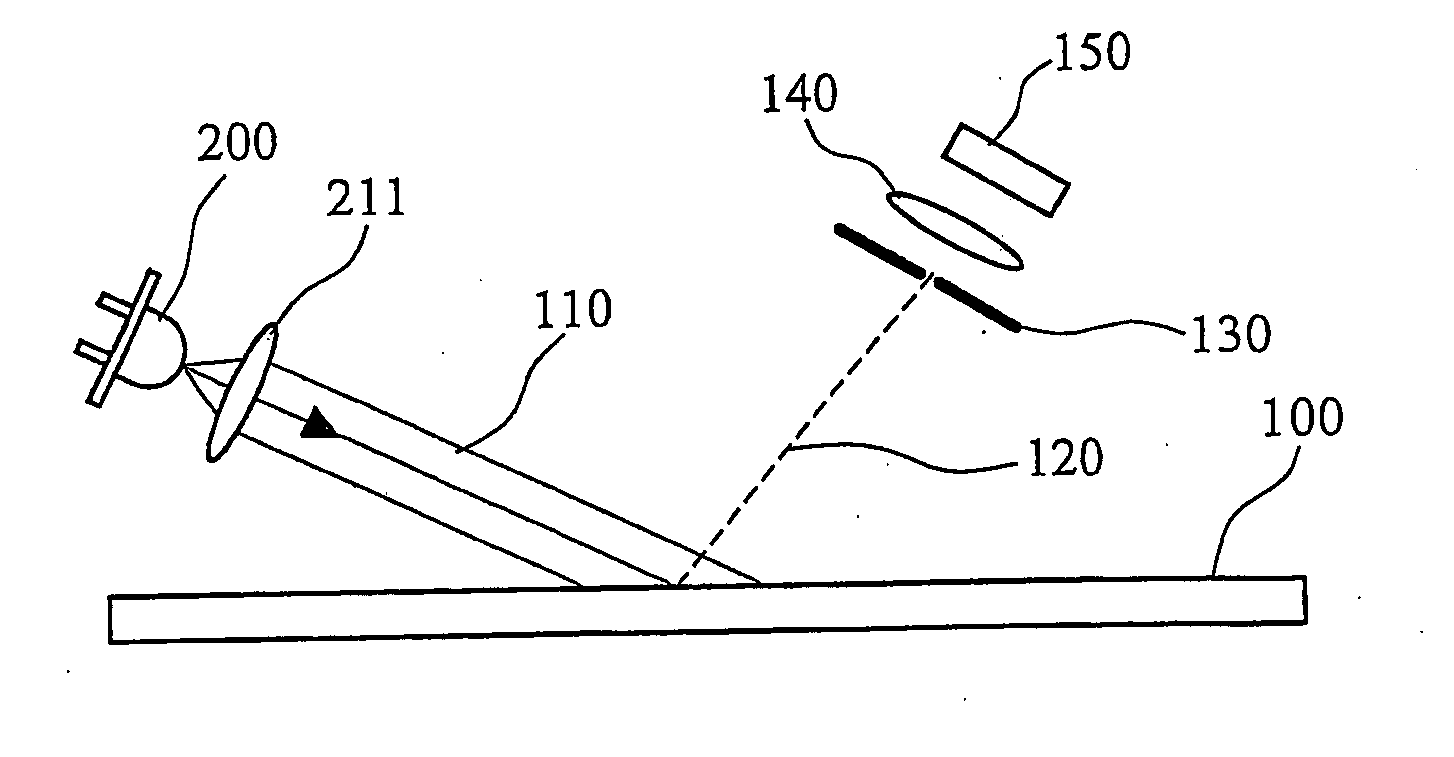
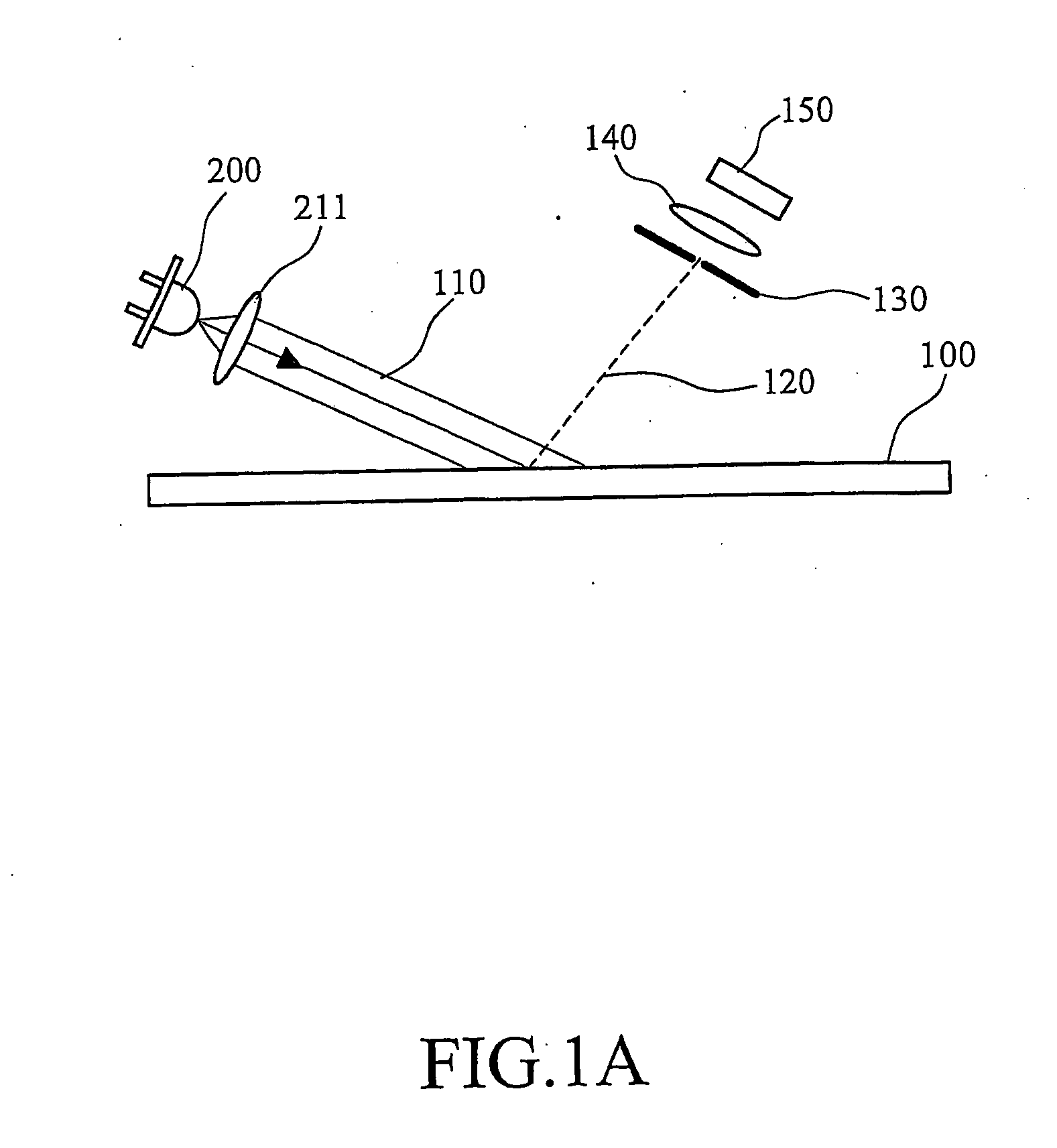
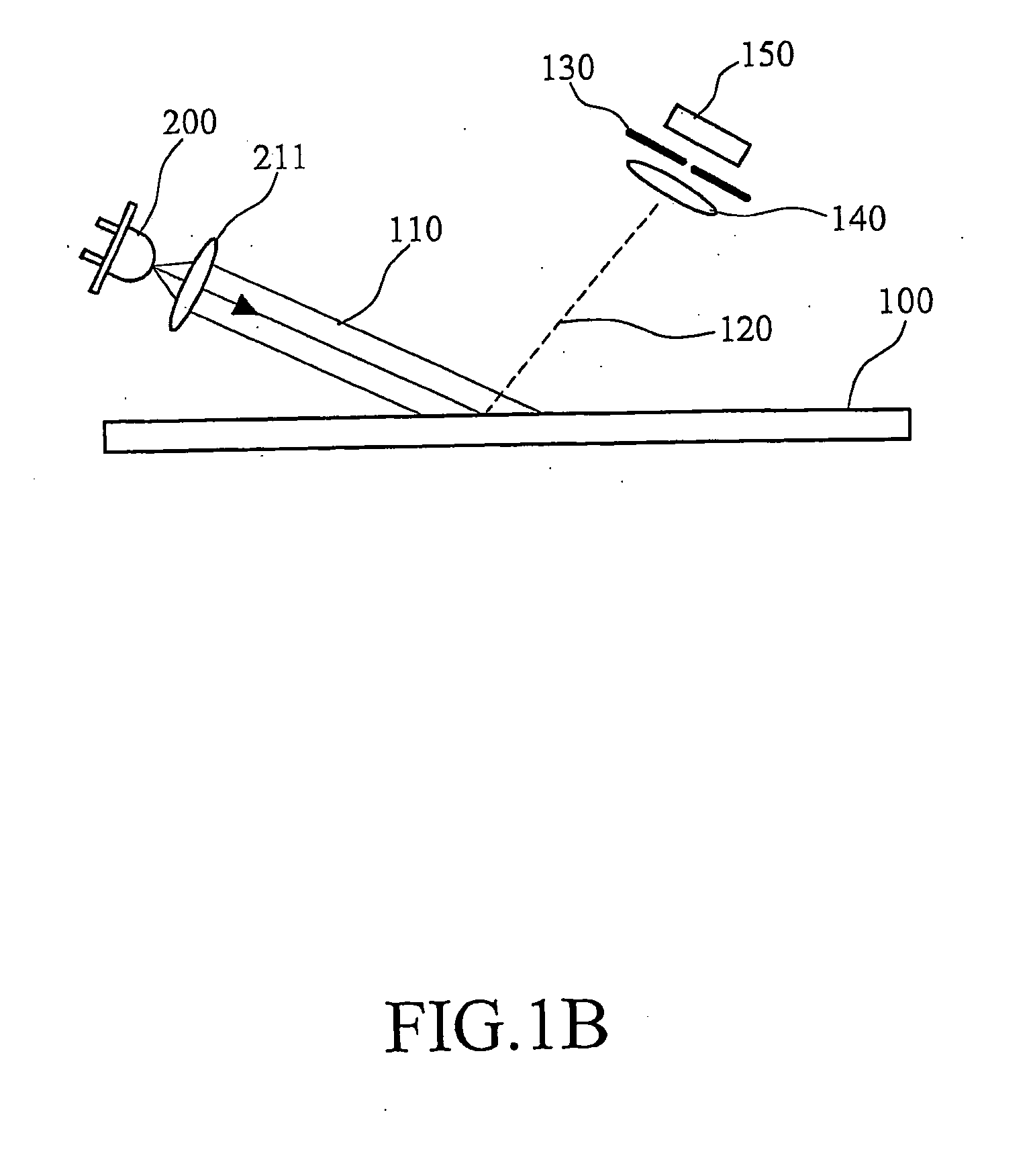
[0032] The system structure of the present invention is illustrated in FIG. 1A. When a light emits onto a surface 100, the properties of the reflected lights are determined by the roughness of the surface 100. The smoother the surface 100 is, the more mirror-like the surface 100 will be. In that case, the incident light 110 is almost totally reflected, with the reflected energy nearly the same as the incident energy. The rougher the surface 100 is, the foggier the surface 100 will be. After projecting onto the rough surface 100, the light is scattered almost in all directions. This is because the surface 100 is so rough that the lights propagate in arbitrary directions due to the scattering effect.
[0033] After the incident light 110 projects onto the surface 100, a lens 140 and an image sensor 150 are used to receive the scattered lights 120. In order to enlarge the speckle, a light restrictive element is disposed in front of the image sensor 150. The light restrictive element is a...
PUM
 Login to View More
 Abstract
Description
Claims
Application Information
 Login to View More