Electrically Programmable Fuse Sense Circuit

US20080106323A1Inactive Publication Date: 2008-05-08IBM CORP
7 Cites 13 Cited by

Patent Information

Authority / Receiving Office
US · United States
Current Assignee / Owner
Publication Date
2008-05-08
Estimated Expiration
Not applicable · inactive patent

Smart Images

  • Figure 1
    Figure 1
  • Figure 2
    Figure 2
  • Figure 3
    Figure 3
Patent Text Reader

Abstract

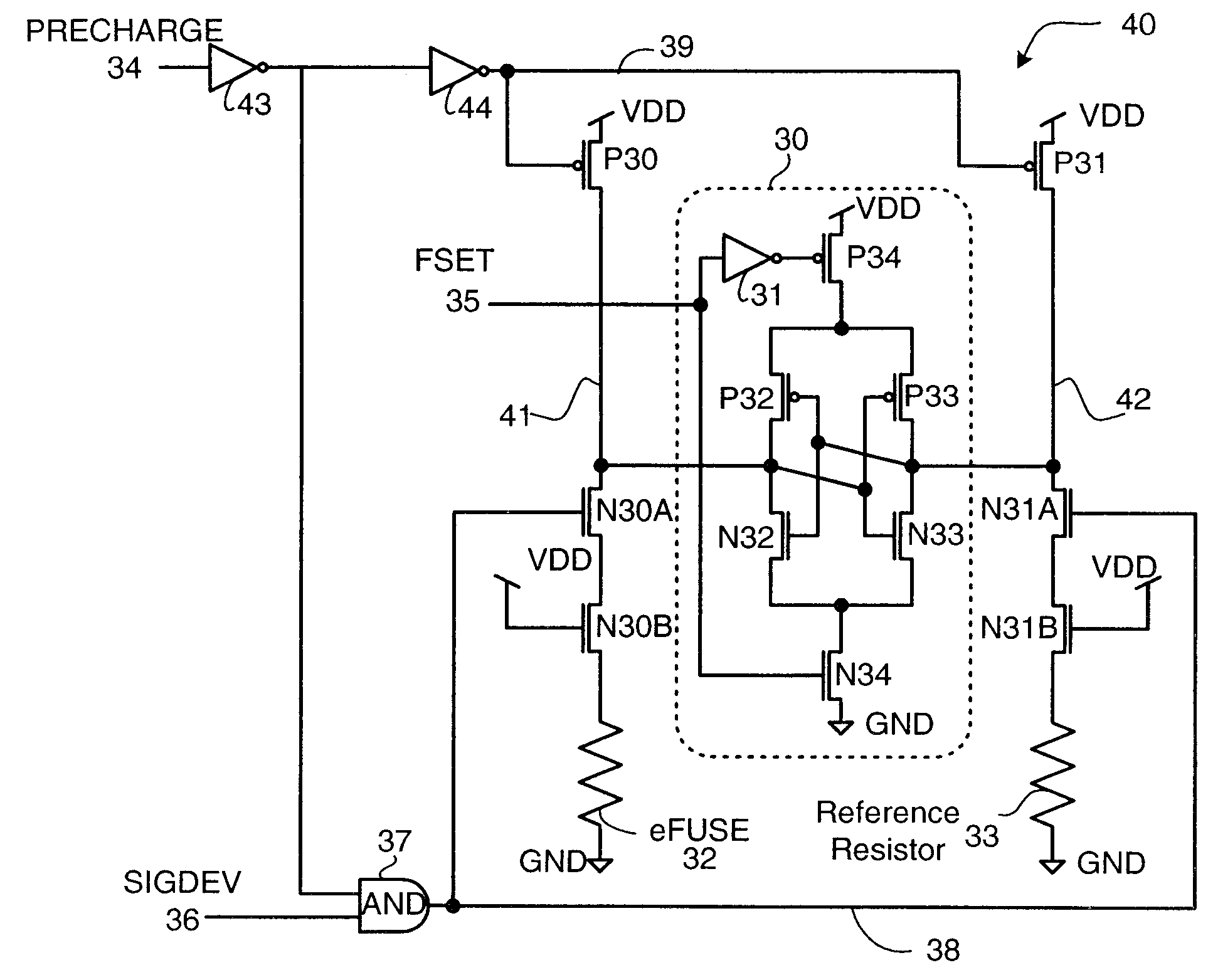
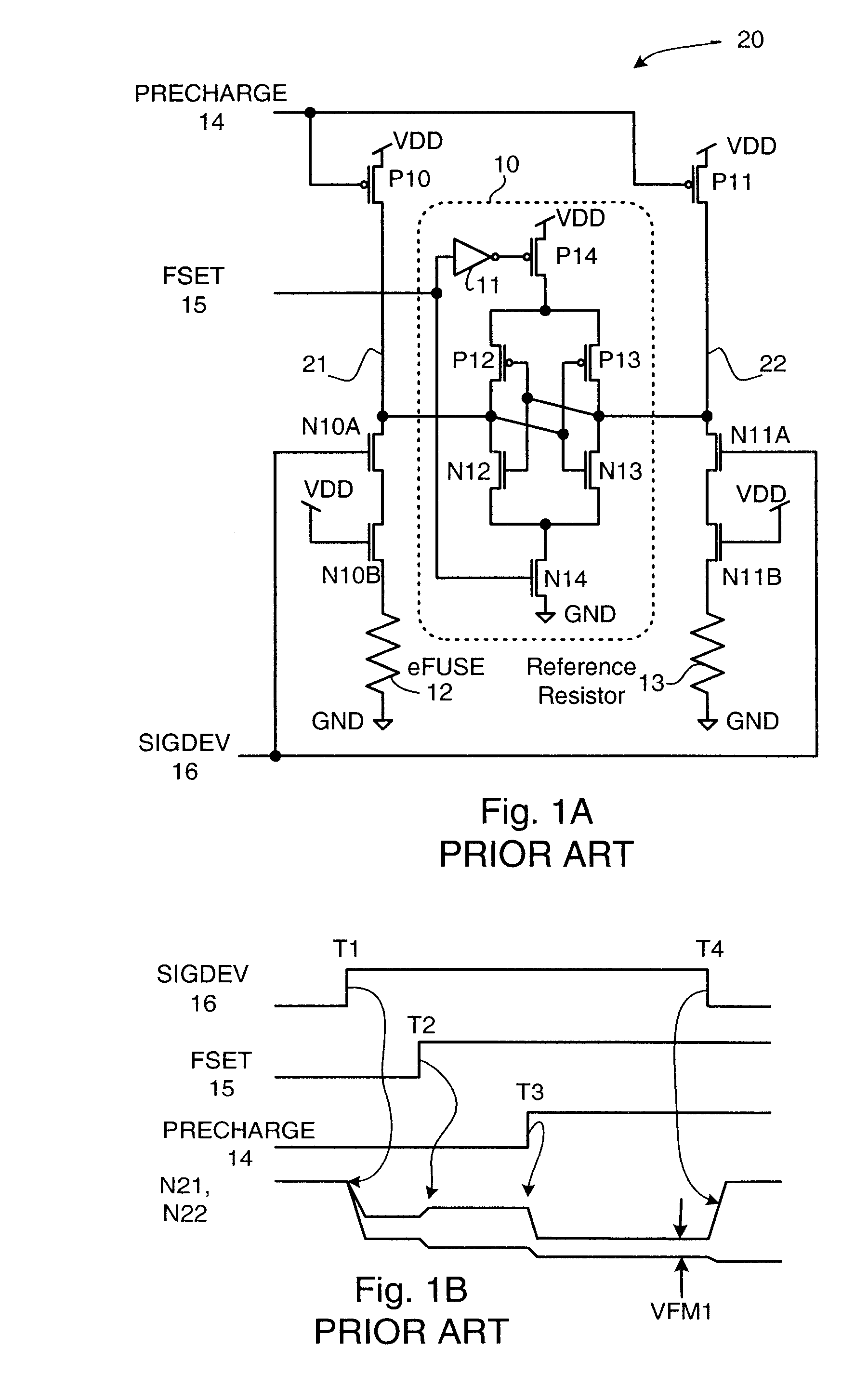
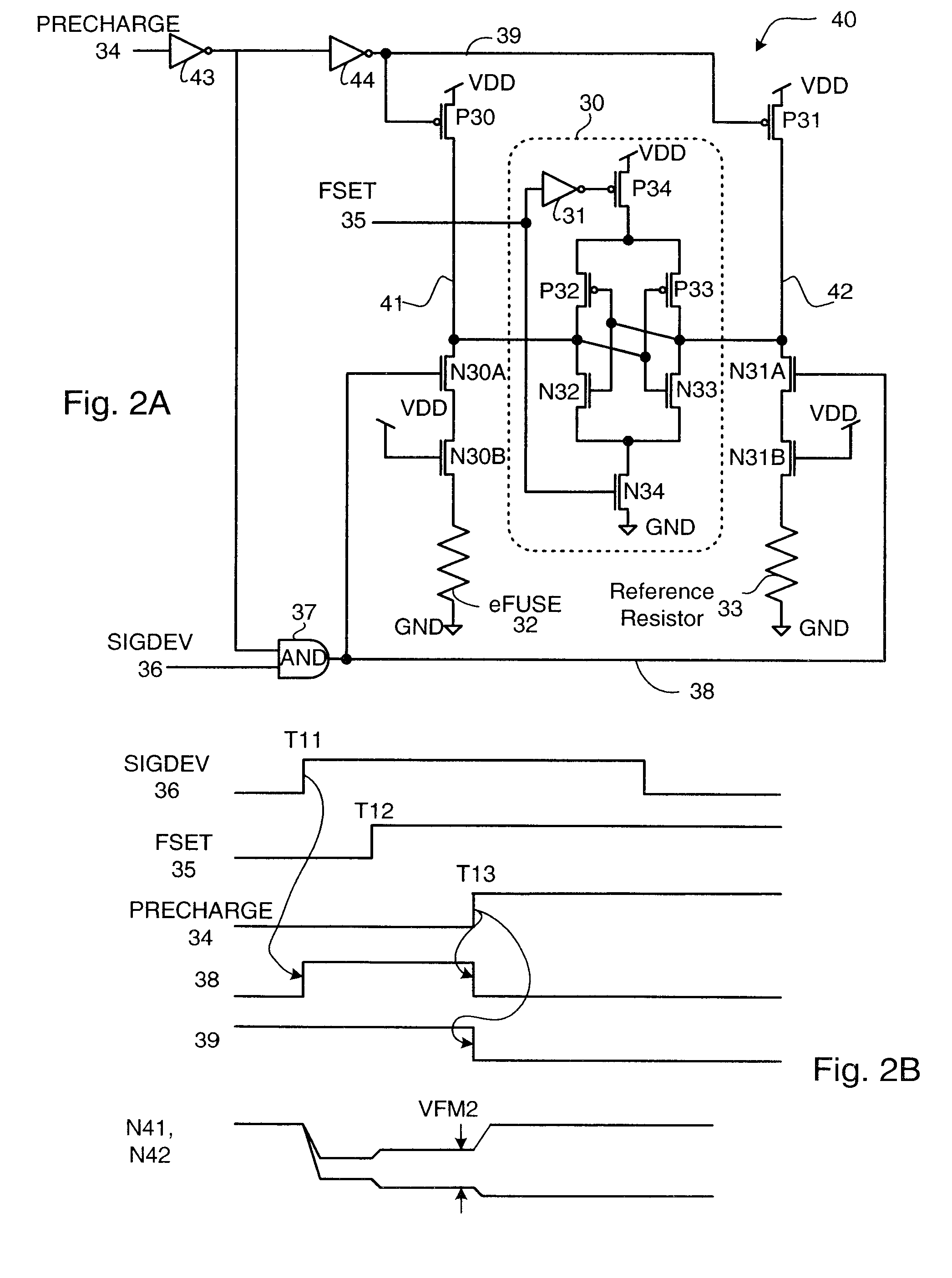
A electrically programmable fuse sense circuit having an electrically programmable fuse and a reference resistance. A first current source is coupled, through a first switch, to the electrically programmable fuse. A second current source is coupled, through a second switch, to the reference resistance. A precharge signal enables the first current source, the second current source and closes the first switch and the second switch, creating voltage drops across the electrically programmable fuse and the reference resistance. When the precharge signal goes inactive, the first current source and the second current source are shut off, and, at the same time the first switch and the second switch are opened. A latching circuit uses a difference in the voltage drops when the precharge signal goes inactive to store a state of the electrically programmable fuse, indicative of whether the electrically programmable fuse is blown or unblown.
Need to check novelty before this filing date? Find Prior Art

Description

BACKGROUND OF THE INVENTION

[0001] 1. Field of the Invention

[0002] This invention relates generally to electrically programmable fuse technology, and in particular, to circuitry used to sense whether an electrically programmable fuse is blown or unblown.

[0003] 2. Description of the Related Art

[0004] Modern electronic systems frequently use one or more electrically programmable fuses on a semiconductor chip to personalize function of the semiconductor chip in a particular electronic system. An electrically programmable fuse may be blown during manufacturing or may be blown at a later time, for example, in a customer's office. A state of an electrically programmable fuse (i.e., whether the electrically programmable fuse is “blown” or “unblown”) or of a plurality of electrically programmable fuses is used on the semiconductor chip to enable function, disable function, or to change function of the semiconductor chip. For example, a test function needed to test an electronic function may not ...

Examples

Embodiment Construction

[0028]In the following detailed description of the preferred embodiments, reference is made to the accompanying drawings, which form a part hereof, and within which are shown by way of illustration specific embodiments by which the invention may be practiced. It is to be understood that other embodiments may be utilized and structural changes may be made without departing from the scope of the invention.

[0029]The present invention provides an improved apparatus for sensing whether an electrically programmable fuse is blown or unblown.

[0030]In the literature a “blown” electrically programmable fuse is also called a “programmed” electrically programmable fuse. Similarly, an “unblown” electrically programmable fuse is called an “unprogrammed” electrically programmable fuse. The process of blowing a particular electrically programmable fuse is often referred to as programming the particular electrically programmable fuse.

[0031]It will be appreciated that there also exist “antifuse” vers...