
Holistic face-down recovery apparatus and method therefor
a face-down recovery and patient technology, applied in the field of surgical patient rehabilitation, can solve the problems of patients' monotony, stress, discomfort, and atrophy of major muscle groups, and achieve the effects of optimizing the recovery regimen of patients, maximizing comfort, and encouraging exercise and stress releas
- Summary
- Abstract
- Description
- Claims
- Application Information
AI Technical Summary
Benefits of technology
Problems solved by technology
Method used
Image

Examples
Embodiment Construction
[0041]While this invention is susceptible of embodiments in many different forms, there is shown in the drawings and will herein be described in detail preferred embodiments of the invention with the understanding that the present disclosure is to be considered as an exemplification of the principles of the invention and is not intended to limit the broad aspect of the invention to the embodiments illustrated.
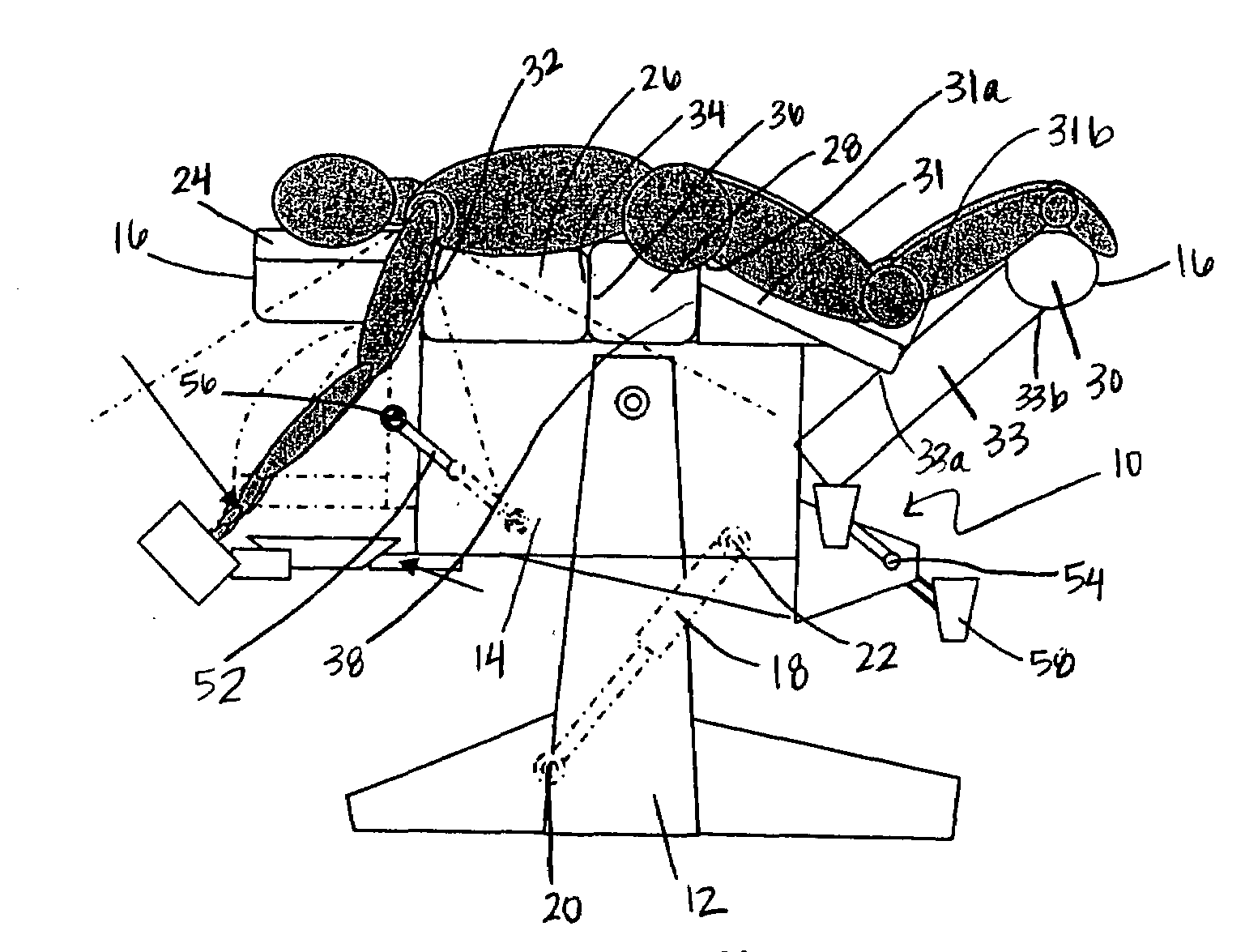
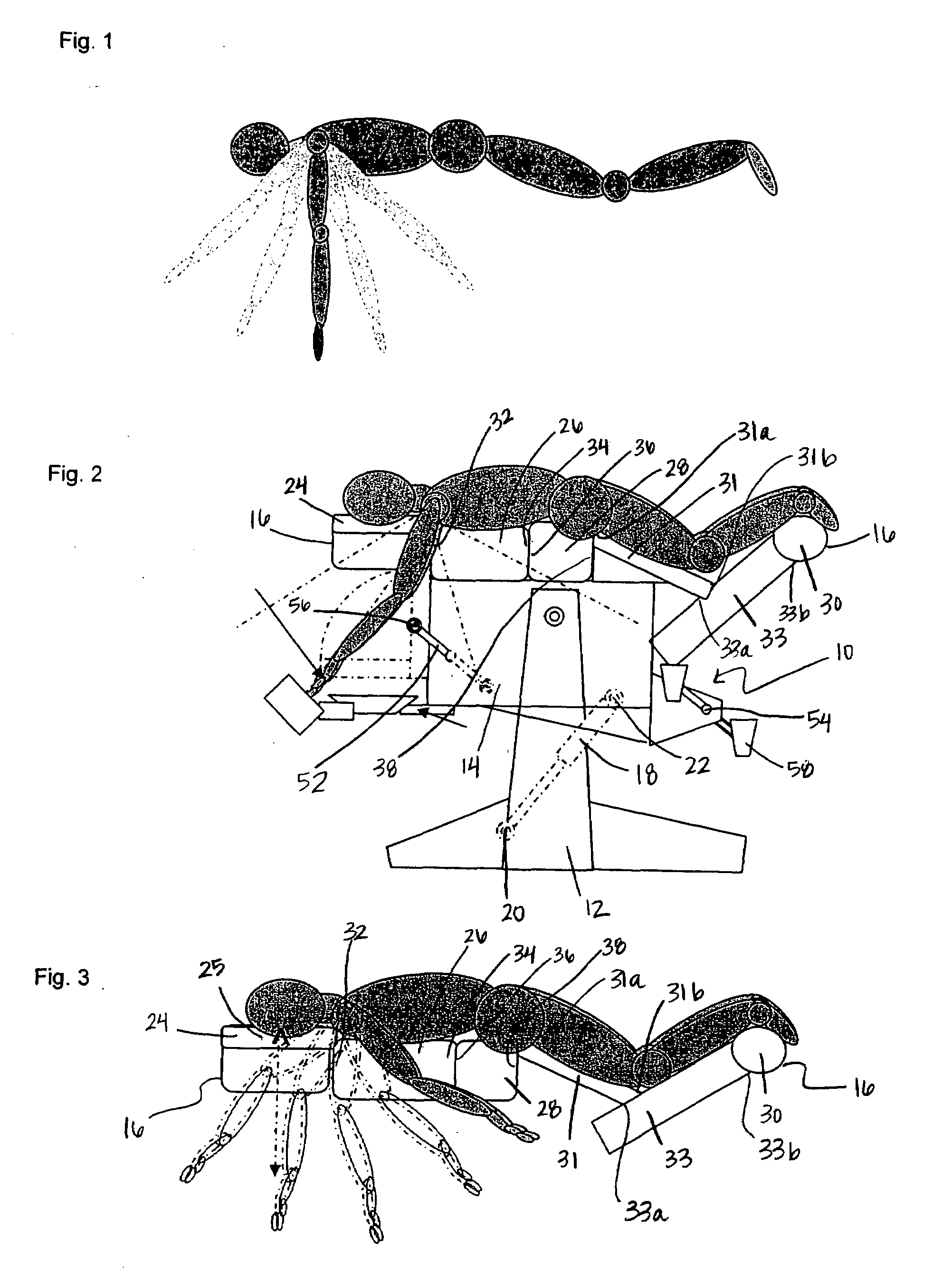
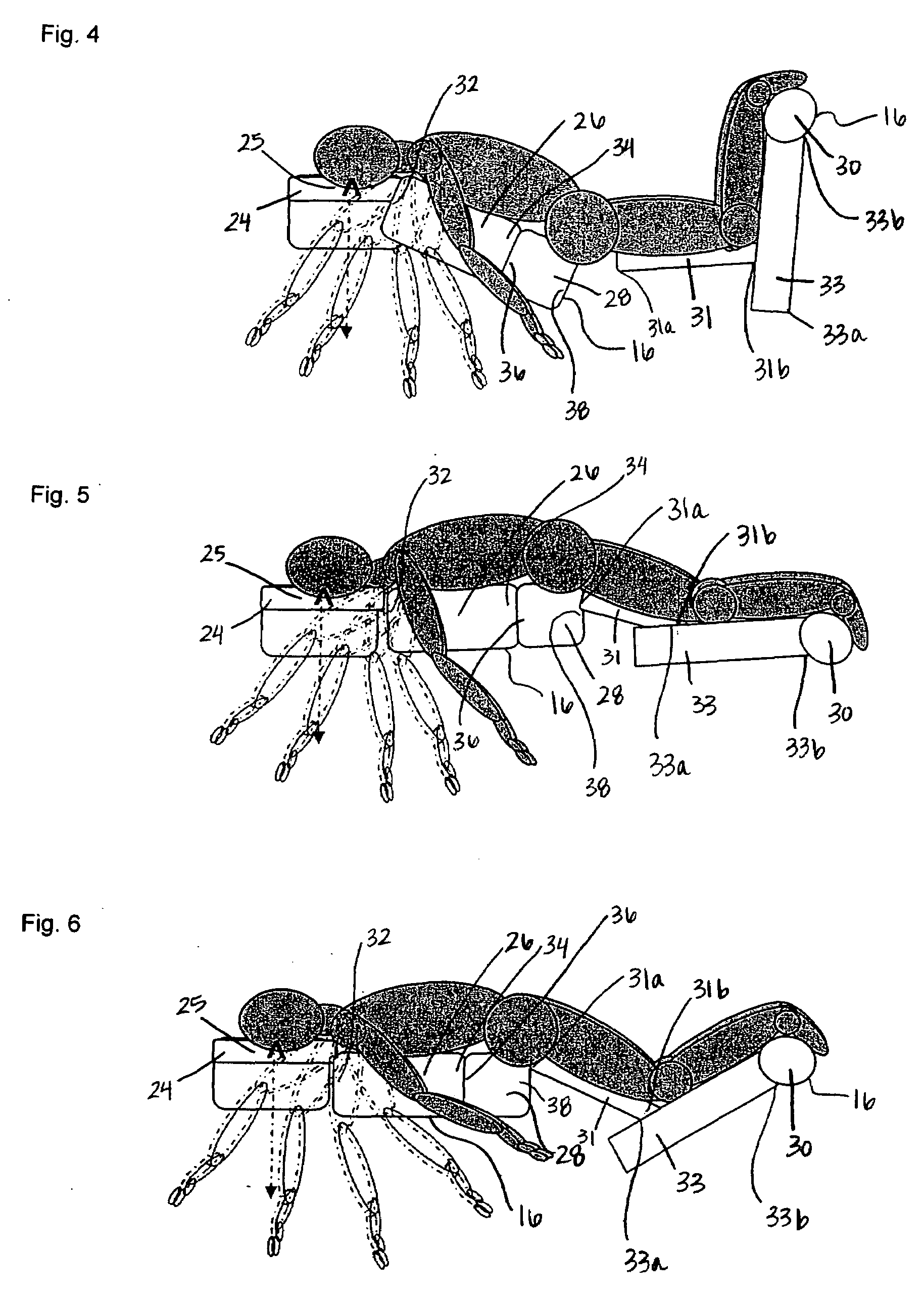
[0042]FIGS. 1-26 show the face-down recovery apparatus of the present invention, generally designated with reference numeral 10. The recovery apparatus is designed to maintain a patient or user's head firmly in a face-down position, with the patient's eyes focused perpendicular to the floor, while the rest of the body is sufficiently supported to alleviate strain from the patient's joints, back, legs and arms.
[0043]As shown in FIGS. 2 and 8, the recovery apparatus 10 generally has a base 12, a housing 14, and a support 16. FIG. 2 shows the housing 14 connected to the base 12 by...
PUM
 Login to View More
 Abstract
Description
Claims
Application Information
 Login to View More