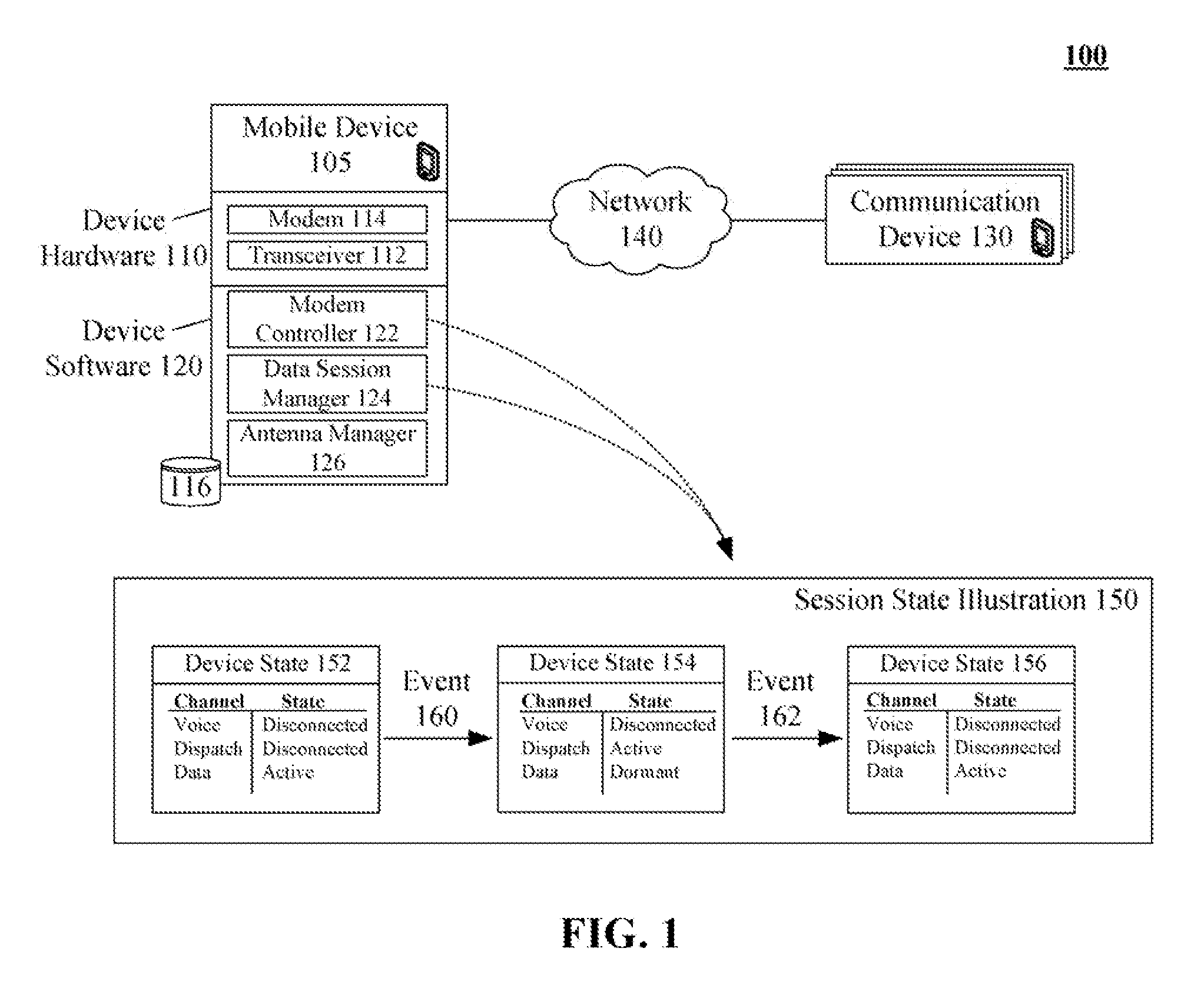
[0007]A solution that utilizes software /
firmware in a
handset of a dual mode mobile
communication device to avoid dual transmit states. More specifically, a data session manager can detect and
control data sessions to avoid simultaneous data session based transmissions and voice / dispatch session based transmissions. The solution can establish at least three different states for data communication sessions, which include an
active state, a dormant state, and a disconnected state. Dispatch and voice sessions can have two states, an
active state and a disconnected state. In a dormant state,
system and
network connectivity can be maintained while transmissions can be disabled. The data session manager can shift an
active data session to a dormant state immediately before permitting a dispatch call, where the handset can establish a dispatch session. After the dispatch call has been ended, the dispatch session can be stopped and the
original data session can be toggled from the dormant state to an
active state.
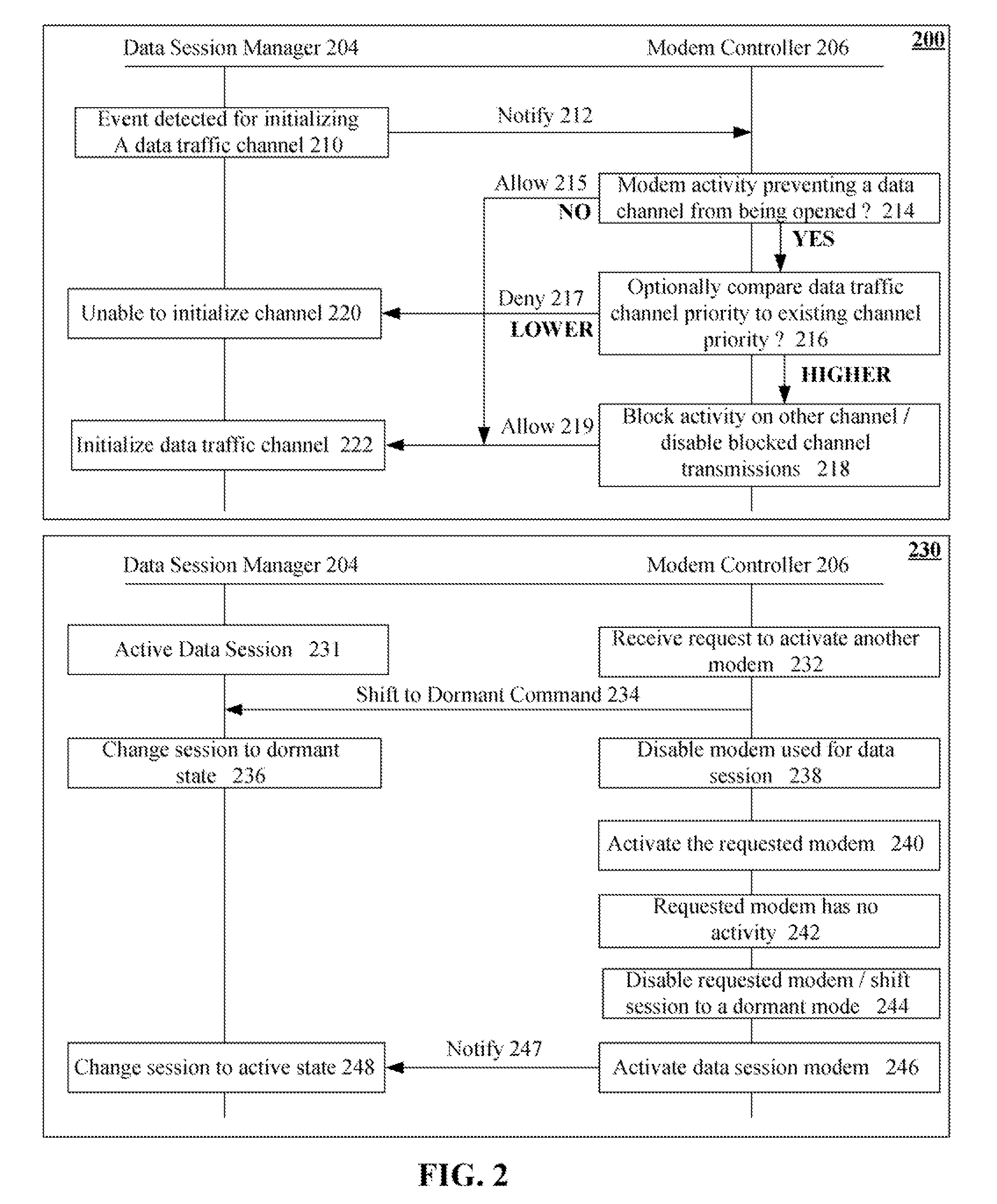
[0008]In one embodiment, the data session manager can prevent simultaneous transmissions by interacting with a main handset modem controller. To elaborate, the data session manager can notify the main handset modem controller before acquiring any
data traffic. This enables the modem controller to fulfill any requirements relating to blocking data sessions when other services are active (e.g., no data sessions are permitted when dispatch services are active). The data session manager can also be configured to terminate a data session when so requested by the modem controller. The data session manager can notify the modem controller whenever a data
traffic channel changes its state, which permits the other modems to be blocked whenever a
data channel is being used. In one configuration, the solution can establish one or more special states related to data transmissions, such as dedicated
data transmission mode, which disables interconnect and / or dispatch calls, and a disabled
data transmission mode, where data transmissions are not permitted.
[0009]The present invention can be implemented in accordance with numerous aspects consistent with the material presented herein. For example, one aspect of the present invention can include a dual transmit mobile communication device that includes multiple modems, a modem controller, and a data session manager. The modem controller can programmatically control the modems. The data session manager can manage data sessions of the mobile communication device. The data session manager can programmatically interact with the software modem controller to ensure that only one of the modems is transmitting at any one time. States of data communication sessions can be automatically adjusted as necessary. For example, the modem controller can block transmissions over a data
traffic channel in order to use a modem other than one associated with the data
traffic channel, such as using a modem to
handle a dispatch session. The data session manager can preserve state information of blocked data sessions, so that the sessions can be resumed when a modem is available.
[0010]Another aspect of the invention can include a method for preventing dual transmissions from concurrently occurring within a dual transmit capable mobile communication device. The method can include a step of identifying a modem controller that programmatically controls more than one modem. A data session manager can interact with the modem controller before performing any activity changing an activation state of a data traffic channel. For example, before a data traffic channel is acquired the modem controller can be queried to determine if a modem for the data traffic channel is available. The modem controller can prevent the data session manager from activating a data traffic channel whenever a modem other than the modem needed for the data traffic channel is active.
[0011]Still another aspect of the invention can include another method for preventing a mobile communication device from performing concurrent dual transmissions. A
data transmission channel can be associated with a first modem. An
active data session can be established over the data
transmission channel. An event can be detected for establishing a
communication channel associated with a second modem. The first modem can be blocked so that transmissions over the data
transmission channel are prevented. The data session can be changed from an active state to a dormant state. After the blocking step occurs, the communication channel can be established and the second modem can be enabled to permit transmissions over the second communication channel.



 Login to View More
  Login to View More