

Volume exchanger valve system and method to increase circulation during cpr
a volume exchanger valve and volume exchanger technology, applied in the field of cardiopulmonary resuscitation, can solve the problems of poor blood flow to the heart and brain with traditional closed-heart cpr, and achieve the effect of reducing the number of times the lungs are expanded with oxygen-containing gases and augmenting circulation
- Summary
- Abstract
- Description
- Claims
- Application Information
AI Technical Summary
Benefits of technology
Problems solved by technology
Method used
Image

Examples
Embodiment Construction
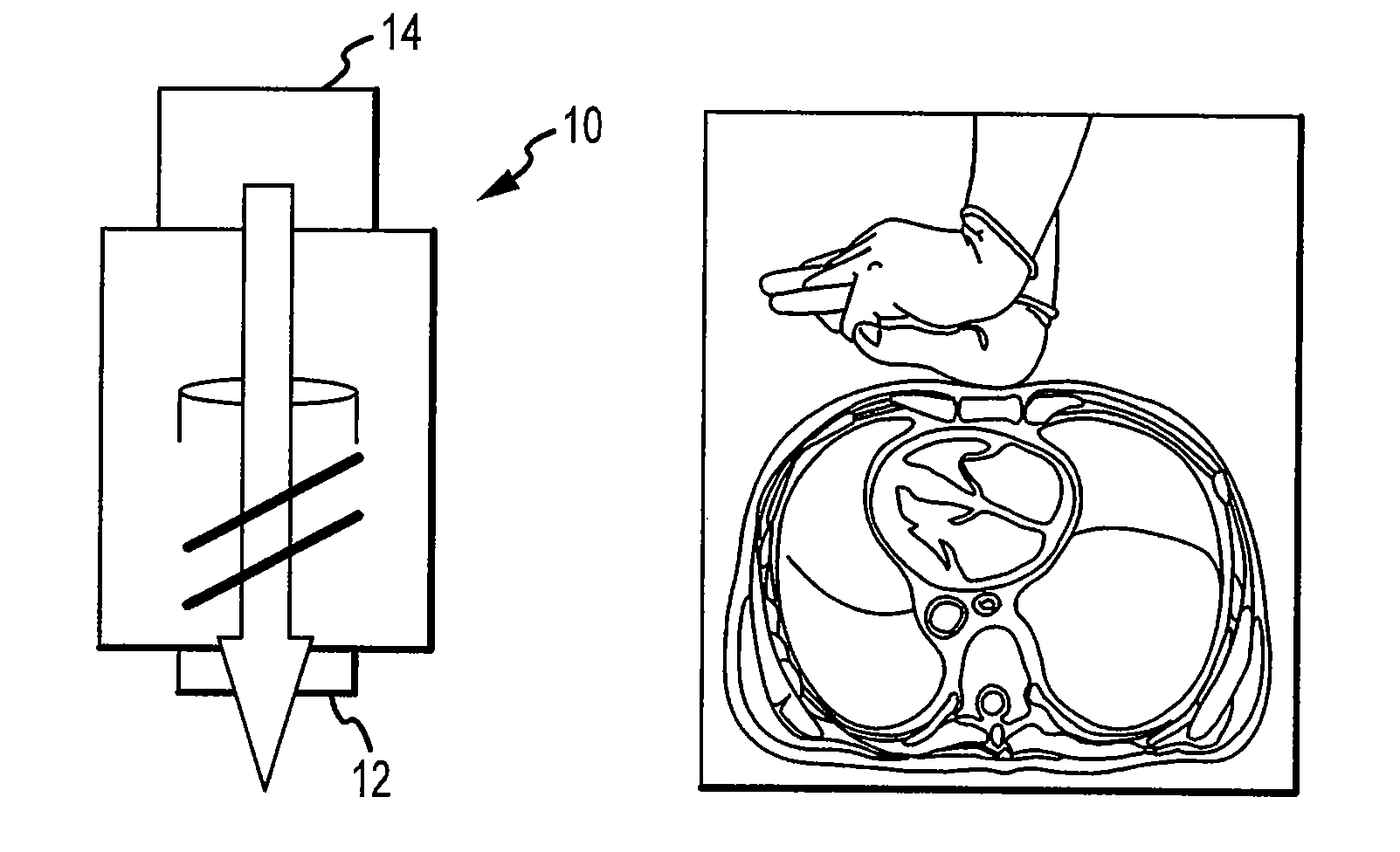
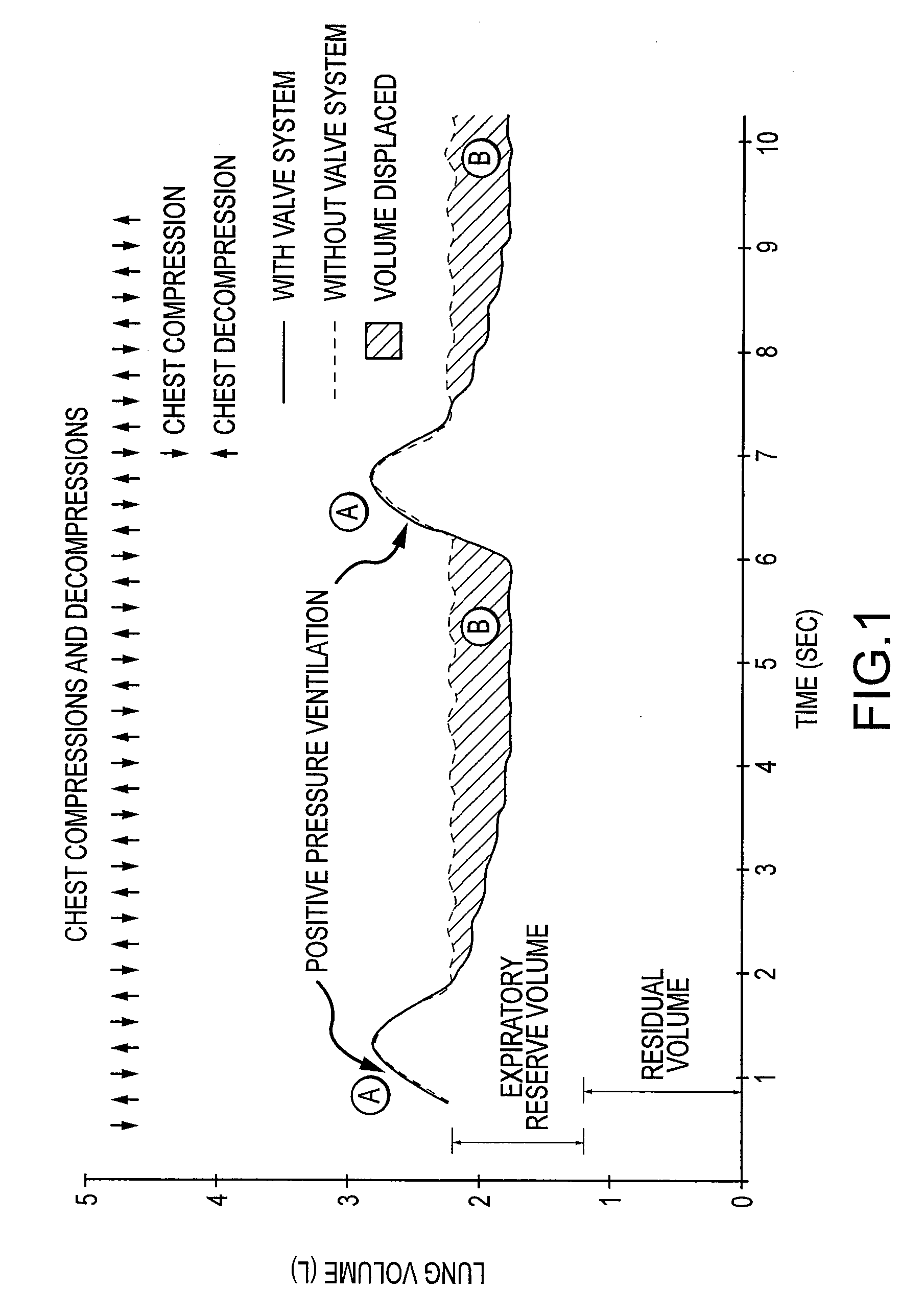
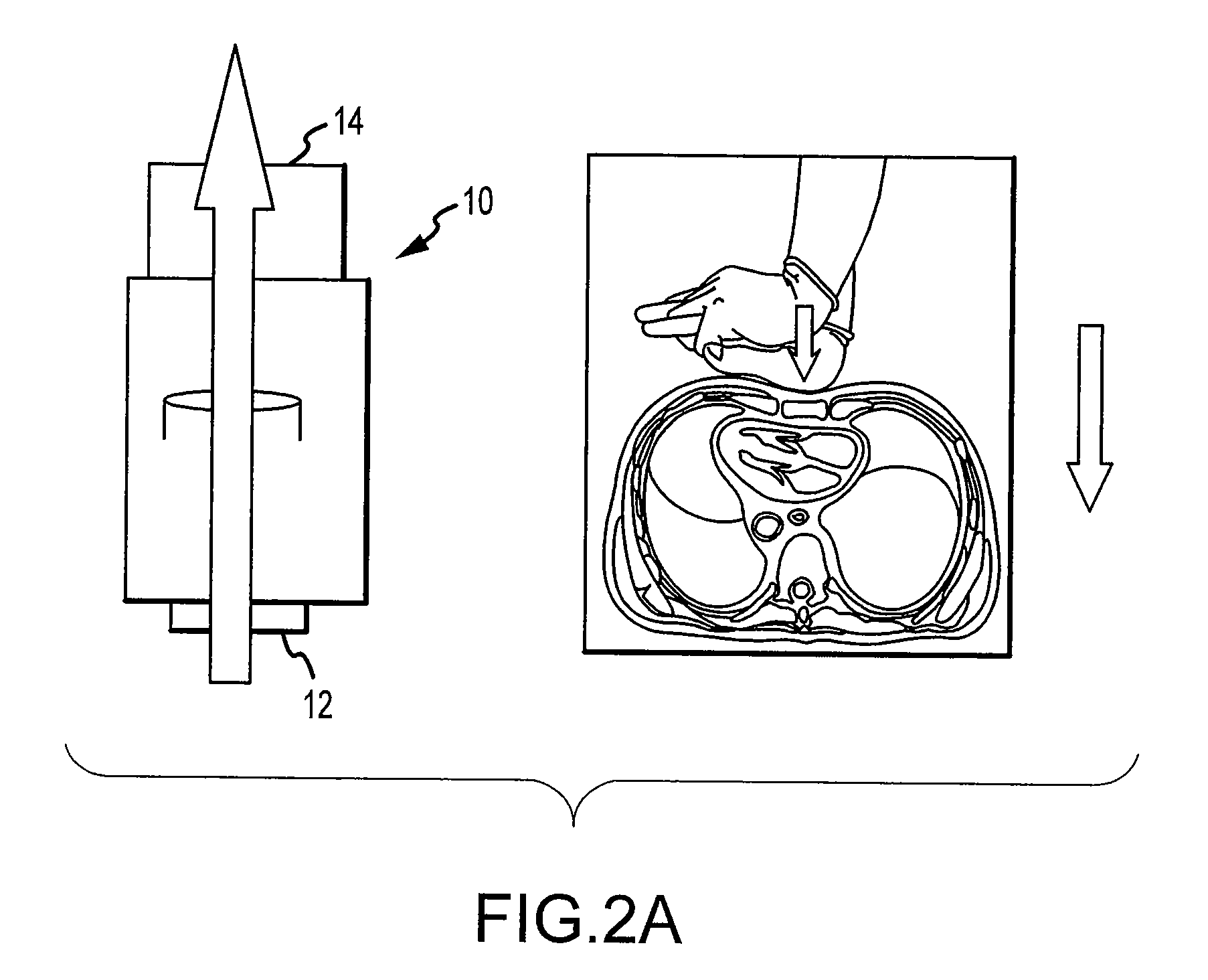
[0025]Multiple methods of chest compression may be used when performing CPR in patients in cardiac arrest. In this life-threatening situation, the heart is not capable of circulating blood so non-invasive external means are used to assist in the circulation of blood to the vital organs including the heart, lungs, and brain. The methods and devices that may be used to circulate blood during cardiac arrest include manual closed chest CPR, active compression decompression (ACD) CPR, mechanical CPR with manual or automated devices that compress the chest and either allow the chest to recoil passively or actively, and devices that compress the chest wall and then function like an iron lung and actively expand the thoracic cage. Some of these approaches and devices only compress the anterior aspect of the chest such as the sternum while other approaches and devices compress all or part of the thorax circumferentially. Some approaches and devices also compress the thorax and abdomen in an ...
PUM
 Login to View More
 Abstract
Description
Claims
Application Information
 Login to View More