
Apparatus and Methods for Assessment of Vestibulo-Ocular Reflexes
- Summary
- Abstract
- Description
- Claims
- Application Information
AI Technical Summary
Benefits of technology
Problems solved by technology
Method used
Image

Examples
Embodiment Construction
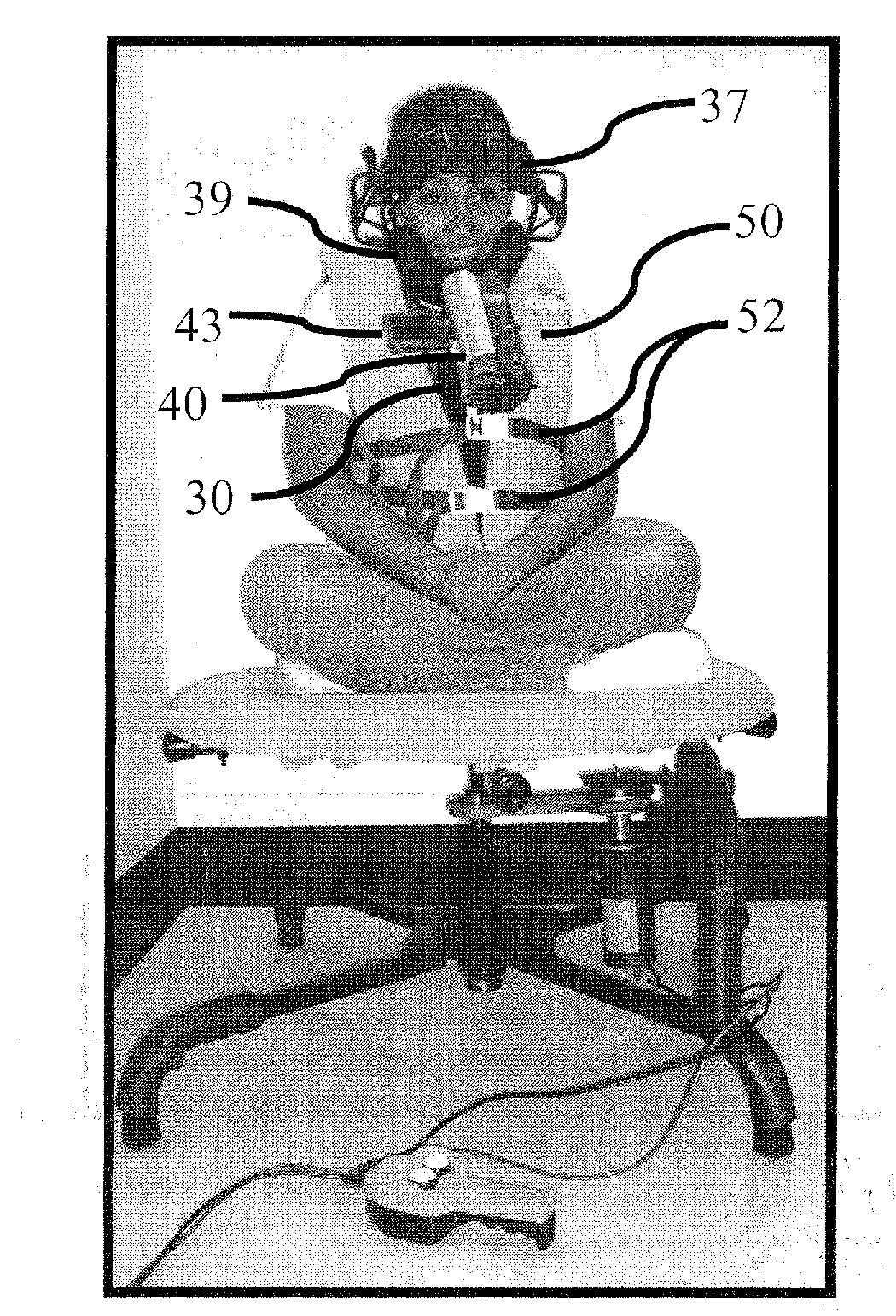
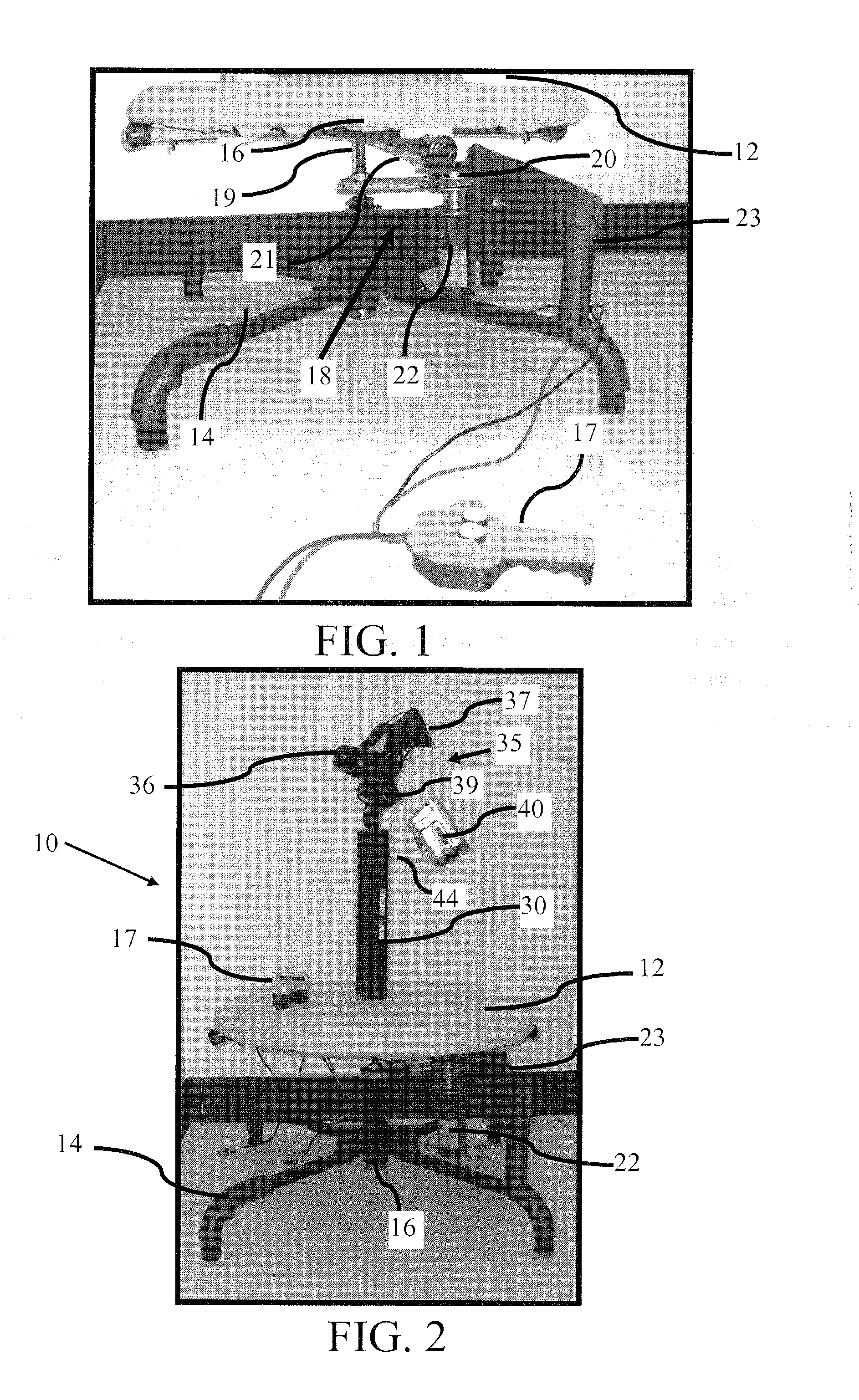
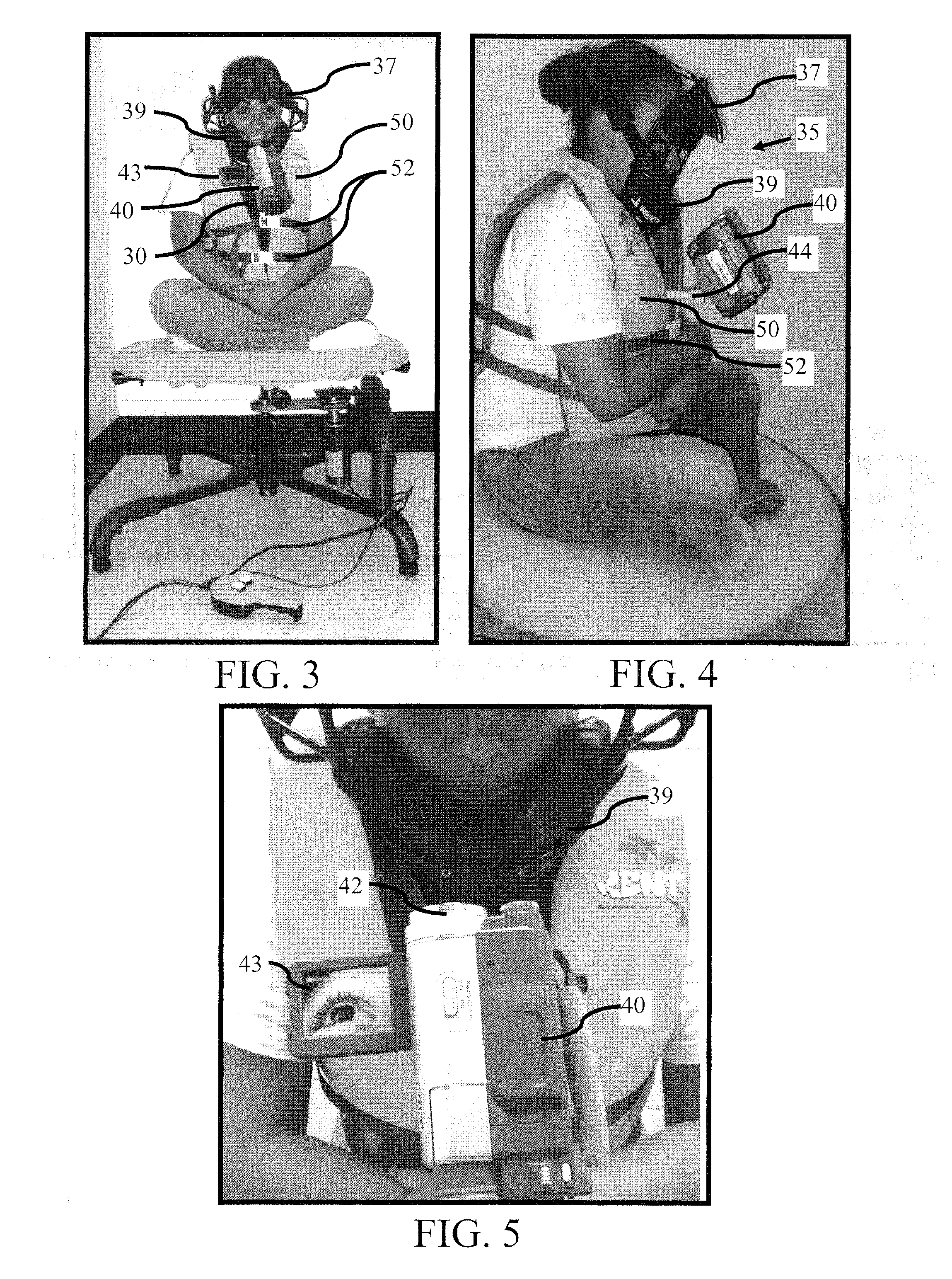
[0020]The subject invention in general provides embodiments of an apparatus for inducing and / or observing a vestibulo-ocular reflex (VOR). More specifically, the subject invention pertains to one or more embodiment(s) of a rotary disk apparatus capable of rotating a patient, usually for the purpose of inducing a nystagmus eye movement response, or of positioning a patient in a suitable posture for inducing an ocular counter-rolling response.
[0021]The rotary disk of the subject invention can be particularly useful to pediatric neurologists for assessing suspected vestibular dysfunction or suspected brain lesion involving the pathways that mediate vestibulo-ocular reflexes (vestibular nuclei, medial longitudinal fasciculus, oculometer, trochlear and abducens nuclei). In addition, evidence indicates that the vestibulo-ocular reflexes, for example, post-rotary nystagmus, may be altered in autistic individuals, and, thus, may be detectable with the devices and methods of the subject inve...
PUM
 Login to View More
 Abstract
Description
Claims
Application Information
 Login to View More