
Wafer carrier with varying thermal resistance
a technology of thermal resistance and carrier, applied in the direction of liquid surface applicators, coatings, chemical vapor deposition coatings, etc., can solve the problems of non-uniform heat transfer, and achieve the effect of improving temperature uniformity and minimizing conta
- Summary
- Abstract
- Description
- Claims
- Application Information
AI Technical Summary
Benefits of technology
Problems solved by technology
Method used
Image

Examples
Embodiment Construction
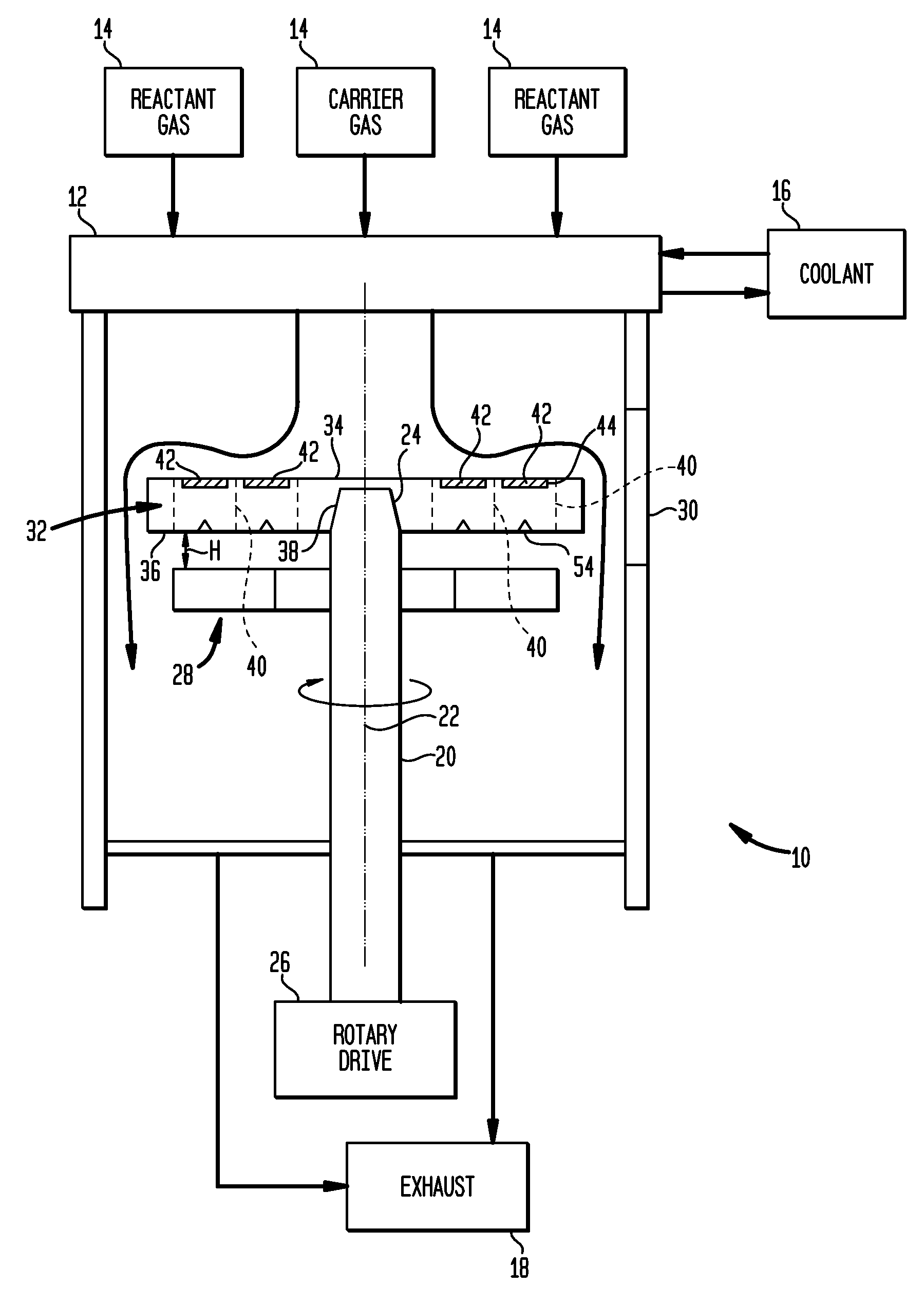
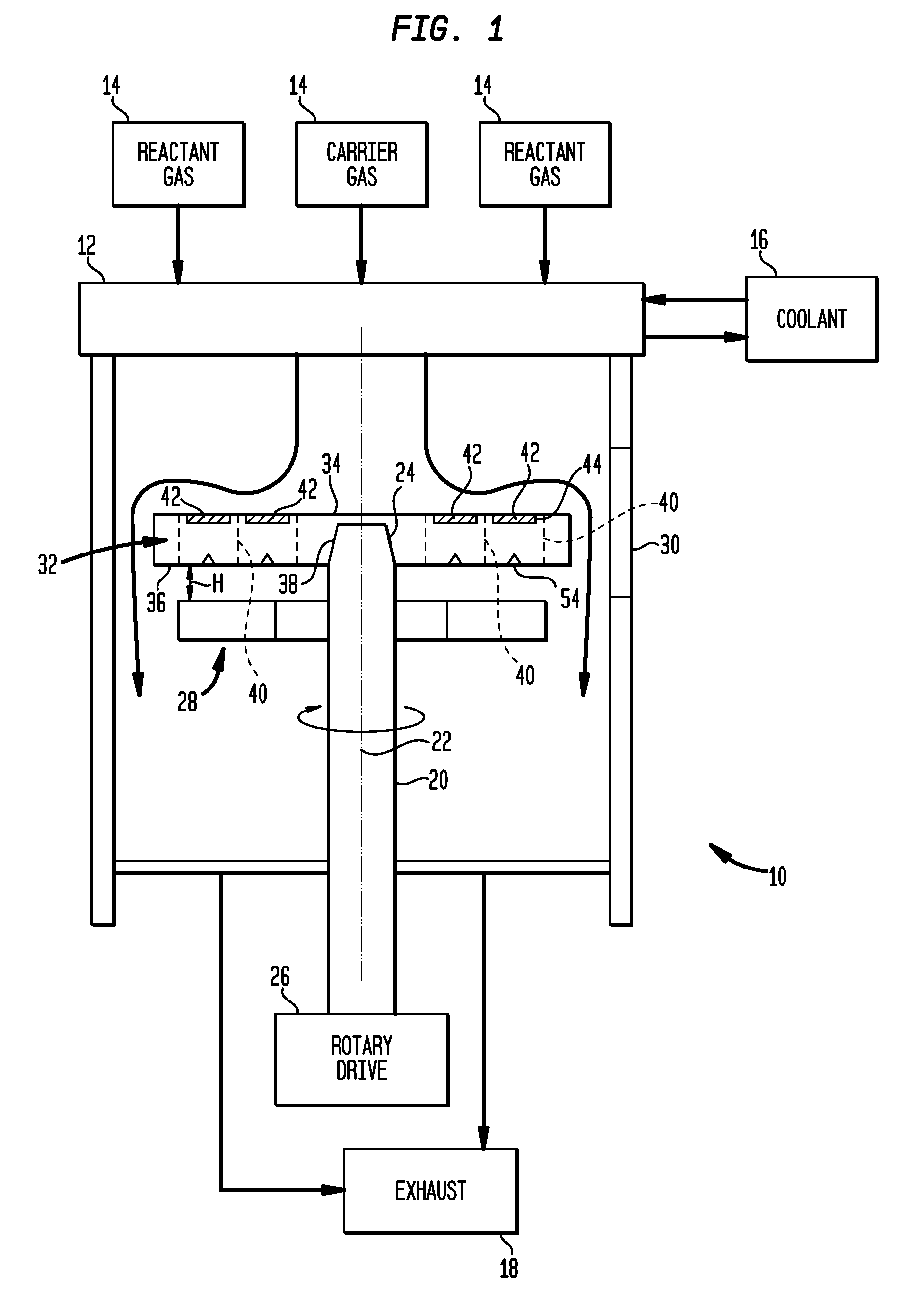
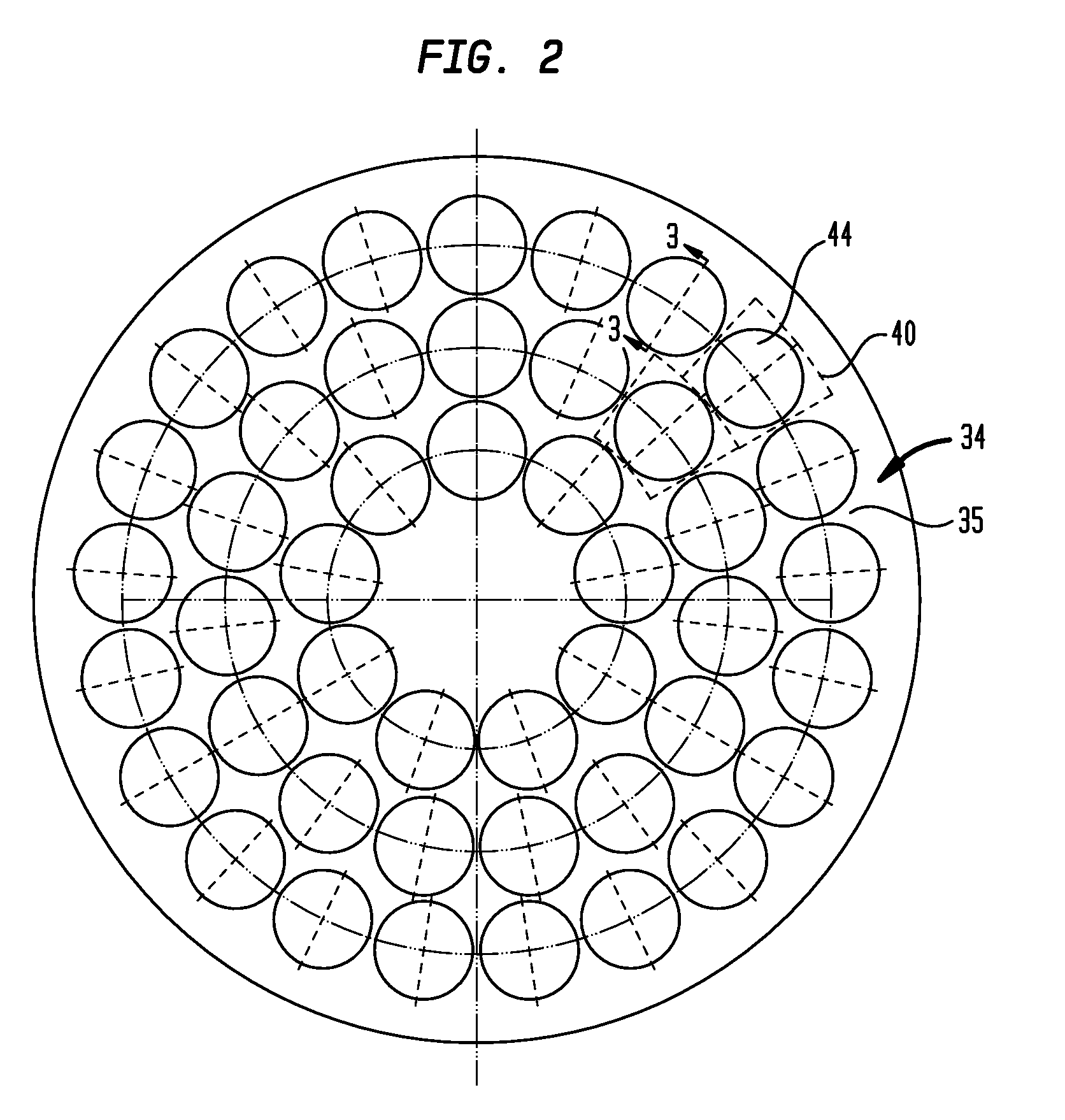
[0023]Chemical vapor deposition apparatus in accordance with one embodiment of the invention includes a reaction chamber 10 having a gas distribution element 12 arranged at one end of the chamber. The end having the gas distribution element 12 is referred to herein as the “top” end of the chamber 10. This end of the chamber typically, but not necessarily, is disposed at the top of the chamber in the normal gravitational frame of reference. Thus, the downward direction as used herein refers to the direction away from the gas distribution element 12; whereas the upward direction refers to the direction within the chamber, toward the gas distribution element 12, regardless of whether these directions are aligned with the gravitational upward and downward directions. Similarly, the “top” and “bottom” surfaces of elements are described herein with reference to the frame of reference of chamber 10 and element 12. Gas distribution element 12 is connected to sources 14 of gases to be used i...
PUM
| Property | Measurement | Unit |
|---|---|---|
| temperature | aaaaa | aaaaa |
| thickness | aaaaa | aaaaa |
| diameter | aaaaa | aaaaa |
Abstract
Description
Claims
Application Information
 Login to View More