
Load sensitive snow barrier device
- Summary
- Abstract
- Description
- Claims
- Application Information
AI Technical Summary
Benefits of technology
Problems solved by technology
Method used
Image

Examples
Embodiment Construction
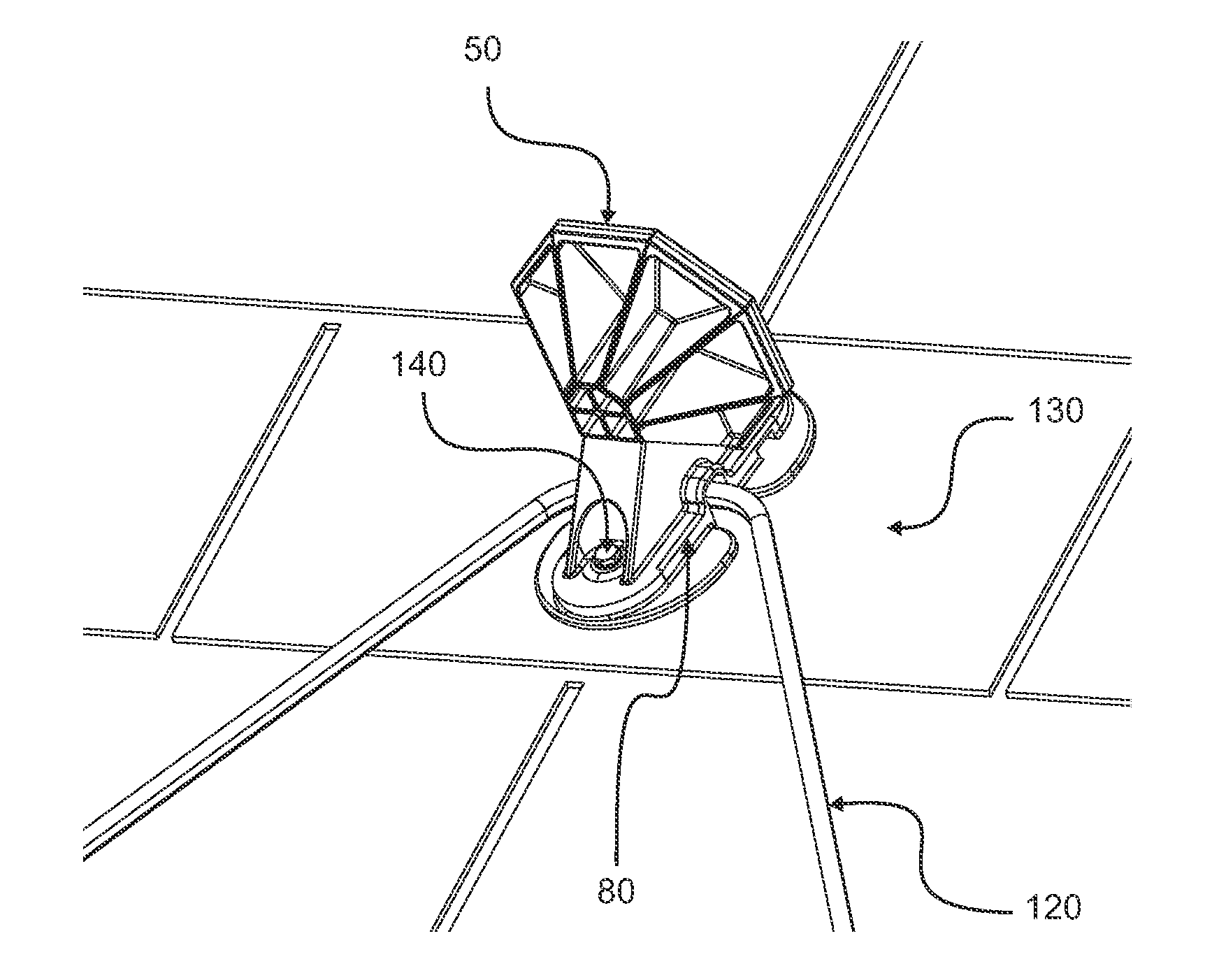
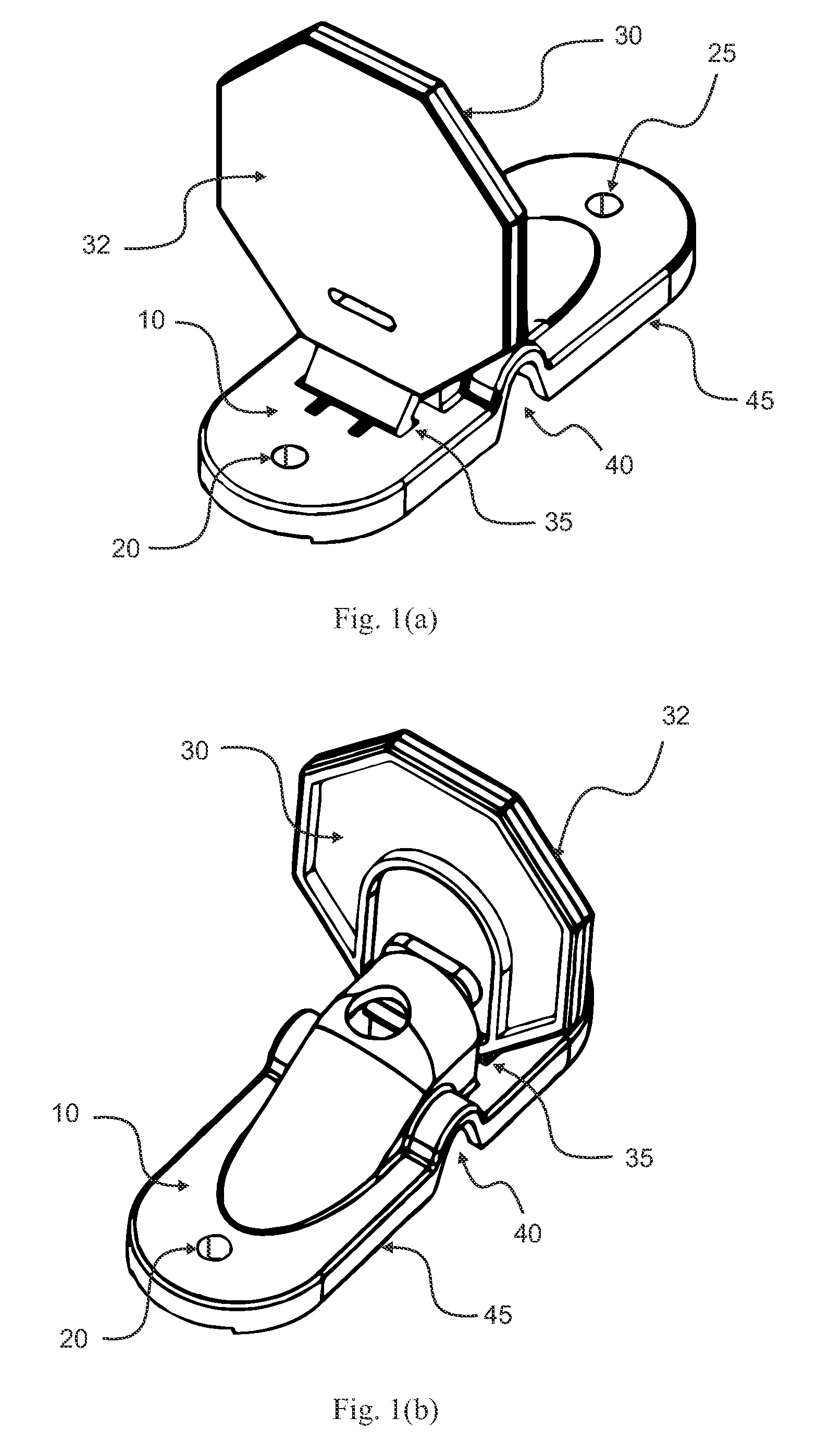
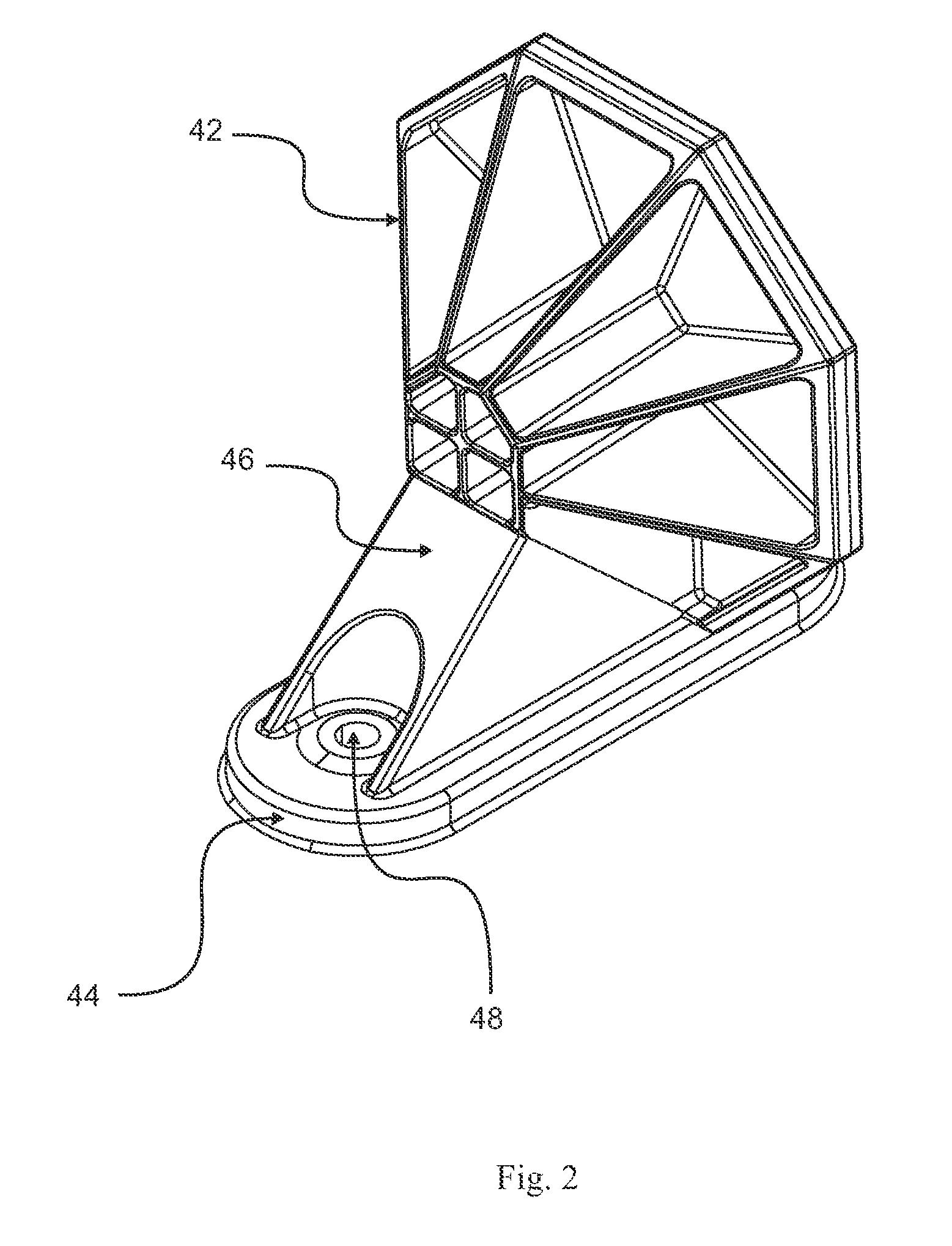
[0027]General features of the present invention are shown in FIGS. 1(a) and 1(b). The base anchor (10), which may be made of a polycarbonate material, is attached to a roof using bolts or screws that are inserted through holes (20) and (25). Base anchor (10) optionally includes a base surface (45) that serves as a waterproof seal. The upper member (30) is removably attached to the base anchor (10) at an attachment assembly junction (35). The upper member (30) may also be made of polycarbonate material.
[0028]As illustrated, upper member (30) preferably has a generally flat face (32), that may be of any shape. The illustrated shape is generally octagonal. Other contemplated geometrical shapes for the flat face (32) of upper member (30) are depicted in FIG. 8. Further shapes for the flat face (32) of upper member (30) are contemplated (not shown), and include shapes with or without holes, screens and other barrier shapes. Such shapes may also be of recognizable silhouettes including an...
PUM
 Login to View More
 Abstract
Description
Claims
Application Information
 Login to View More