
Twin flow supercharged engine
a supercharged internal combustion engine and twin-flow technology, which is applied in the direction of machines/engines, mechanical equipment, cylinders, etc., can solve the problems of reducing turbine efficiency and affecting the efficiency of turbines, and achieves high turbine pressure ratios, high charge pressure ratios, and increased turbine rotational speed
- Summary
- Abstract
- Description
- Claims
- Application Information
AI Technical Summary
Benefits of technology
Problems solved by technology
Method used
Image

Examples
Embodiment Construction
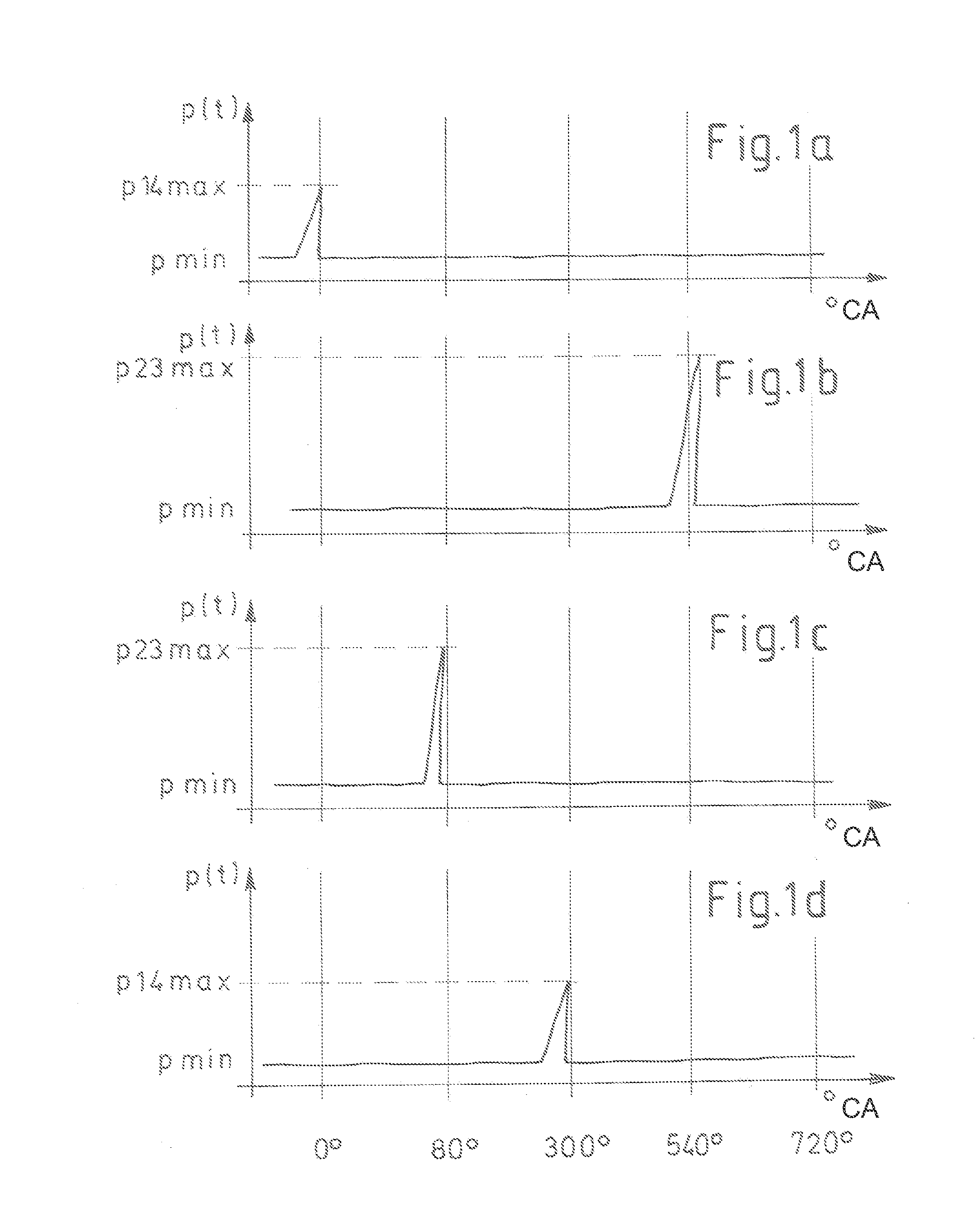
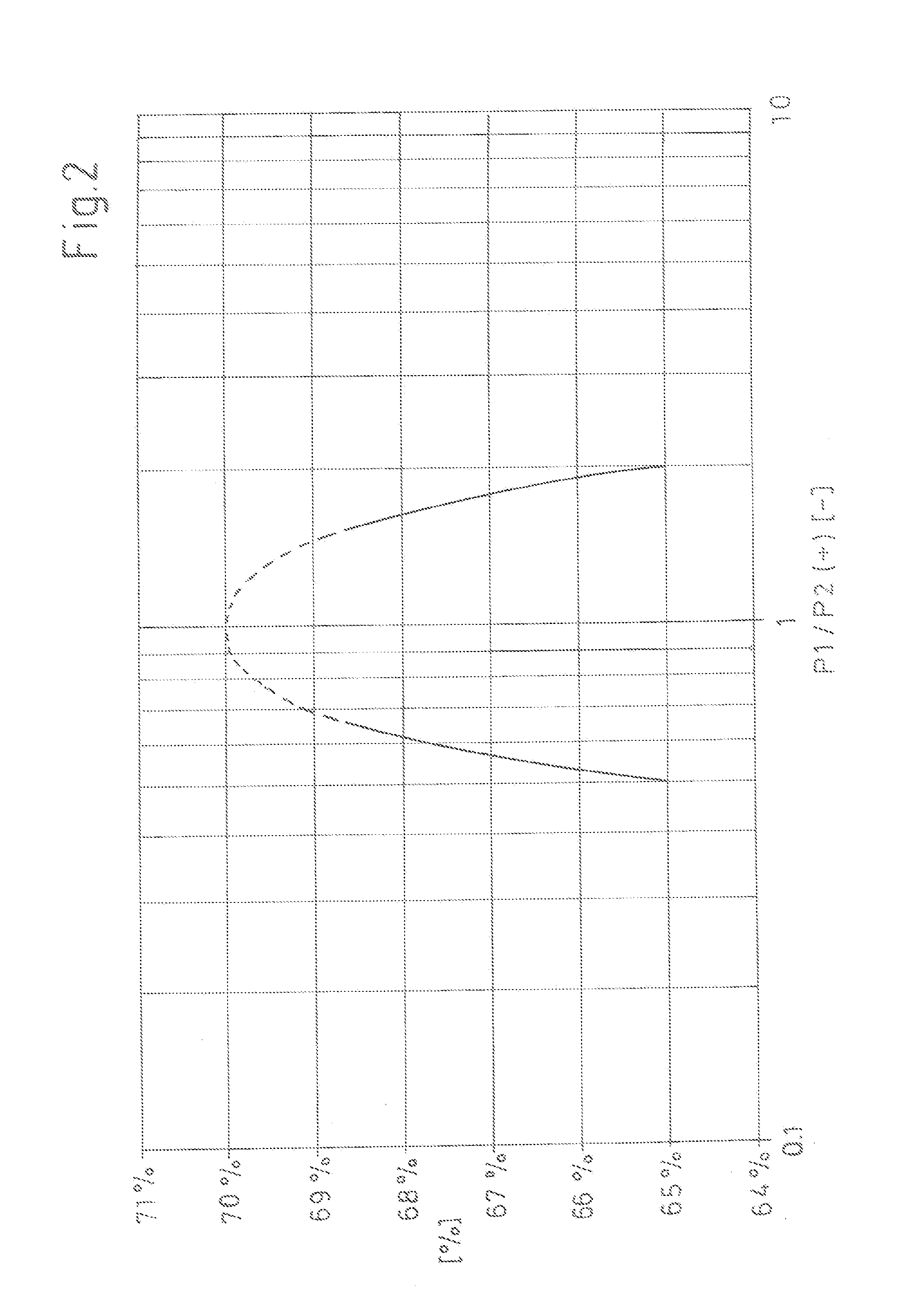
[0051]As described above, the different-sized pressure peaks at the inlet into the rotor may lead to a reduction in turbine efficiency. Thus, to be able to operate the turbine provided in the exhaust system optimally, e.g., as efficiently as possible, the pressure peaks at the inlet into the turbine, i.e., at the inlet into the rotor of the turbine, should be substantially equal in size.
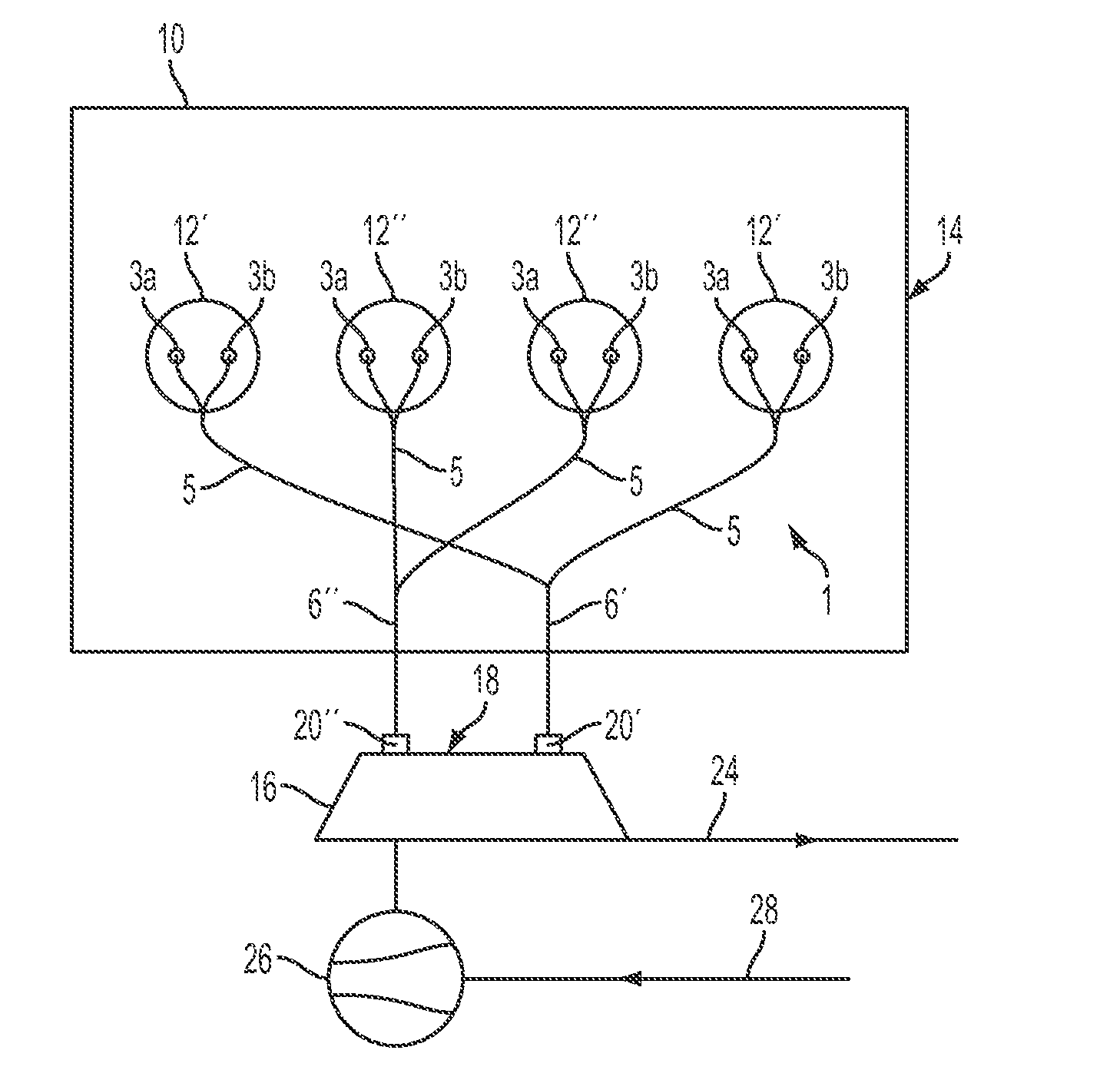
[0052]In general, in a cylinder head having four cylinders in an in-line arrangement the exhaust lines of the two outer cylinders as a first cylinder group merge to form a first overall exhaust line and the exhaust lines of the two inner cylinders as a second cylinder group merge to form a second overall exhaust line.
[0053]Said configuration of the cylinders makes allowance for the fact that the cylinders of a four-cylinder in-line engine are generally ignited in the sequence 1-3-4-2, with the cylinders being numbered successively in series starting from an outer cylinder of the row of cylinders. Thi...
PUM
 Login to View More
 Abstract
Description
Claims
Application Information
 Login to View More