
Method for forming interconnect structure having airgap
a technology of interconnection structure and air gap, which is applied in the direction of electrical apparatus, semiconductor devices, semiconductor/solid-state device details, etc., can solve the problems of severe process integration challenges, difficult to develop a dielectric material with a k value less than 2.5 with good mechanical and suitable integration properties, and all air gap processes require drastic changes to the existing process schemes. to achieve the effect of current process flow
- Summary
- Abstract
- Description
- Claims
- Application Information
AI Technical Summary
Benefits of technology
Problems solved by technology
Method used
Image

Examples
Embodiment Construction
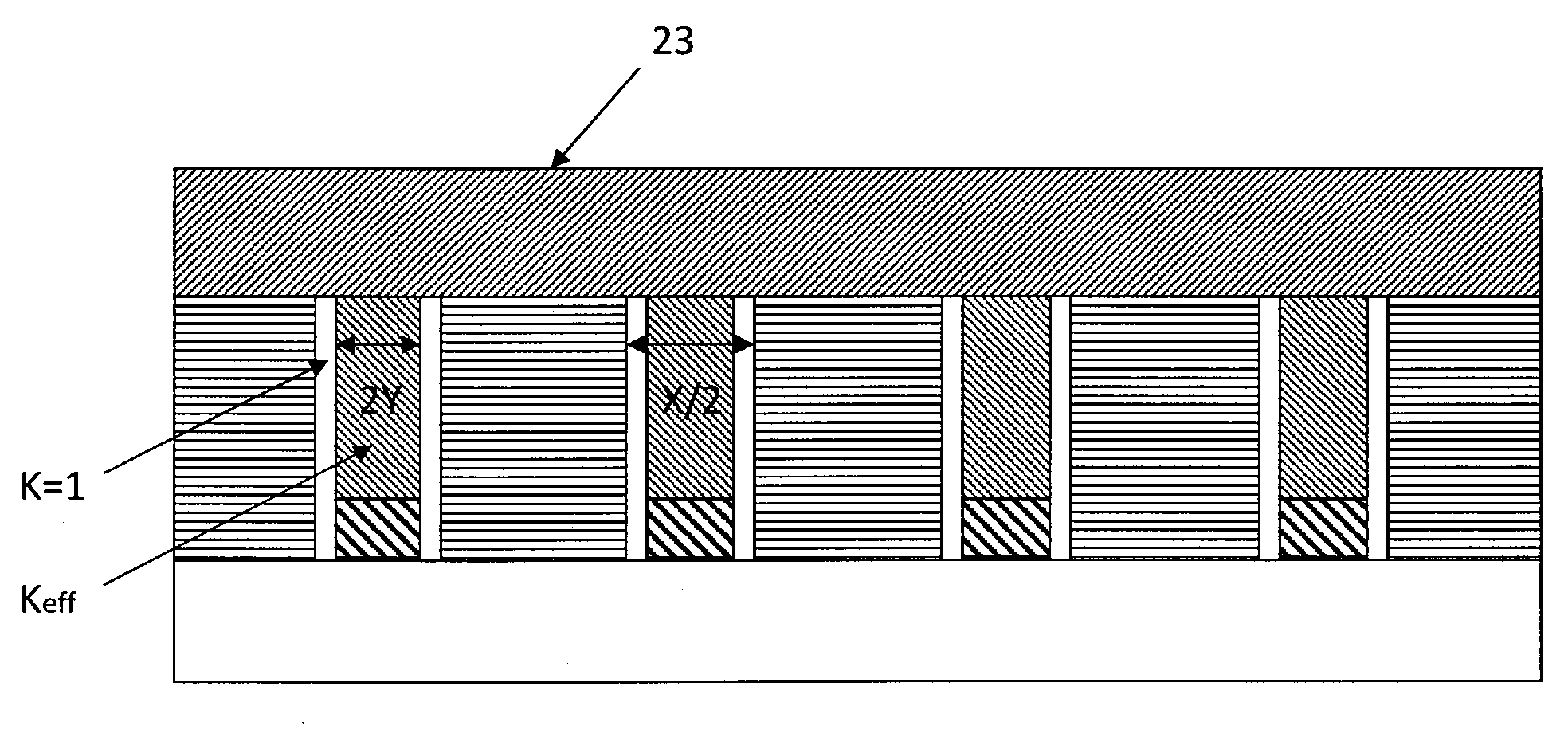
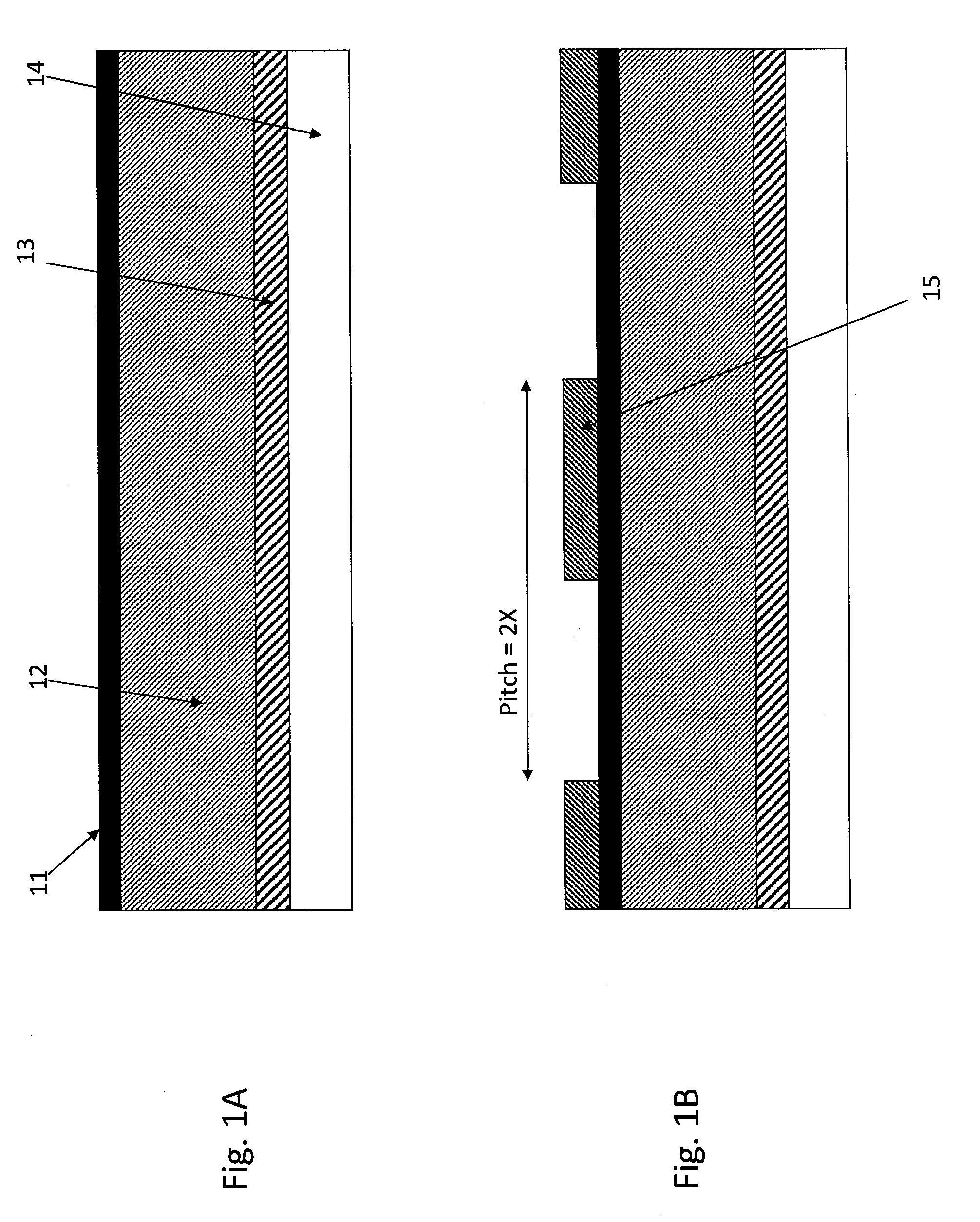
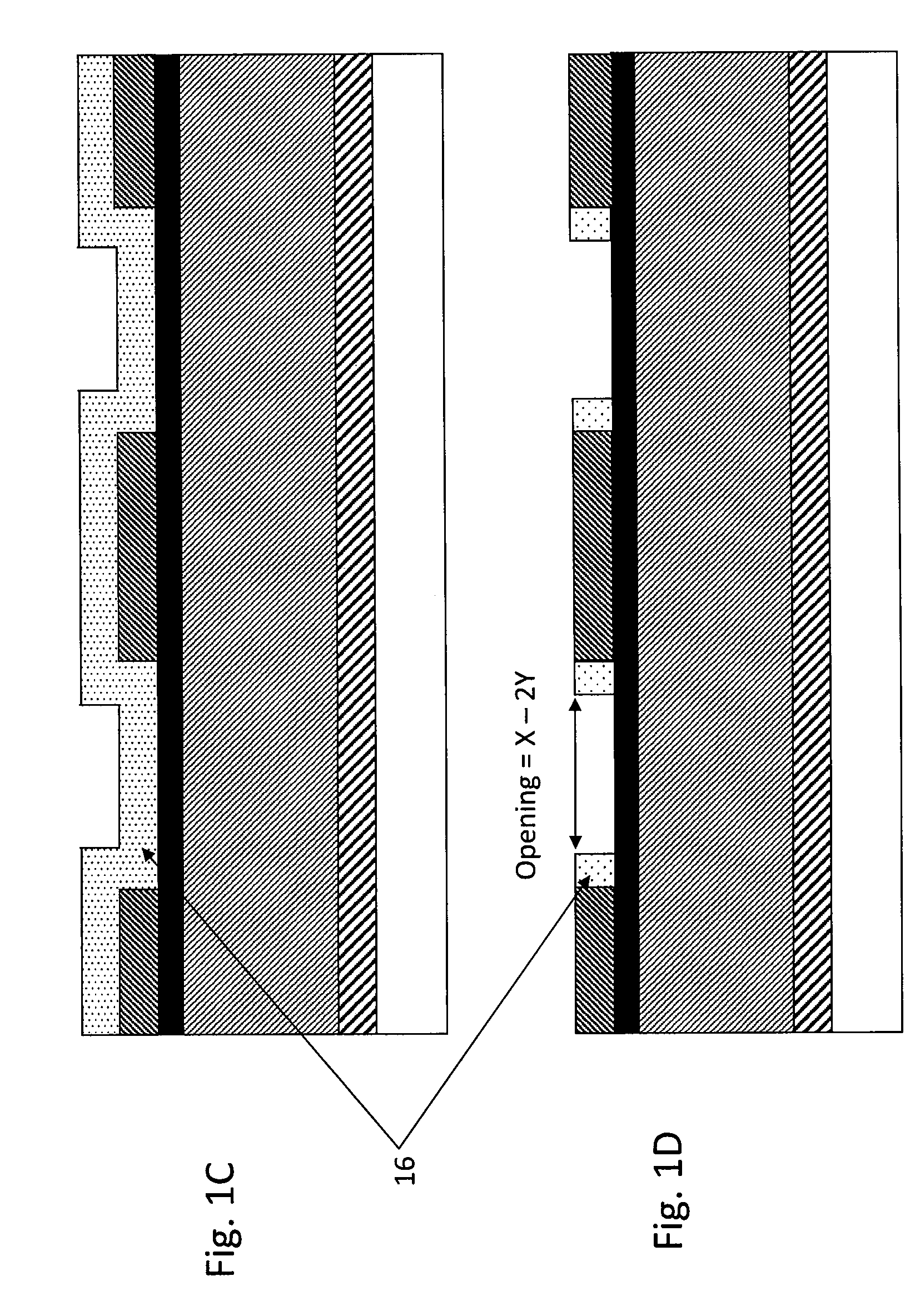
[0022]An embodiment provides a method for forming an interconnect structure with airgaps, comprising: (i) providing a structure having a trench formed on a substrate; (ii) depositing a spacer oxide layer on sidewalls of the trench as sidewall spacers preferably by plasma enhanced atomic layer deposition; (iii) filling the trench having the sidewall spacers with copper; (iv) removing the sidewall spacers to form an airgap structure; and (v) encapsulating the airgap structure, wherein airgaps are formed between the filled copper and the sidewalls of the trench.
[0023]In some embodiments, the method may further comprise depositing a SiCxNy-based spacer layer (hereinafter in “SiCxNy”, x and y indicate a type of film, rather than indicating actual atomic compositions, and are independently 0 or 1, typically both x and y are 1) on the sidewall spacers by atomic layer deposition before filling the trench, wherein airgaps are formed between the SiCxNy-based spacer layer and the sidewalls of ...
PUM
 Login to View More
 Abstract
Description
Claims
Application Information
 Login to View More