

Immune regulatory oligonucleotide (IRO) compounds to modulate toll-like receptor based immune response
a technology of immune response and immune system, applied in the field of immunotherapy, can solve the problems of immune compromised subjects' uncontrolled stimulation of the immune system through tlrs, and achieve the effect of preventing, suppressing or antagonizing the cytokine and chemokine respons
- Summary
- Abstract
- Description
- Claims
- Application Information
AI Technical Summary
Benefits of technology
Problems solved by technology
Method used
Image

Examples
example 1
Synthesis of Oligonucleotides Containing Immune Regulatory Moieties
[0120]All IRO compounds of the invention were synthesized according to standard procedures (see e.g. U.S. Patent Publication No. 20040097719).
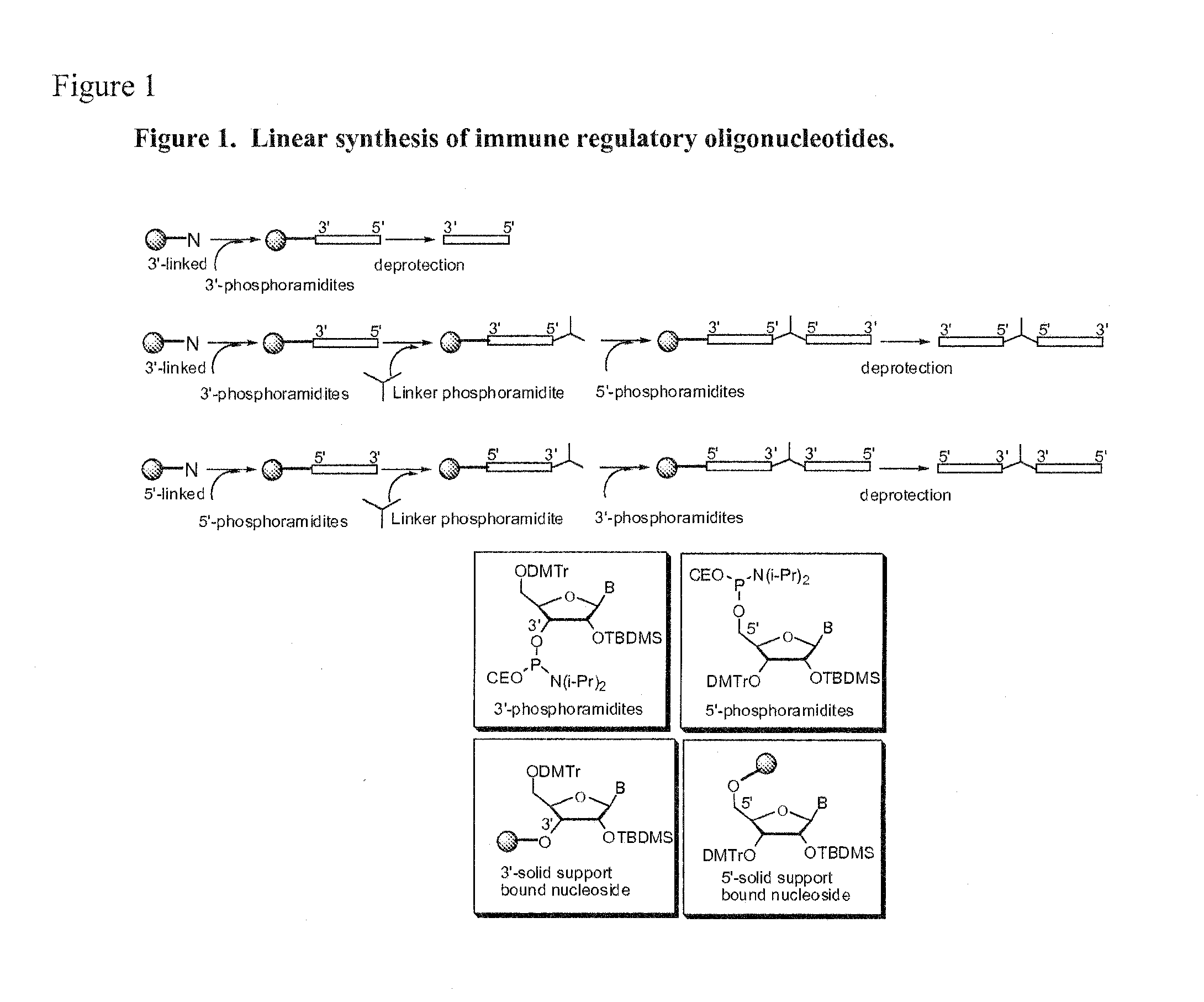
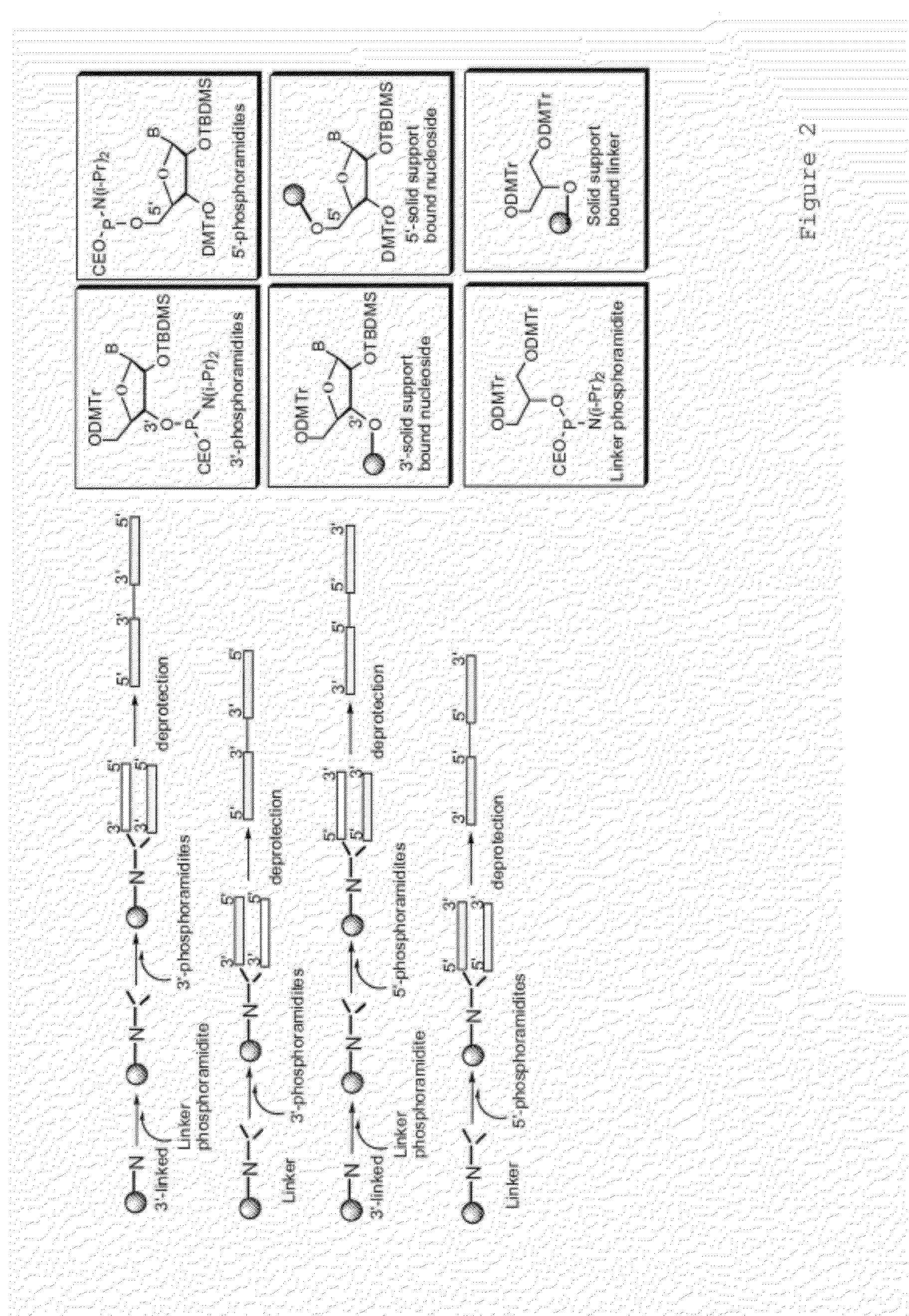
[0121]Oligonucleotides were synthesized on a 1 μM scale using an automated DNA synthesizer (Expedite 8909; PerSeptive Biosystems, Framingham, Mass.), following standard linear synthesis or parallel synthesis procedures (see e.g. FIGS. 5 and 6 of U.S. Patent Publication No. 20040097719).
[0122]Deoxyribonucleoside phosphoramidites were obtained from (Aldrich-Sigma, St Louis, Mo.). 1′,2′-dideoxyribose phosphoramidite, propyl-1-phosphoramidite, 2-deoxyuridine phosphoramidite, 1,3-bis-[5-(4,4′-dimethoxytrityl)pentylamidyl]-2-propanol phosphoramidite and methyl phosphonamidite were obtained from Glen Research (Sterling, Va.).beta.-L-2′-deoxyribonucleoside phosphoramidite, .alpha.-2′-deoxyribonucleoside phosphoramidite, mono-DMT-glycerol phosphoramidite and di-DMT-glycerol phosphoramid...
example 2
Inhibition of TLR7 and TLR9 Stimulation
[0124]C57BL / 6 mice were injected s.c. at left underarm with 5 mg / kg of an IRO compound at 0 hours and 0.25 mg / kg TLR9 agonist or 10 mg / kg TLR7 agonist at 24 hours. Serum samples were taken at 2 hours after injection of the TLR9 or TLR7 agonist and IL-12 concentration was determined by ELISA. For IRO number 40, the TLR7 and TLR9 agonists were administered 72 hours after administration of the IRO. The results for all IROs are shown in Tables 4-11. These results demonstrate that an IRO compounds according to the invention can inhibit TLR7 and / or TLR9 activity in vivo, and more generally that IRO compounds according to the invention can inhibit TLR activation.
TABLE 4Antagonist Activity in vivo in mice% Inhibition of% Inhibition ofOligoTLR9 agonistTLR7 agonistNo.Sequences and Modificationinduced IL-12induced IL-12 15′-UGUCG1TTCT-X1-TCTTG1CUGU-5′44.894.0 25′-UGUCG1TTC-X1-CTTG1CUGU-5′69.891.6 35′-UGUCG1TT-X1-TTG1CUGU-5′63.789.8 45′-UGUCoG1TTCTo-Z-oTCT...
example 3
TLR7 / TLR9 In Vitro Antagonist Study
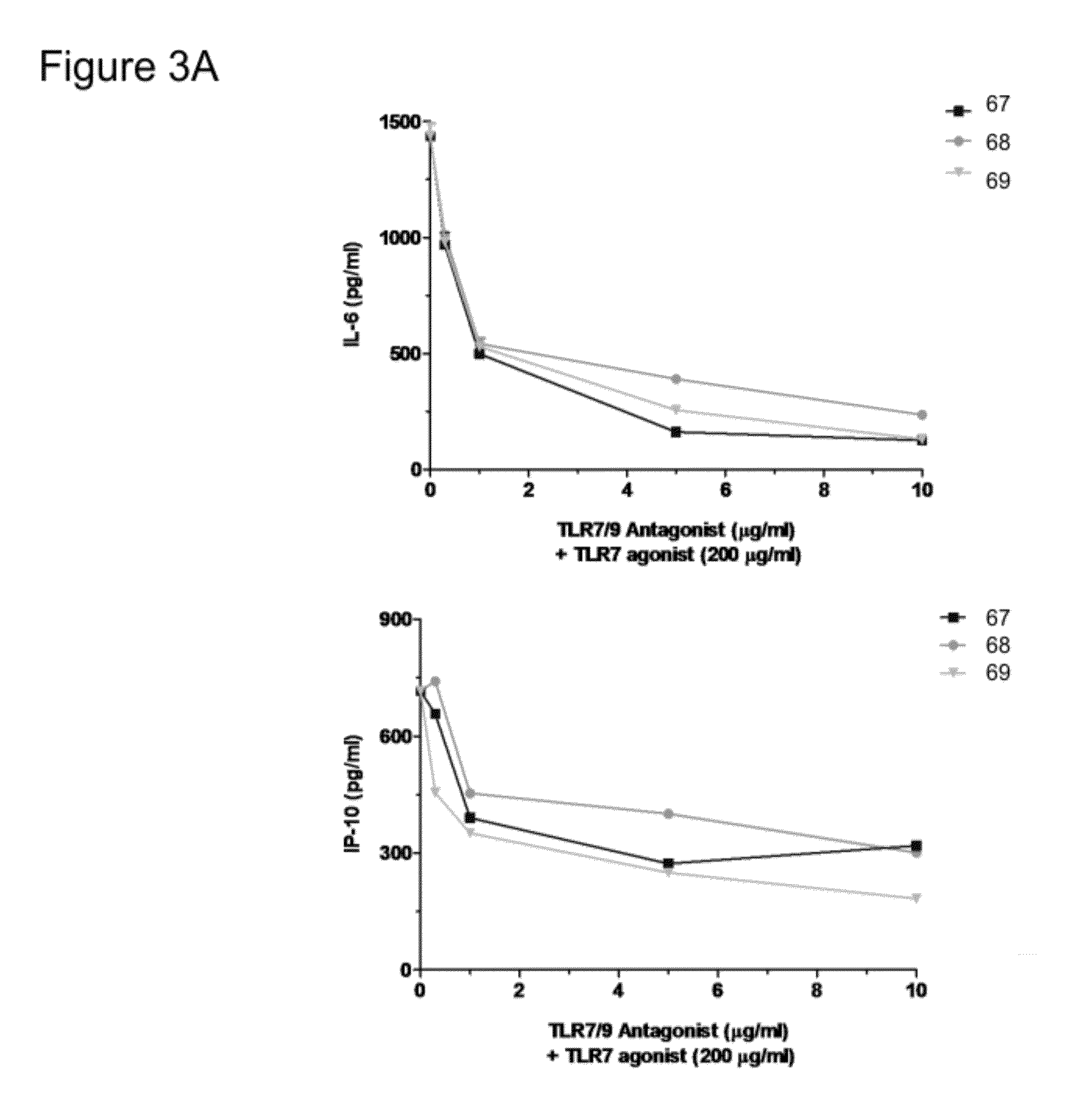
[0125]C57BL / 6 mice were used in this study. Mouse splenocytes were cultured for 24 hrs (at 37° C., 5% CO2) with TLR7 / TLR9 antagonists over a dose range 0.3, 1, 5, 10 mg / ml (A) or at a single dose, 10 mg / ml (B) in the presence of a TLR7 agonist (200 mg / ml) or in the presence of a TLR9 agonist (1 mg / ml) or in the presence of PBS. Supernatants were collected and cytokine / chemokine responses were then evaluated in supernatants by multiplex assays using the Luminex xMAP system. Samples were assayed in duplicate (±SD). Results are shown in FIGS. 3 and 4.
PUM
| Property | Measurement | Unit |
|---|---|---|
| Electric charge | aaaaa | aaaaa |
| Inhibition | aaaaa | aaaaa |
| Inhibition | aaaaa | aaaaa |
Abstract
Description
Claims
Application Information
 Login to View More