
Energy dispersion device
a technology of energy dispersion device and energy dispersion chamber, which is applied in the direction of optical radiation measurement, spectrophotometry/monochromator, spectrometry/spectrophotometry/monochromator, etc., to achieve the effect of large pixel count, high pixel count and greater dynamic rang
- Summary
- Abstract
- Description
- Claims
- Application Information
AI Technical Summary
Benefits of technology
Problems solved by technology
Method used
Image

Examples
example
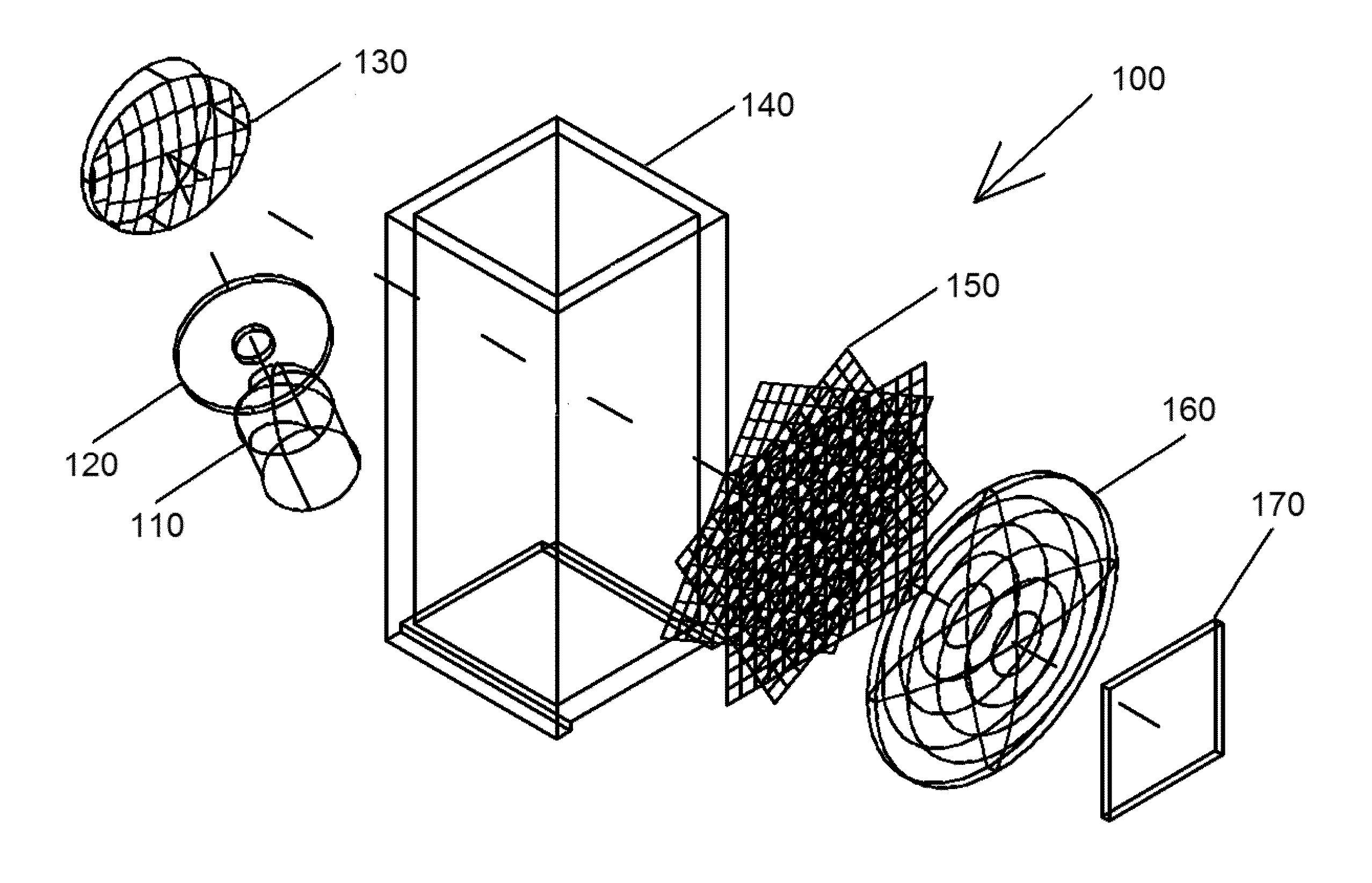
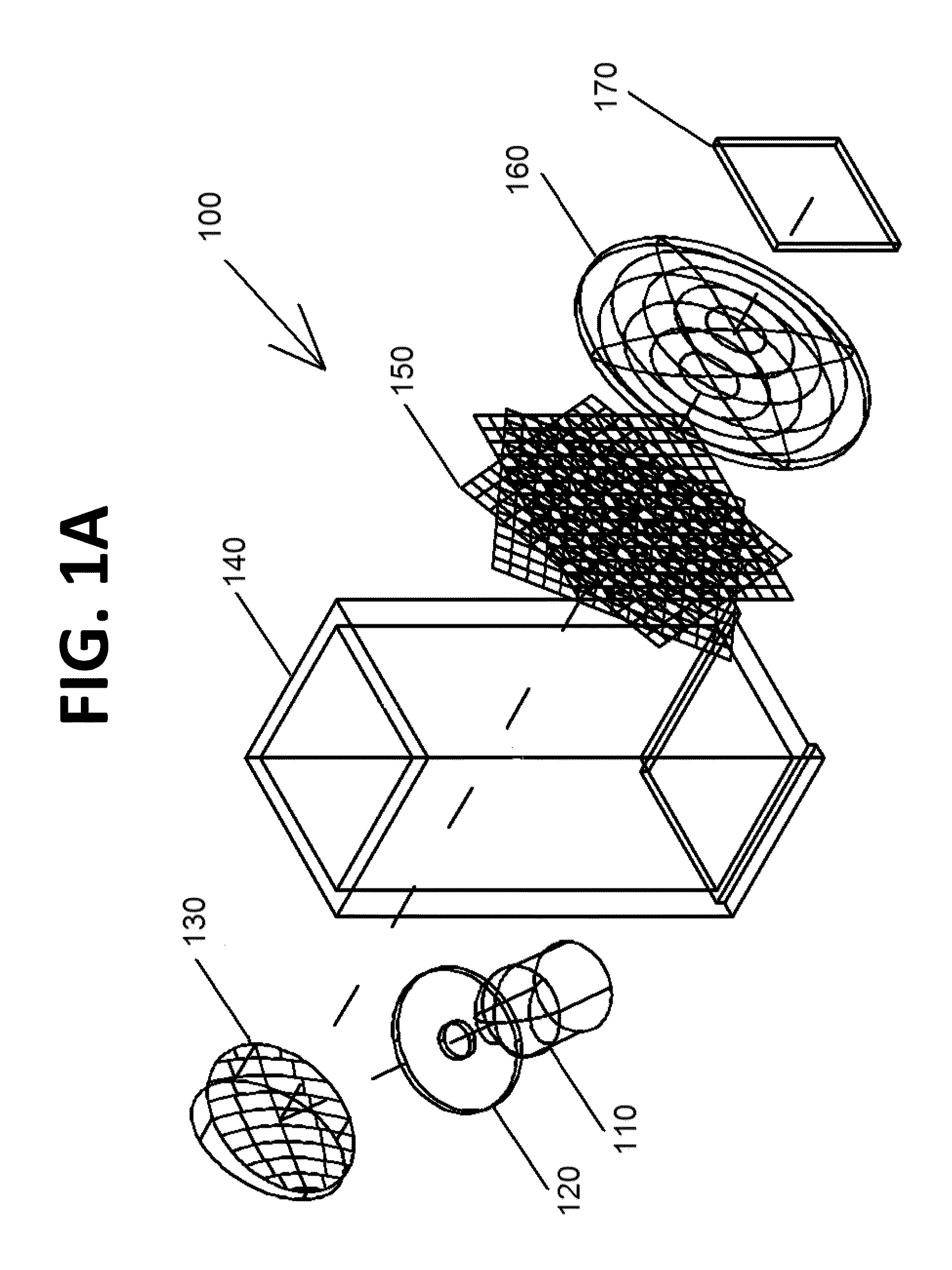
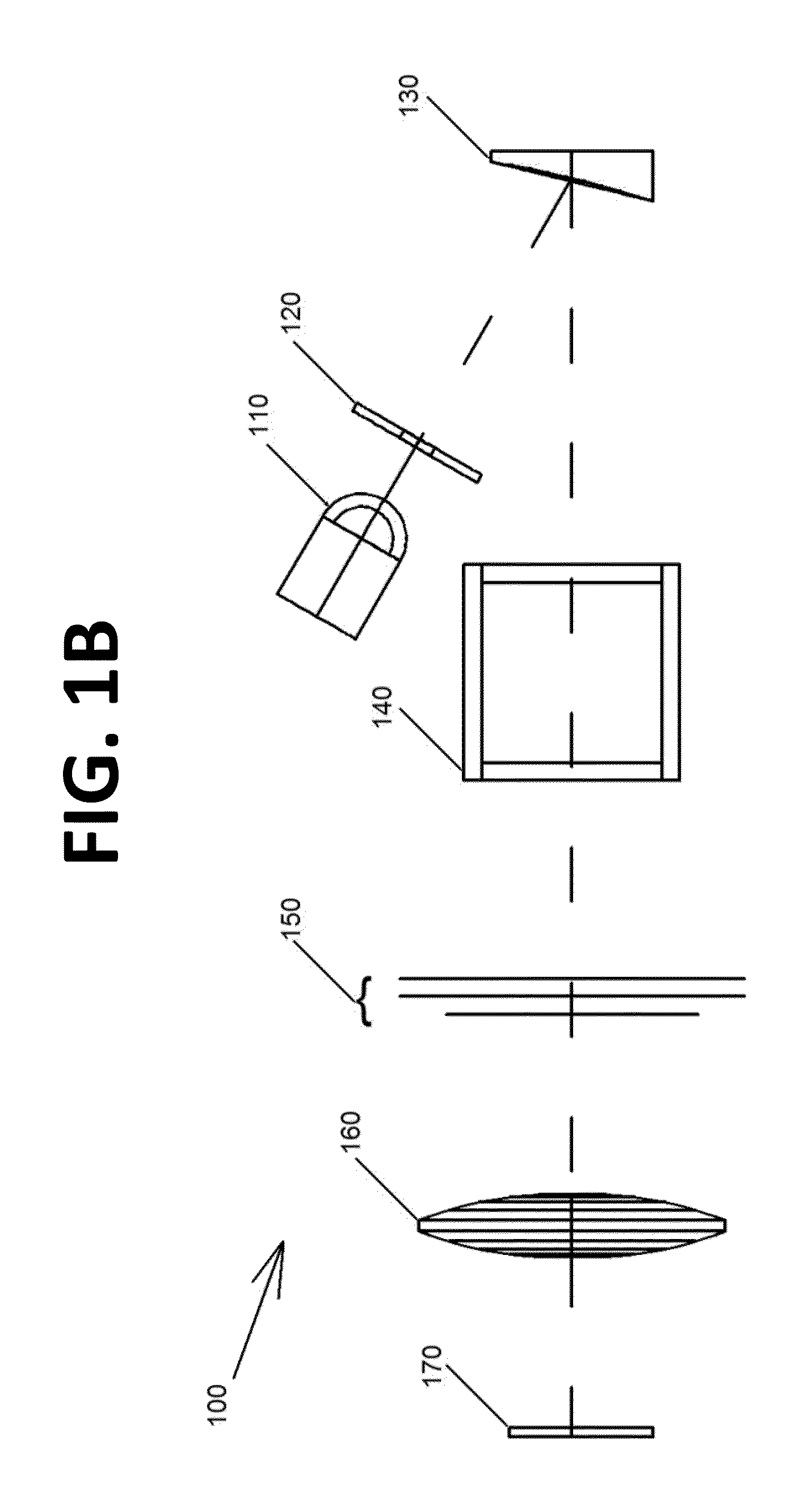
[0093]A spectrophotometer was constructed using, as a light source, a white LED (RL-5-W5020), which produces a continuous spectrum from 420 to 720 nm, with peak emission from the blue, primary source LED near 450 nm (the LED is manufactured with an overcoat containing yttrium aluminum oxide phosphor which generated light over the remainder of the visible spectrum). The LED was powered by a lithium ion battery (CR2032). The LED back-illuminated a 50 micrometer diameter pinhole in a thin metallic disk, positioned one focal length from a 30° off-axis paraboloidal reflector (Edmund Scientific NT63-180). In addition, a plastic spectrophotometry cuvette and two-dimensional, holographic transmission gratings (Rainbow Symphony Store #01602 gratings with parallel lines 500 per mm) were used. In the experiment, three of these double-dispersion diffraction gratings (gratings in which the patterning is two-dimensional so that dispersion is in both vertical and horizontal directions) were stacke...
PUM
| Property | Measurement | Unit |
|---|---|---|
| angle | aaaaa | aaaaa |
| angle | aaaaa | aaaaa |
| angle | aaaaa | aaaaa |
Abstract
Description
Claims
Application Information
 Login to View More