

System and method for detecting pulmonary congestion based on stroke volume using an implantable medical device
a medical device and pulmonary congestion technology, applied in the field of implantable medical devices, can solve the problems of pulmonary congestion, pulmonary congestion, pulmonary congestion, and more likely pulmonary congestion and edema, and achieve the effect of increasing the index and reducing the imbalan
- Summary
- Abstract
- Description
- Claims
- Application Information
AI Technical Summary
Benefits of technology
Problems solved by technology
Method used
Image

Examples
Embodiment Construction
[0020]The following description includes the best mode presently contemplated for practicing the invention. This description is not to be taken in a limiting sense but is made merely to describe general principles of the invention. The scope of the invention should be ascertained with reference to the issued claims. In the description of the invention that follows, like numerals or reference designators will be used to refer to like parts or elements throughout.
Overview of Implantable System
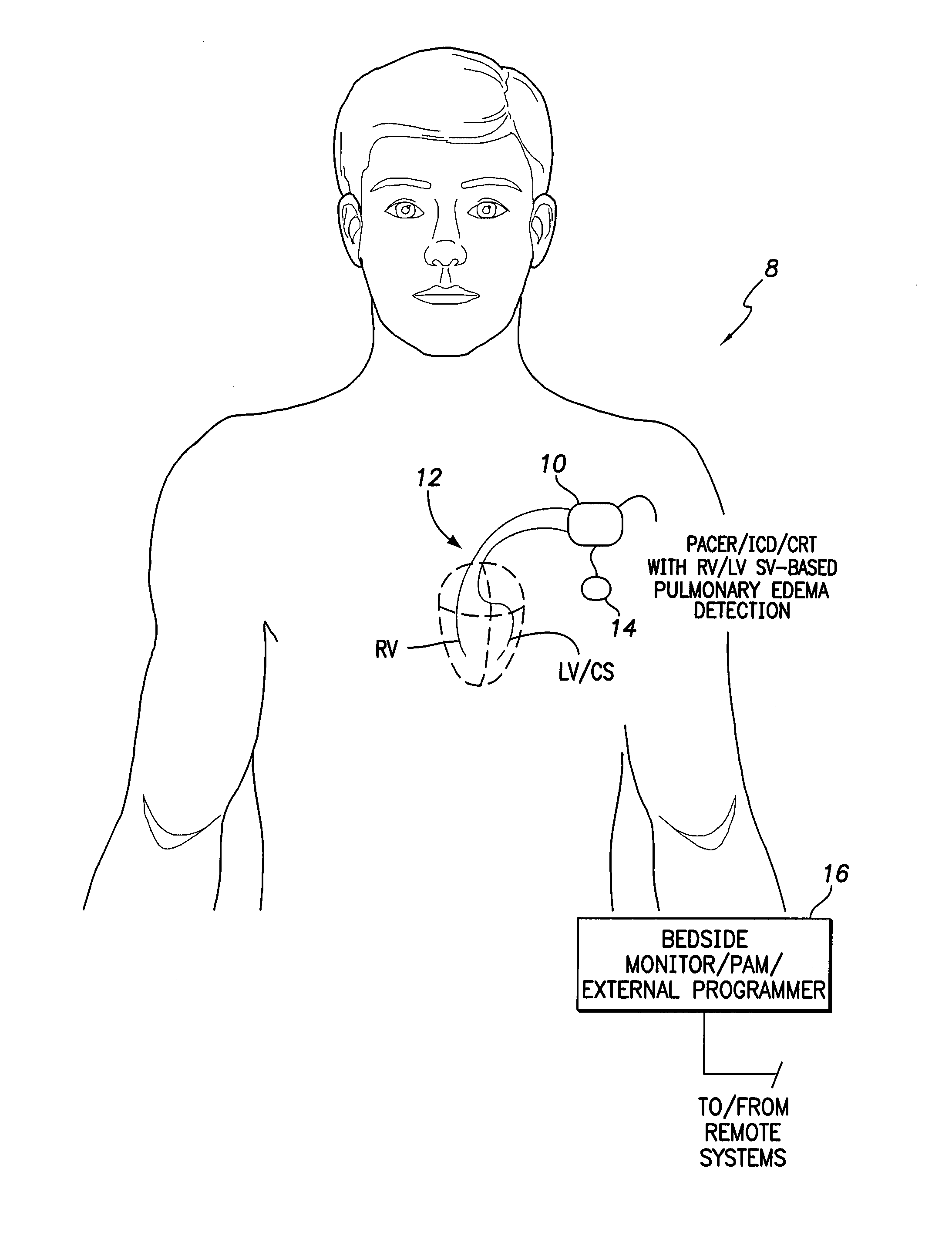
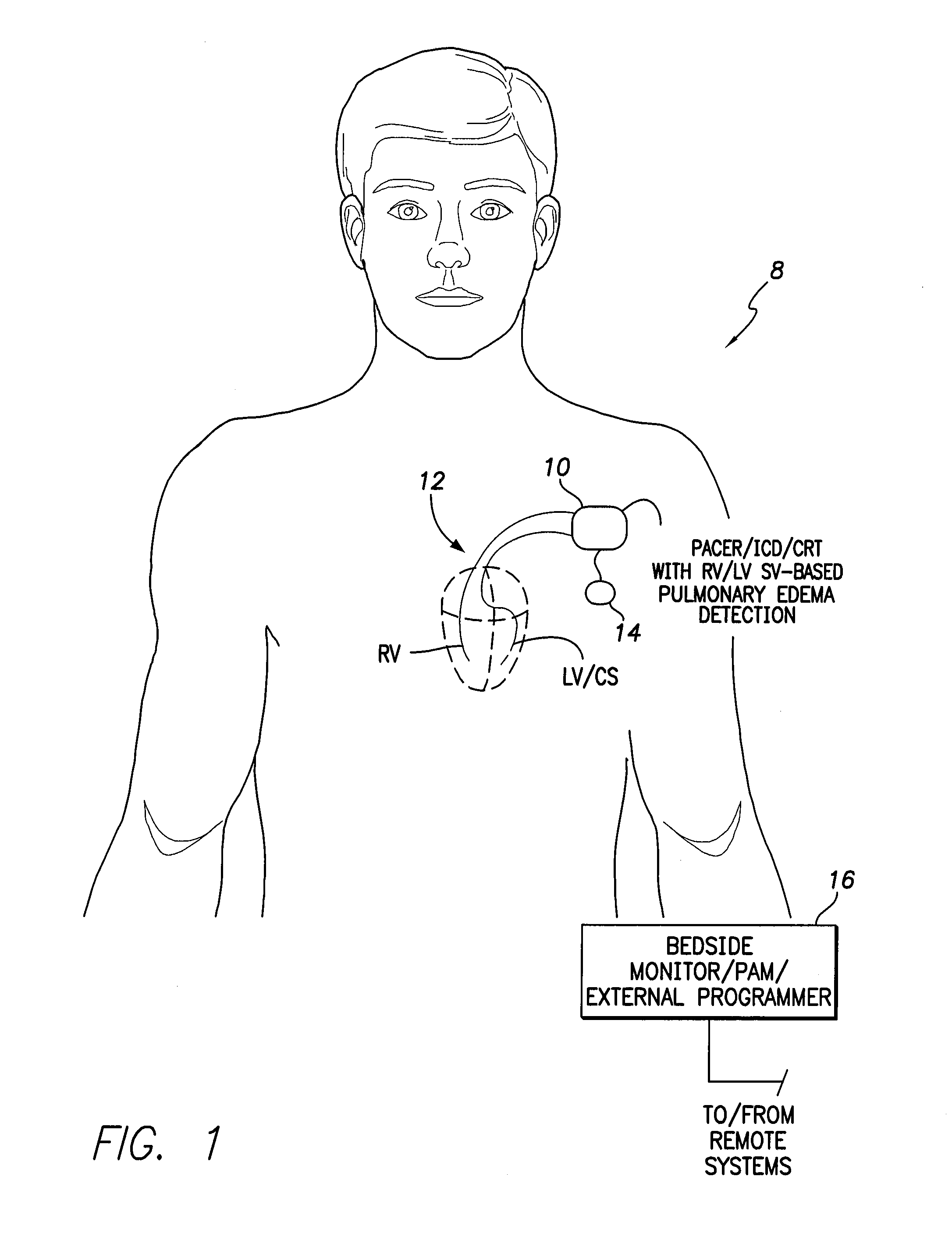
[0021]FIG. 1 illustrates an implantable medical system 8 capable of detecting pulmonary congestion and edema based on a comparison of RV and LV stroke volumes, i.e. the system is equipped with an RV / LV stroke volume-based edema detection system. To this end, medical system 8 includes a pacer / ICD / CRT 10 or other cardiac rhythm management device equipped with one or more cardiac sensing / pacing leads 12 implanted within the heart of the patient. In FIG. 1, two exemplary leads are shown: an RV lead a...
PUM
 Login to View More
 Abstract
Description
Claims
Application Information
 Login to View More